RussiaDiscovery Magazine

We write about Russia so that the native land ceases to be Terra Incognita.

topchaeva
bobir
konstantin

Authors

Coming Soon

We collaborate with masters of words who are in love with travel.

UNESCO World Heritage Sites in Russia

21 timeless landmarks you need to visit at least once

Travel Ideas
04.06.2025
12 minutes
85
Article photo

There are landmarks that hold value not only for their beauty but also for the living history they preserve. Russia is home to many such places, and some of them are recognized as UNESCO World Heritage Sites.


Where are they located, what makes them special, and why are they worth visiting? Let’s explore together.

What Is UNESCO World Heritage?

UNESCO World Heritage Sites are natural and cultural landmarks of outstanding universal value. Countries around the world work to protect them, funding preservation projects and carefully monitoring their condition. Once added to the World Heritage List, these sites often attract more tourists, bringing benefits to the local economy.

The Criteria for Selection

Until 2005, UNESCO World Heritage Sites were chosen based on two sets of criteria — one for culture and one for nature. These were later combined into a single list. However, the first six criteria (I–VI) still apply to cultural heritage, while the remaining four (VII–X) relate to natural heritage.

Here, we’ll focus on Russia’s cultural and historical landmarks. To be inscribed on the UNESCO World Heritage List, a site must meet at least one of the following criteria:

I. Represents a masterpiece of human creative genius.

II. Exhibits an important interchange of human values that has influenced architecture, technology, monumental art, urban planning, or landscape design over time.

III. Bears unique or exceptional testimony to a cultural tradition or a civilization, whether living or extinct.

IV. Is an outstanding example of a type of building, architectural or technological ensemble, or landscape illustrating a significant stage in human history.

V. Is an outstanding example of traditional human settlement, land use, or sea use representative of a culture, or shows human interaction with the environment.

VI. Is directly or tangibly associated with events, living traditions, ideas, beliefs, or artistic and literary works of outstanding universal significance.

Historic Centre of Saint Petersburg and Related Groups of Monuments

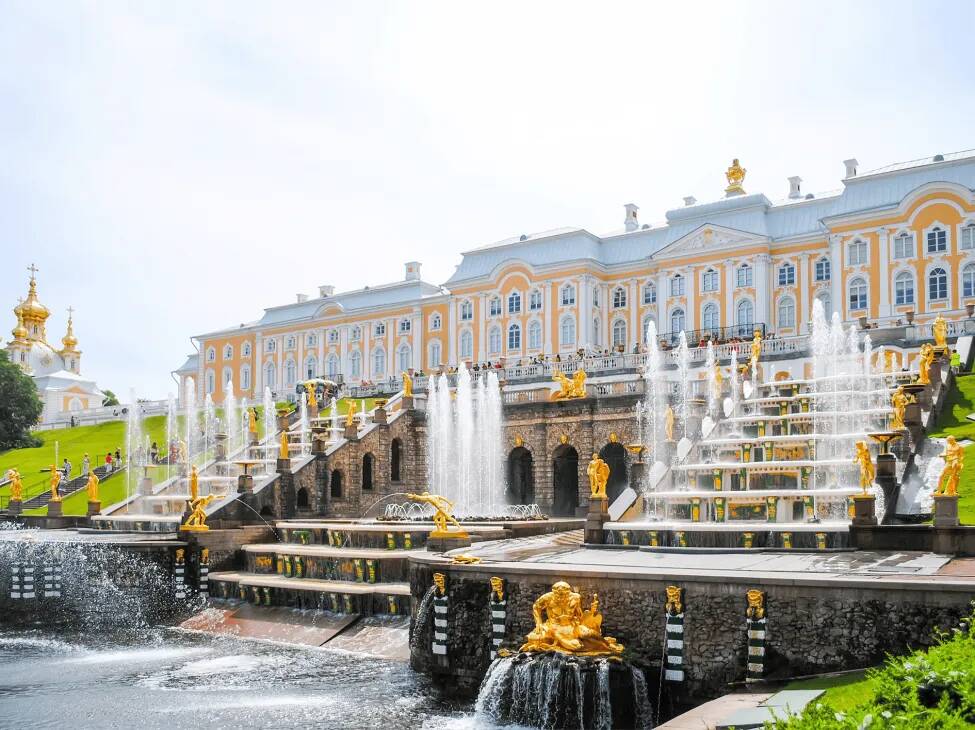
This UNESCO site covers St. Petersburg and parts of the Leningrad Oblast, encompassing canals, cathedrals, bridges, sculptures, and architectural landmarks along the Neva Embankment — as well as Peterhof, Pavlovsk, Lindulovskaya Grove, and the Oreshek Fortress.

The Grand Cascade is one of the most magnificent features of the Peterhof complex

Value: A sophisticated 18th-century urban planning ensemble combining architecture, monumental sculpture, and landscape design.

Year and criteria for inclusion on the UNESCO World Heritage List: 1990; I, II, IV, VI.

Kizhi Pogost

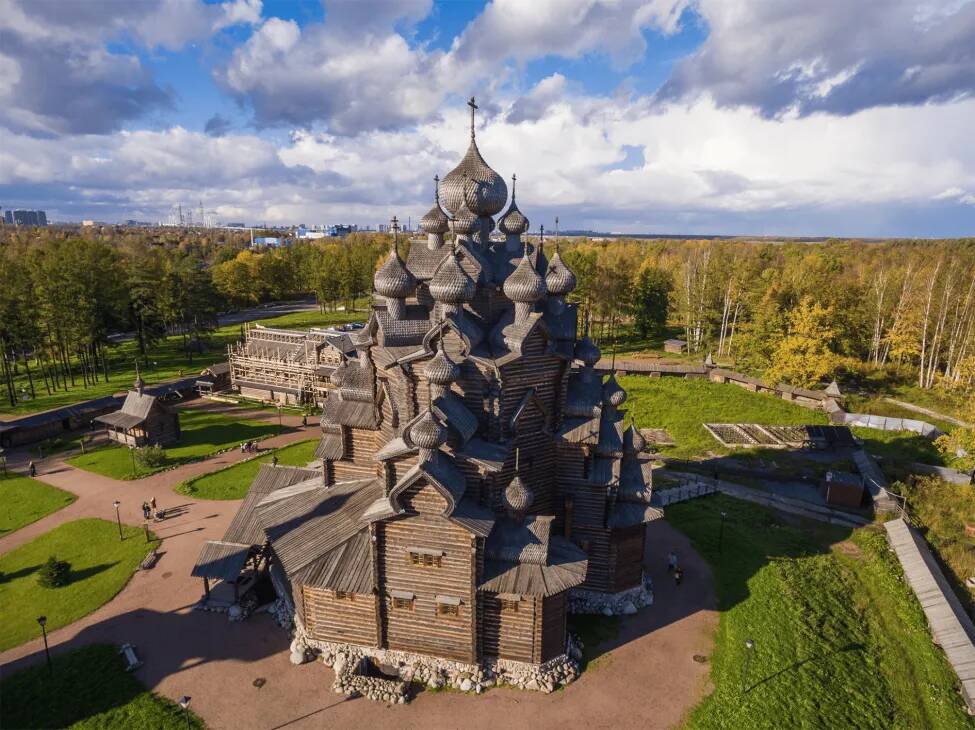
Located on Kizhi Island in Karelia, this UNESCO site includes the 18th-century Church of the Transfiguration and the Church of the Intercession, along with a 19th-century bell tower and surrounding fence.

According to legend, the Church of the Transfiguration was built by a master carpenter named Nestor — though it’s uncertain whether he truly existed. It’s said he built the entire church using only an axe, without a single nail, and afterward threw his tool into the lake. The ensemble was inscribed on the UNESCO World Heritage List in 1990, though restoration work had begun earlier. The project was completed in 2020.

The Church of the Transfiguration is crowned with 22 domes.

Value: A group of buildings constructed in the tradition of Russian wooden architecture — without the use of nails. 

Year and criteria for inclusion on the UNESCO World Heritage List: 1990; I, IV, V.

Kremlin and Red Square in Moscow

The Moscow Kremlin and Red Square were inscribed on the UNESCO World Heritage List in 1990. This historic fortress complex, with its cathedrals, towers, and palaces, reflects the evolution of Russian architecture from the medieval period to the classical era.

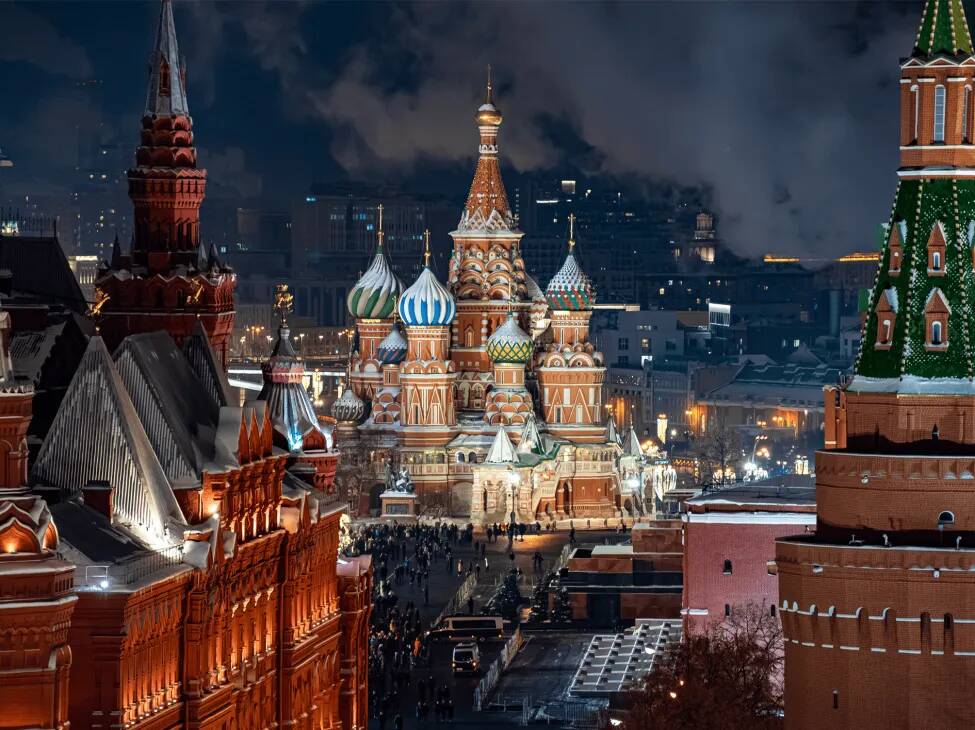
The main landmark of Red Square is St. Basil’s Cathedral, whose colorful onion domes with their intricate patterns are recognized far beyond Russia’s borders. It is believed that the cathedral was built in just six years, from 1555 to 1561, to commemorate the annexation of the Kazan Khanate to the Russian state.

The multicolored domes of St. Basil’s Cathedral are among the most recognizable symbols of Russia

Value: The political and cultural heart of Russia, built between the 14th and 17th centuries.

Year and criteria for inclusion on the UNESCO World Heritage List: 1990; I, II, IV, VI.

White Monuments of Vladimir and Suzdal

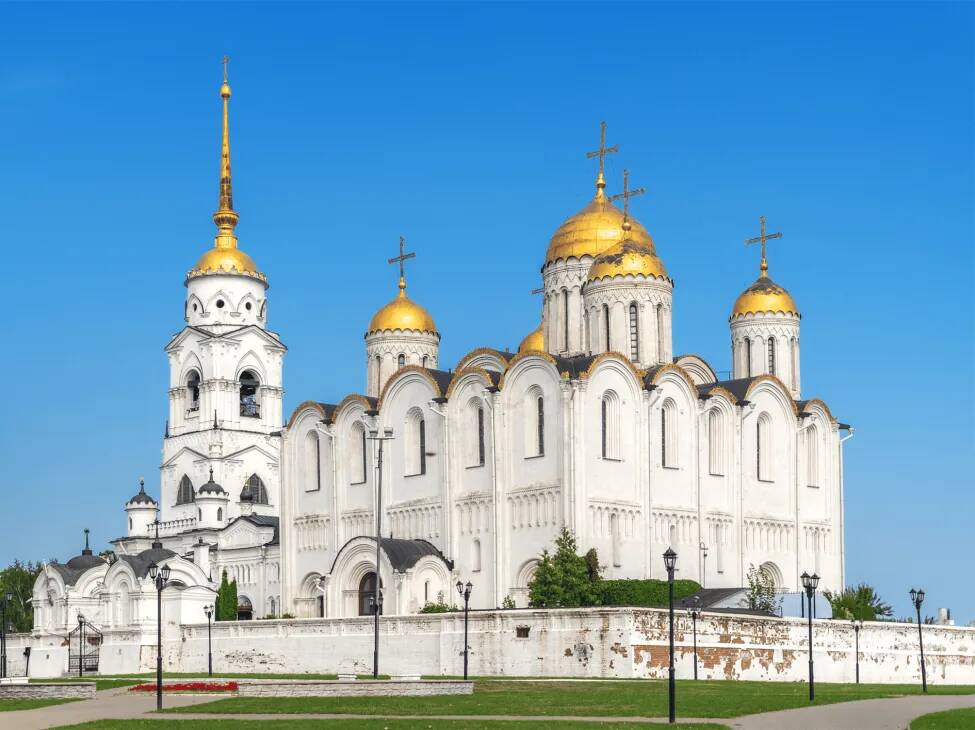
This group of eight magnificent architectural monuments from the 12th and 13th centuries is located in Vladimir, Suzdal, and the village of Kideksha. Among them, the Dormition Cathedral, built in 1158, holds a special place. Its historical and cultural significance is immense: inside are fragments of frescoes created in 1408 by the renowned icon painters Andrei Rublev and Daniil Cherny—masterpieces that form an integral part of the world’s cultural heritage.

Other notable monuments include the Cathedral of St. Demetrius (1194–1197), famous for its intricate white stone carvings, and the Church of the Intercession on the Nerl (1165).

The Dormition Cathedral preserves original frescoes by Andrei Rublev

Value: Outstanding examples of ancient Russian architecture—a remarkable synthesis of religious construction and monumental art.

Year and criteria for inclusion on the UNESCO World Heritage List: 1992; I, II, IV.

Cultural and Historic Ensemble of the Solovetsky Islands

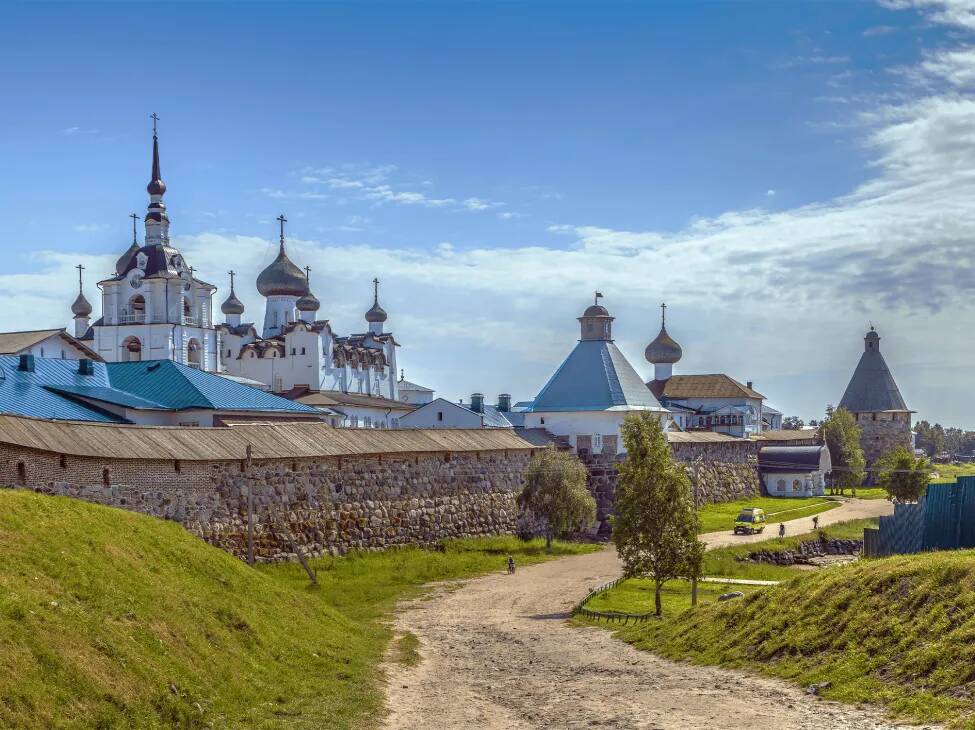
Archaeological evidence suggests that the Solovetsky Islands were first inhabited as early as the 5th–6th millennia BC. In the 15th century, the Solovetsky Saviour Transfiguration Monastery was founded on the largest island, Bolshoi Solovetsky.

The complex features numerous churches, small chapels, monastic hermitages, and memorial crosses. Of particular note is the network of canals built by monks between the 15th and 20th centuries.

In the 20th century, the Solovetsky Islands became the site of tragic events: in 1923, a forced labor camp was established there. Fourteen years later, in 1937, it was replaced by the Solovetsky Special Purpose Prison, which operated until 1939.

The Solovetsky Transfiguration Monastery remains the archipelago’s most iconic landmark

Value: A unique architectural ensemble notable for its completeness and integrity.

Year and criteria for inclusion in the UNESCO World Heritage List: 1992; IV.

Historic Monuments of Novgorod and Surroundings

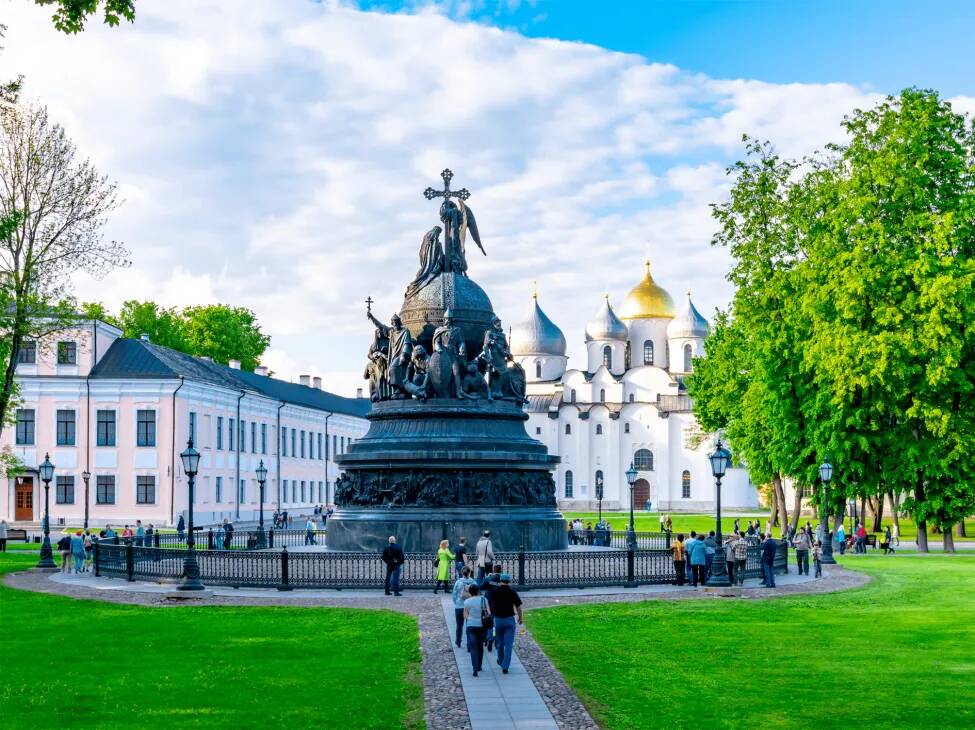
At the heart of Veliky Novgorod stands the impregnable Novgorod Kremlin — the city’s main historical fortress. The UNESCO-listed site also encompasses monasteries, Orthodox churches, and Yaroslav's Court.

One of the city’s highlights is the Church of the Transfiguration of the Savior on Ilyina Street, built in 1374 and adorned with frescoes by the renowned master Theophanes the Greek, the teacher of Andrei Rublev. The cultural layer of the medieval city is itself a treasure, preserving unique artifacts such as birch bark manuscripts dating from the 11th–15th centuries.

The Millennium of Russia monument depicts the nation’s history from the 9th to the 19th centuries

Value: Outstanding examples of Russian stone architecture from the 11th–19th centuries and remarkable works of art reflecting one of the country’s oldest artistic traditions.

Year and criteria for inclusion on the UNESCO World Heritage List: 1992; II, IV, VI.

Architectural Ensemble of the Trinity Sergius Lavra

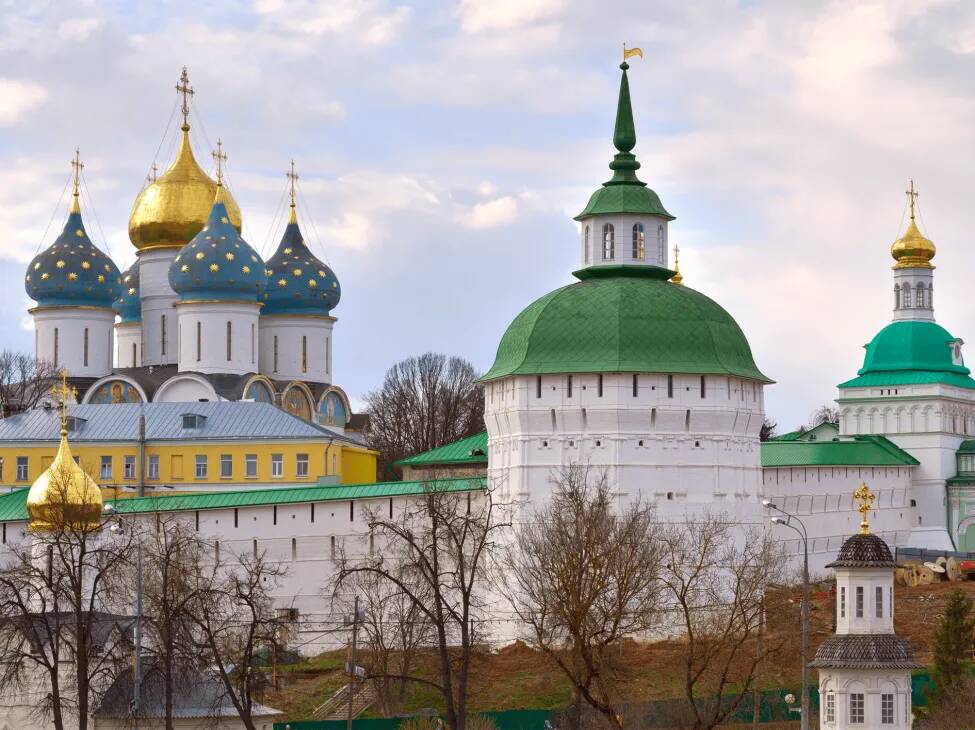
The Trinity Lavra of St. Sergius comprises more than fifty buildings. At its heart stands the Trinity Cathedral, built in 1422–1423 over the grave of its founder, Sergius of Radonezh. The cathedral’s frescoes, painted between 1425 and 1427 by Andrei Rublev and Daniil Cherny, are among the greatest achievements of medieval Russian art. The Lavra also preserves a remarkable collection of ancient Russian paintings and decorative artworks created between the 14th and 17th centuries.

The Ensemble of the Trinity Sergius Lavra took shape between the 15th and 18th centuries

Value: An active Orthodox monastery founded in 1337, featuring architectural monuments from the 14th to 19th centuries.

Year and criteria for inclusion on the UNESCO World Heritage List: 1993; II, IV.

Church of the Ascension, Kolomenskoye

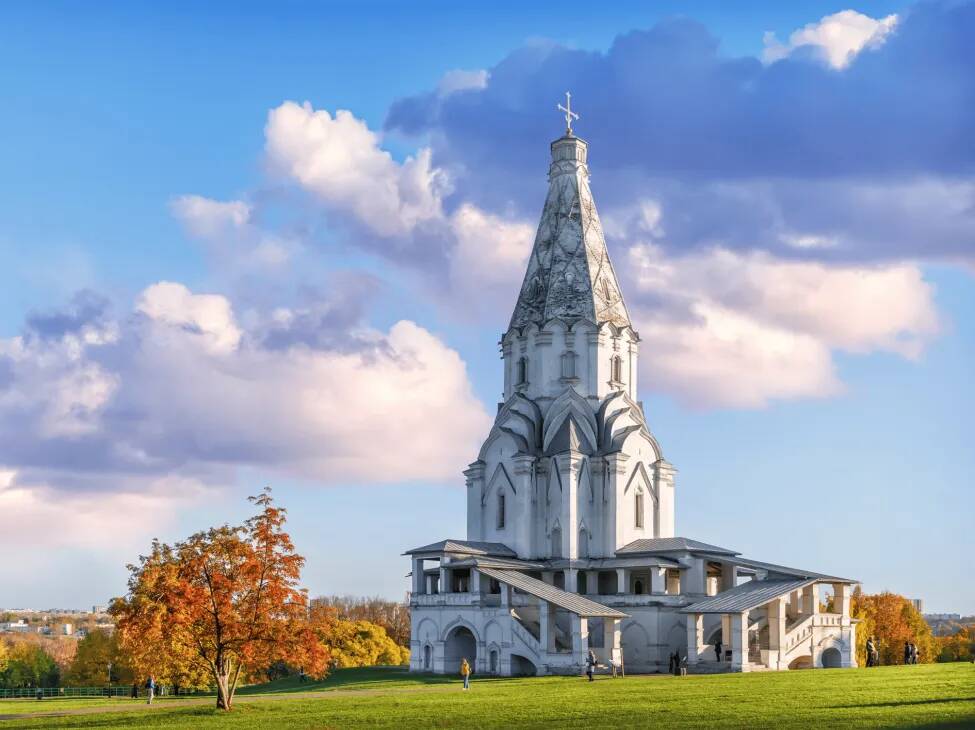
The church was built between 1528 and 1532, reportedly by order of Vasily III in Kolomenskoye, near Moscow. According to legend, he commissioned it to thank God for the birth of his long-awaited heir, the future Ivan the Terrible. This is one of the first stone tented-roof churches in Russia — a style previously reserved for wooden structures. Its construction marked a major milestone in Russian architecture, representing a transition to new forms. It is believed that the Italian architect Petrok Maly may have contributed to its design.

The Church of the Ascension is one of the first stone tented-roof churches in Russia

Value: A masterpiece and one of the earliest examples of tented-roof stone architecture.

Year and criteria for inclusion on the UNESCO World Heritage List: 1994; II.

Ensemble of the Ferapontov Monastery

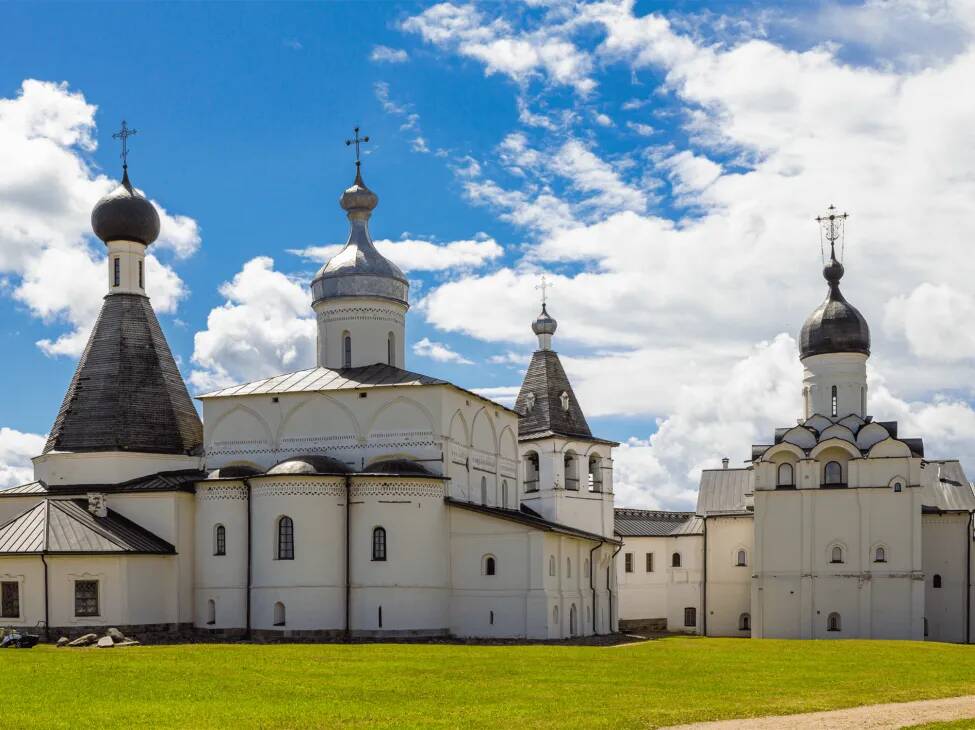
Located in the Vologda Region, the Ferapontov Monastery is a remarkable example of medieval Russian architecture. The complex includes the Church of the Annunciation with its refectory (1530–1534), the St. Martinian Church (1640), and the Cathedral of the Nativity of the Blessed Virgin Mary (1490). The latter is particularly significant: its monumental design reflects the traditions of the Pskov school of architecture, and its interior is decorated with unique frescoes by the 15th-century icon painter Dionisius.

Today, the Ferapontov Monastery houses the Museum of Dionisius’s Frescoes

Value: An exceptionally well-preserved Orthodox monastic complex dating from the 15th–17th centuries.

Year and criteria for inclusion on the UNESCO World Heritage List: 2000; I, IV.

Historic and Architectural Complex of the Kazan Kremlin

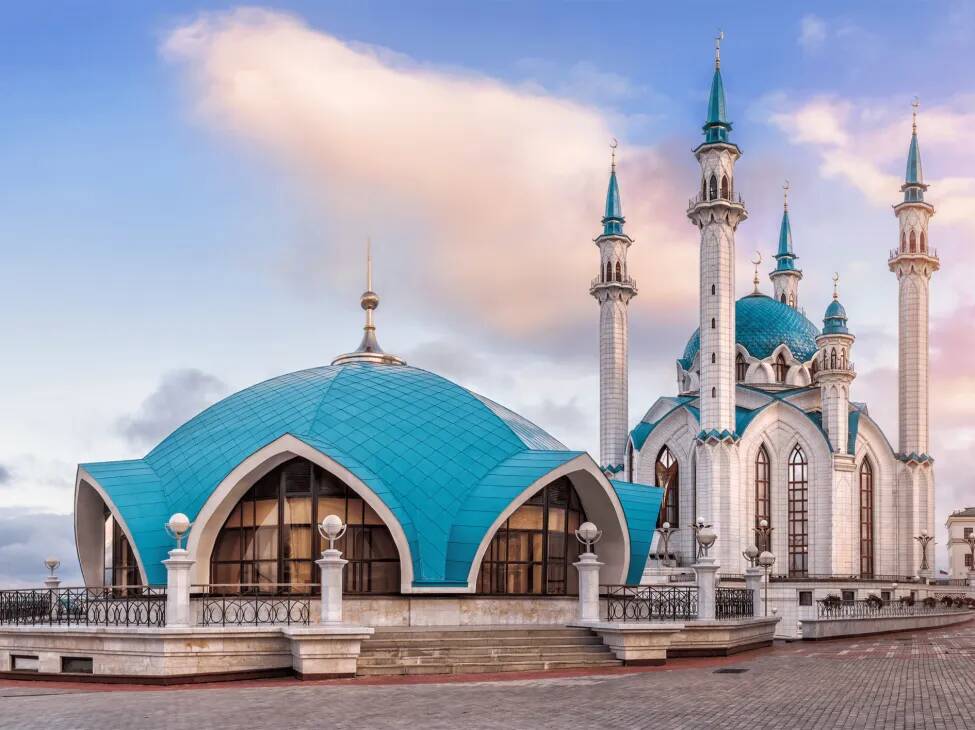
The Kazan Kremlin has retained the layout of the ancient Tatar fortress and features architectural monuments dating from the 16th to the 19th centuries. Within its walls, Orthodox and Muslim landmarks stand side by side with secular monuments — the Kul Sharif Mosque, the Annunciation Cathedral, the “leaning” Suyumbike Tower, and the Presidential Palace.

Today, the Kremlin grounds host several museums, where visitors can learn not only about the fortress itself but also about the history of the Tatar people and the natural heritage of the republic.

The ensemble of the Kazan Kremlin reflects the influence of diverse cultures

Value: A unique synthesis of Tatar and Russian architectural traditions.

Year and criteria for inclusion on the UNESCO World Heritage List: 2000; II, III, IV.

Curonian Spit

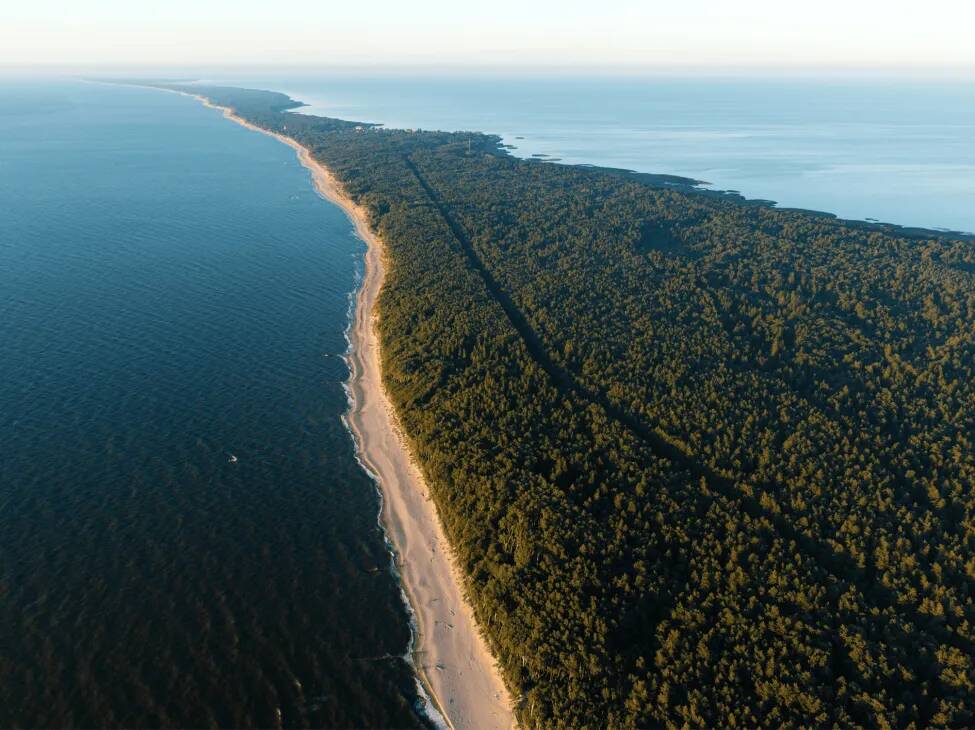
The Curonian Spit is a narrow, elongated strip of land separating the Baltic Sea from the Curonian Lagoon. For several centuries, starting in the late Middle Ages, the area was cleared for timber and used for grazing. Over time, the vegetation and thin soil layer eroded, allowing sand to drift inland and bury forests, roads, and entire villages.

By the 19th century, the shifting sands had become a serious threat, and a decision was made to save the spit. An artificial foredune was constructed along the coast to stop the sand from spreading further, and several species of pine trees were planted to stabilize the soil.

The site is recognized as a cultural — rather than natural — heritage site, as the spit survives only thanks to sustained human effort. The Curonian Spit is shared between Lithuania and Russia, with the nearest cities being Klaipėda and Zelenogradsk.

The Curonian Spit stretches for 98 kilometers

Value: One of the world’s longest sand spits — nearly 100 kilometers long and 0.4 to 4 kilometers wide — maintained through continuous human effort.

Year and criteria for inclusion on the UNESCO World Heritage List: 2000; V.

Citadel, Ancient City, and Fortress Buildings of Derbent

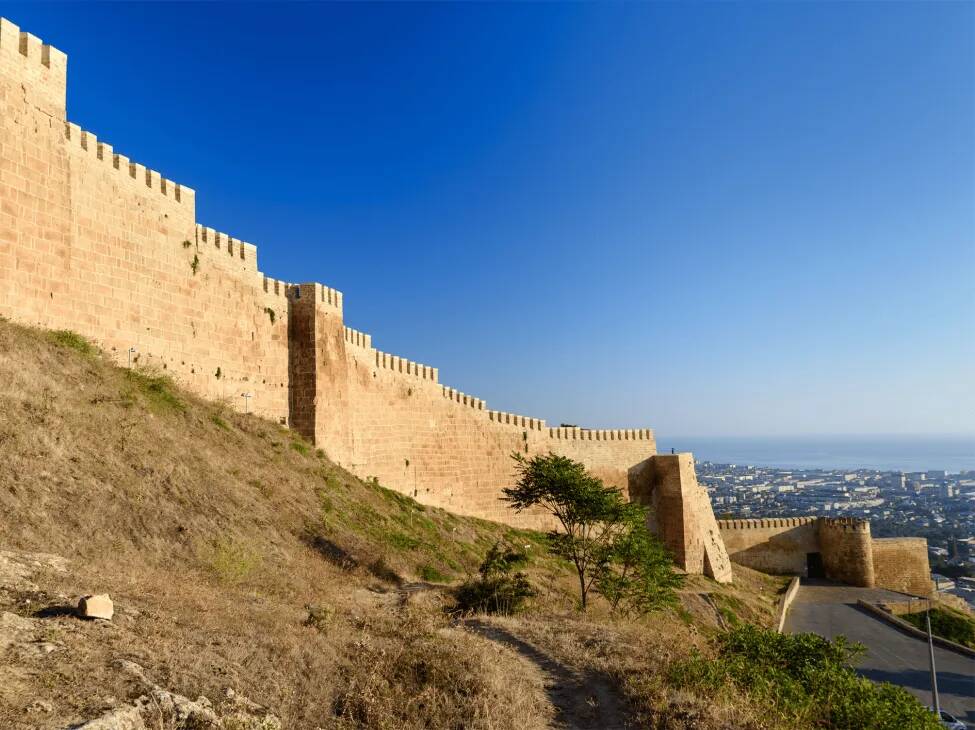
This site includes the Naryn-Kala Citadel and medieval neighborhoods along the western shore of the Caspian Sea in Dagestan. Today, you can still wander through mahals — networks of narrow streets that evoke the atmosphere of the Middle Ages — lined with mosques, fountains, and traditional two-story houses. The stone fortress walls that once protected the city are remarkably well preserved. Their thickness ranges from 2.5 to 4 meters, and their average height is about 10–12 meters.

You can explore ancient monuments, discover local traditions, and sample national cuisine on our journeys through Dagestan.

Derbent is considered the oldest city in Russia

Value: One of the oldest continuously inhabited settlements in the world (6th century BC).

Year and criteria for inclusion on the UNESCO World Heritage List: 2003; III, IV.

Ensemble of the Novodevichy Convent

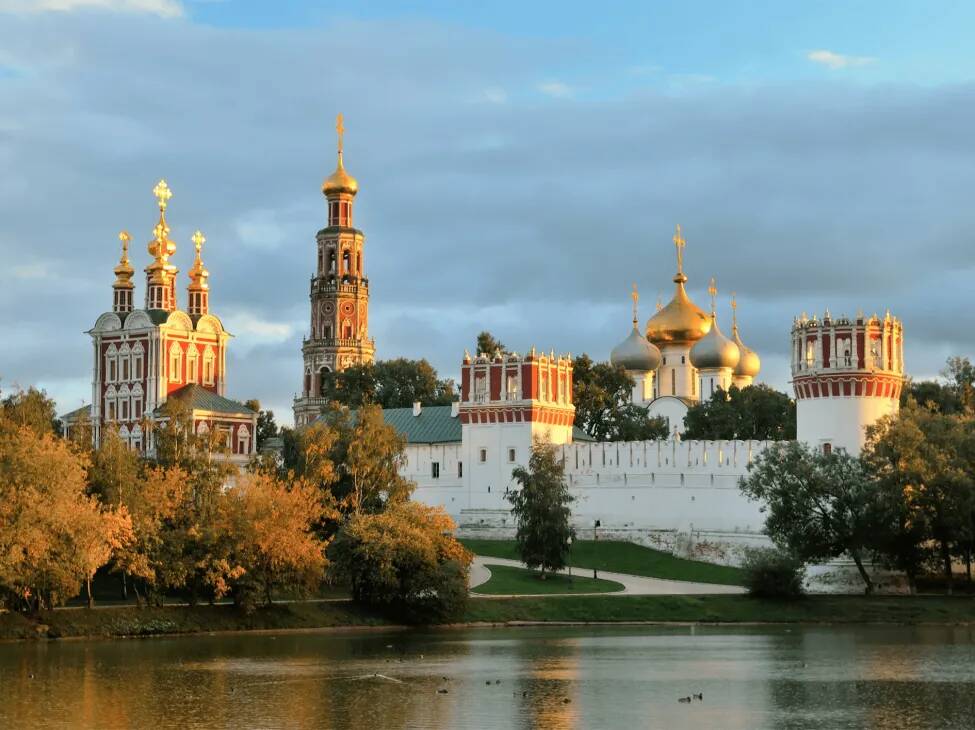
Built in the 16th and 17th centuries as part of Moscow’s extensive defensive system, the Novodevichy Convent held a special place in the life of the Russian state, being closely tied not only to religion but also to politics. The convent preserves remarkable collections of artworks — from ancient icons and frescoes to exquisite pieces of decorative and applied art.

At the heart of the complex stands the five-domed Smolensk Cathedral, decorated with frescoes dating from the 16th and 17th centuries.

Originally, the walls and towers of the Novodevichy Convent were made of wood

Value: Moscow’s oldest convent and a masterpiece of Moscow Baroque architecture.

Year and criteria for inclusion on the UNESCO World Heritage List: 2004; I, IV, VI.

Struve Geodetic Arc

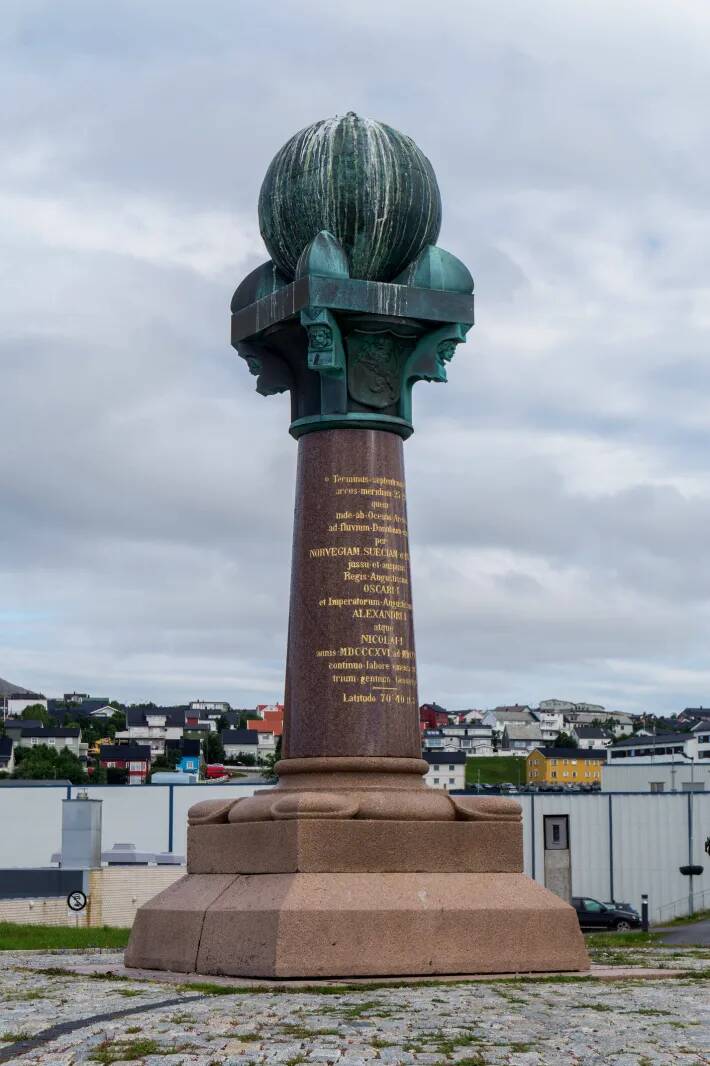
The Struve Geodetic Arc is one of the most remarkable scientific projects of the 19th century — a unique chain of survey triangulations stretching 2,820 kilometers across ten countries, from the rugged shores of the Norwegian Sea to the warm waters of the Black Sea.

The arc originally consisted of 265 geodetic observation points — stone markers topped by wooden towers. Only 34 of the best-preserved sites have been inscribed on the UNESCO World Heritage List. In Russia, two of them are located on Gogland Island.

At these points, scientists carried out measurements to determine the shape and size of the Earth. Thanks to their work, it became possible — for the first time — to accurately measure a large section of a meridian and refine the planet’s parameters.

The Struve Arc stretches for 2,820 kilometers

Value: The surviving geodetic points represent a pioneering scientific achievement — the first accurate measurement of the Earth’s size and shape, which also enabled the creation of precise maps.

Year and criteria for inclusion on the UNESCO World Heritage List: 2005; II, IV, VI.

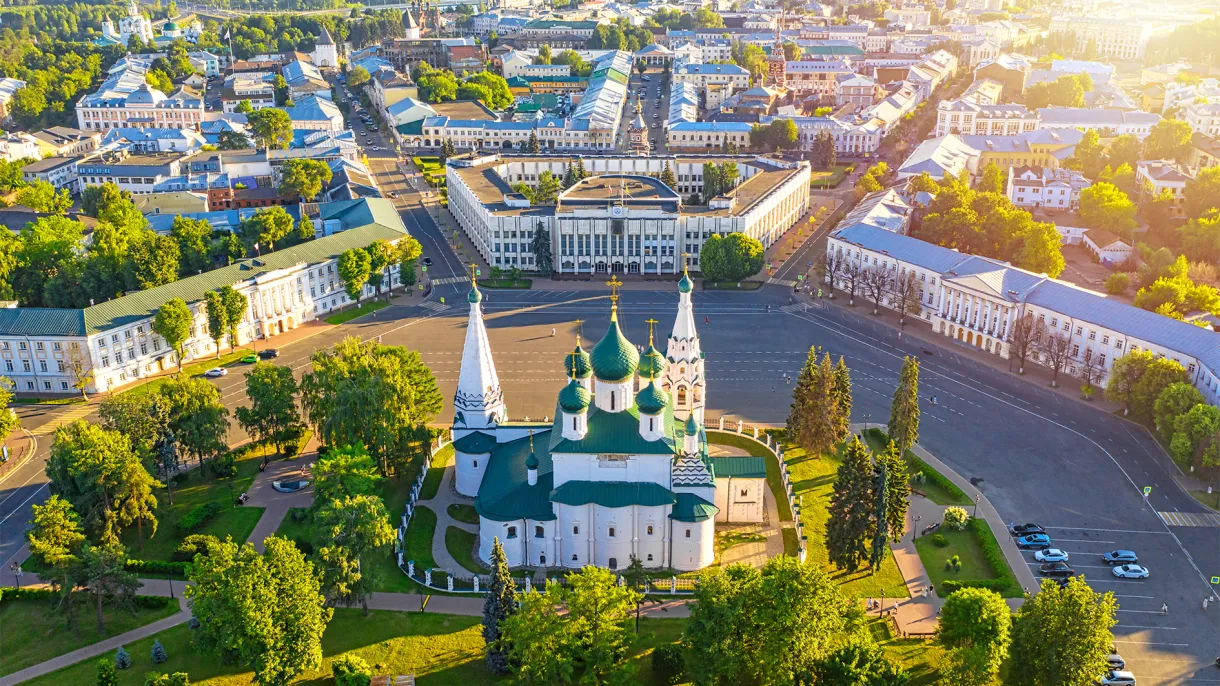
Historical Centre of the City of Yaroslavl

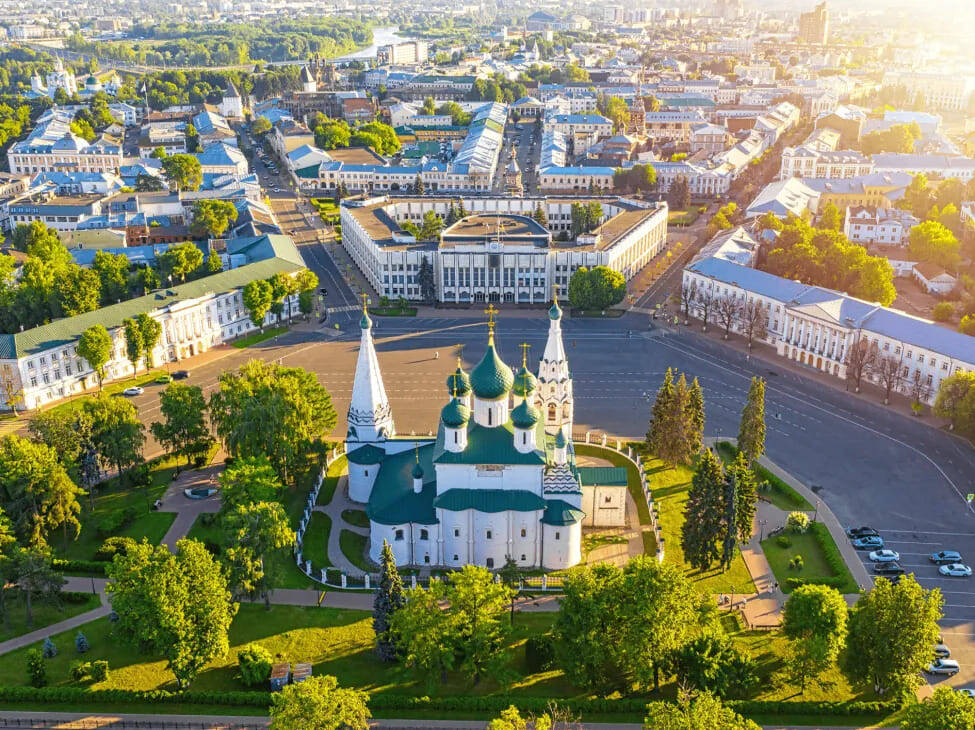
Yaroslavl is home to 140 architectural monuments from different eras. Ancient churches blend harmoniously with classical buildings from later periods, allowing you to trace the evolution of Russian architecture from the 16th to the 18th centuries. Many churches and monasteries have preserved valuable frescoes and iconostases.

Yaroslavl features 140 architectural monuments representing different historical periods

Value: A unique combination of 17th-century churches, a distinctive radial urban plan, and civil architecture.

Year and criteria for inclusion on the UNESCO World Heritage List: 2005; II, IV.

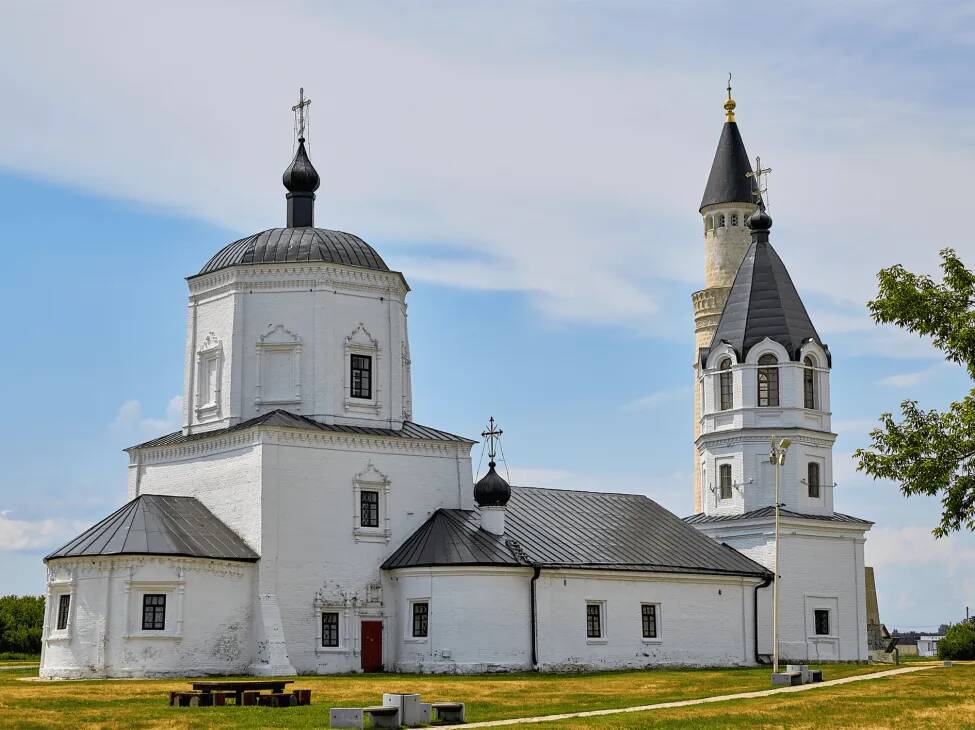
Bolgar Historical and Archaeological Complex

Located in southwestern Tatarstan, this ancient settlement traces its origins to the 7th–8th centuries, when the Bulgars—a Turkic people—migrated to the region. Their culture blended with the local Finno-Ugric culture, resulting in the emergence of a distinctive state—Volga Bulgaria. The city of Bolgar became its capital, and by the early 10th century, it had grown into an important administrative center and a hub of busy trade routes.

The capital of Volga Bulgaria stood on the banks of the Volga River

Value: A site preserving the historical memory of medieval Volga Bulgaria and illustrating the cultural and historical connections among the peoples of Eurasia.

Year and criteria for inclusion on the UNESCO World Heritage List: 2014; II, VI.

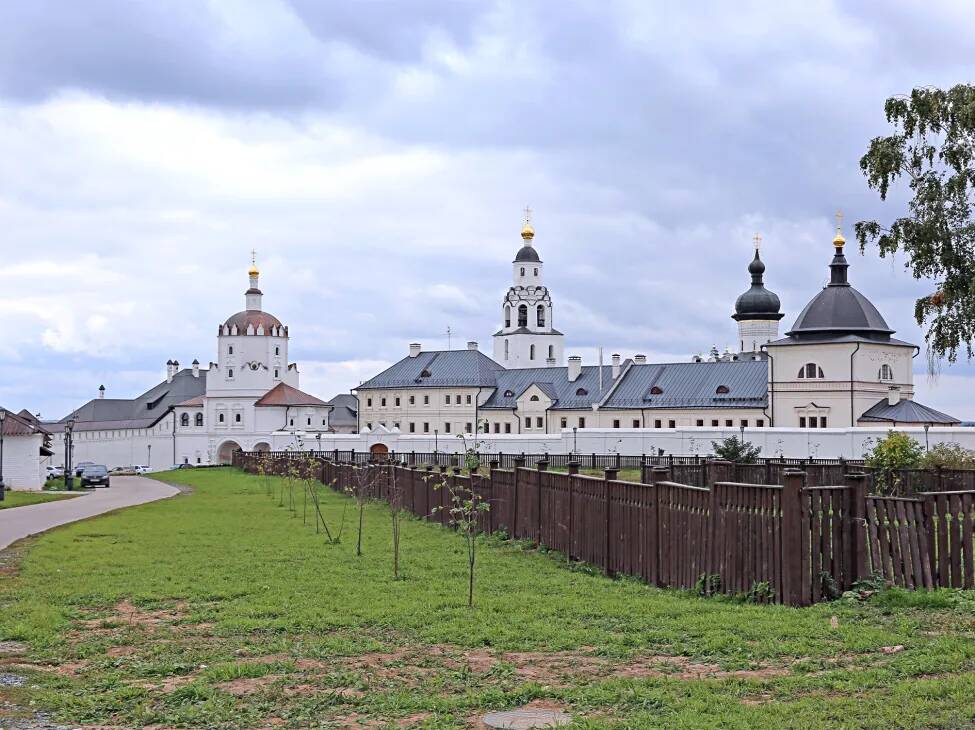
Assumption Cathedral and Monastery of the Town-Island of Sviyazhsk

The fortress was built in 1551 on an island at the confluence of the Volga and Sviyaga rivers as an outpost for the conquest of the Kazan Khanate. The Assumption Cathedral and Monastery were later established here as both a missionary and administrative center.

The cathedral’s interior preserves frescoes and icons from the 16th and 17th centuries. Its appearance changed slightly in the 18th century, when it underwent a Baroque-style reconstruction.

The Assumption Cathedral served as an important missionary center

Value: A historical and architectural monument that bears witness to the dramatic geopolitical transformations of the 16th century in Eurasia.

Year and criteria for inclusion on the UNESCO World Heritage List: 2017; II, IV.

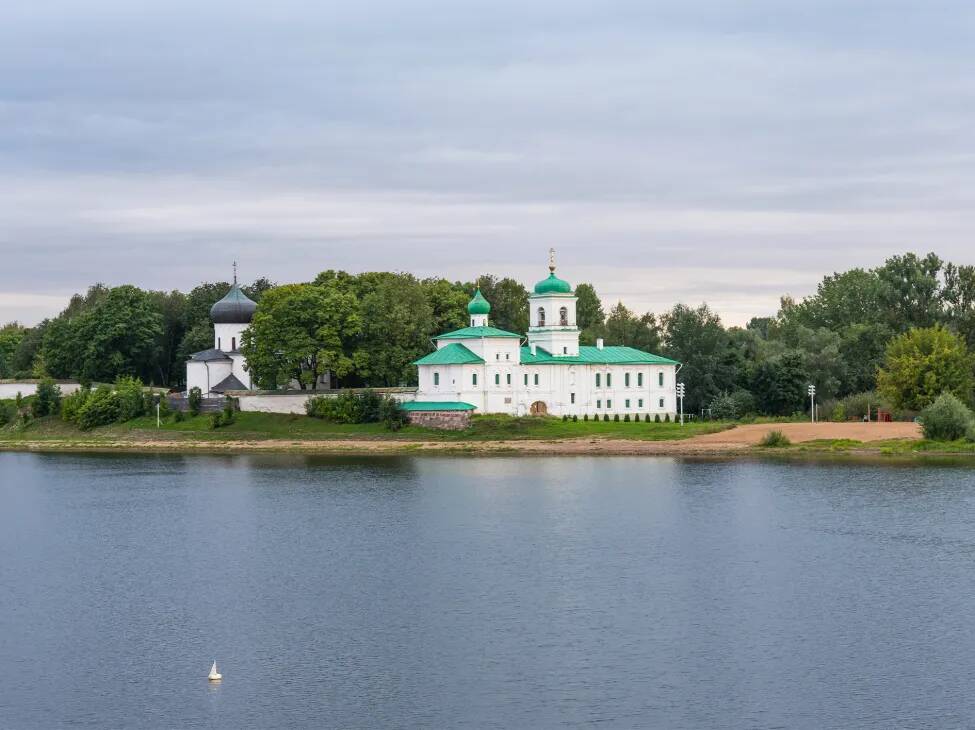
Churches of the Pskov School of Architecture

Ten churches in Pskov were built between the 12th and early 17th centuries. It is believed that the local architectural school was influenced by Byzantine traditions, reflected in the churches’ restrained forms and distinctive decorative elements. The Cathedral of the Transfiguration of the Savior, built in the 12th century, is particularly noteworthy. Its interior still preserves remarkable murals created by unknown Greek masters.

Mirozhsky Monastery is believed to have been founded in the mid-12th century

Value: Monuments representing one of the most influential schools of ancient Russian architecture.

Year and criteria for inclusion on the UNESCO World Heritage List: 2019; II.

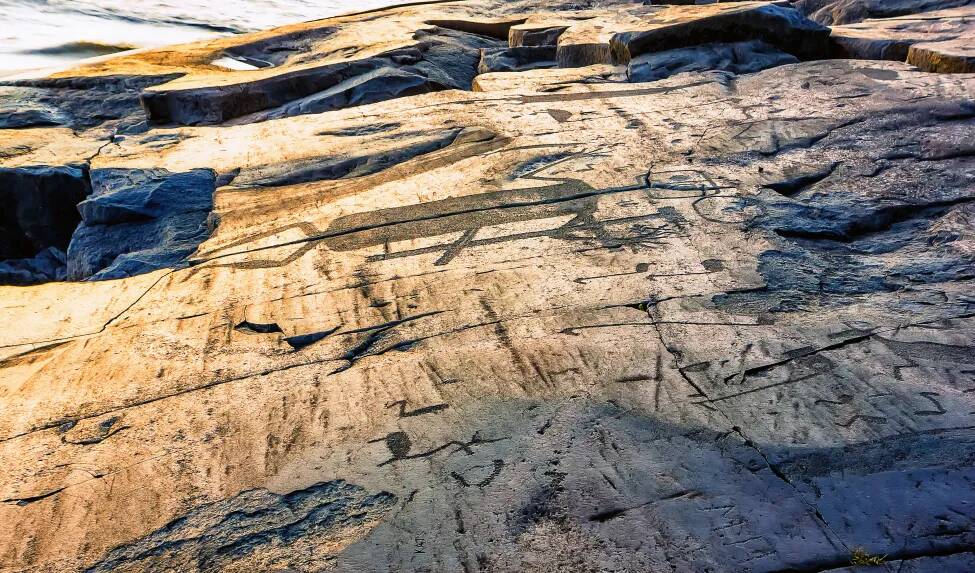
Petroglyphs of Lake Onega and the White Sea

Petroglyphs are ancient images carved into rock. In Karelia, on the shores of Lake Onega and near the White Sea, there are more than 4,600 such carvings, dating back approximately six to seven thousand years.

The artists of Lake Onega depicted animals and geometric figures, possibly linked to the worship of the Sun and Moon. About 300 kilometers away, along the White Sea coast, the carvings more often show scenes of sea voyages and hunting, as well as animal and human footprints.

The site includes over 4,600 petroglyphs

Value: Over 4,600 Neolithic rock carvings — one of the largest and most significant collections in the world in terms of both number and area.

Year and criteria for inclusion on the UNESCO World Heritage List: 2021; III.

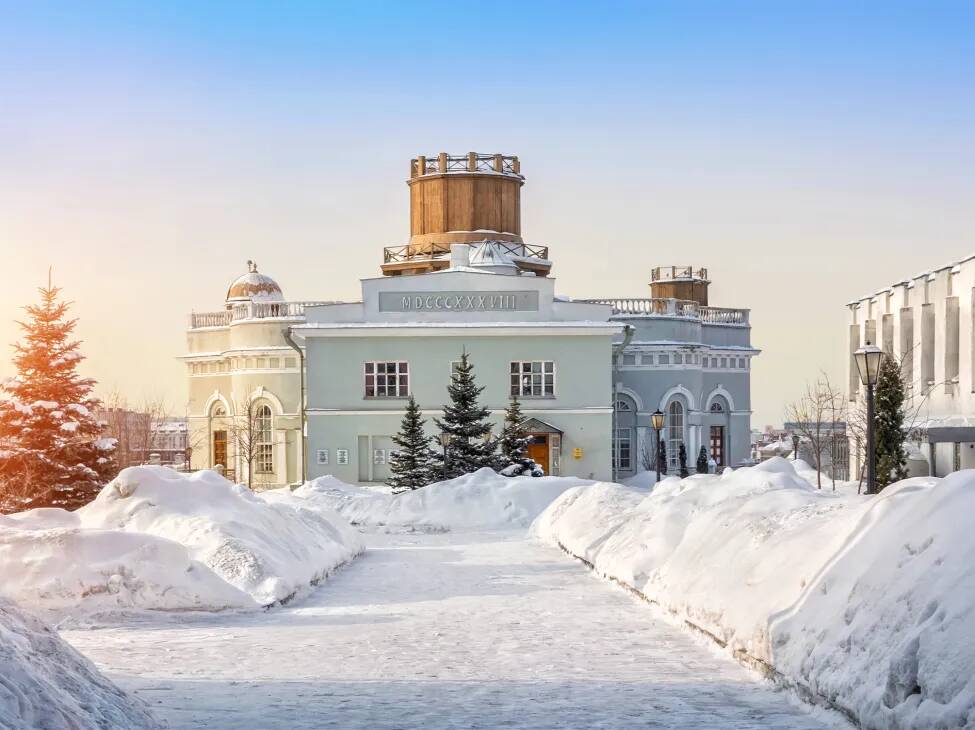
Astronomical Observatories of Kazan Federal University

The complex consists of two parts: one located in Kazan and the other outside the city. The Kazan Observatory, built in 1837 on the university campus, was designed by architect Mikhail Korinfsky in the Russian Classical style. Its distinctive semicircular façade and domed towers house specialized astronomical instruments. Optical observations ceased here after World War II due to light pollution in the city center. Today, the observatory continues to train future astronomers.

The suburban observatory includes not only facilities for celestial observation but also residential buildings. Together, these structures represent fine examples of Classical and Neoclassical architecture.

The Kazan observatories were inscribed on the UNESCO World Heritage List in 2023

Value: An outstanding example of technological achievement and a unique fusion of scientific and cultural heritage.

Year and criteria for inclusion on the UNESCO World Heritage List: 2023; II, IV.

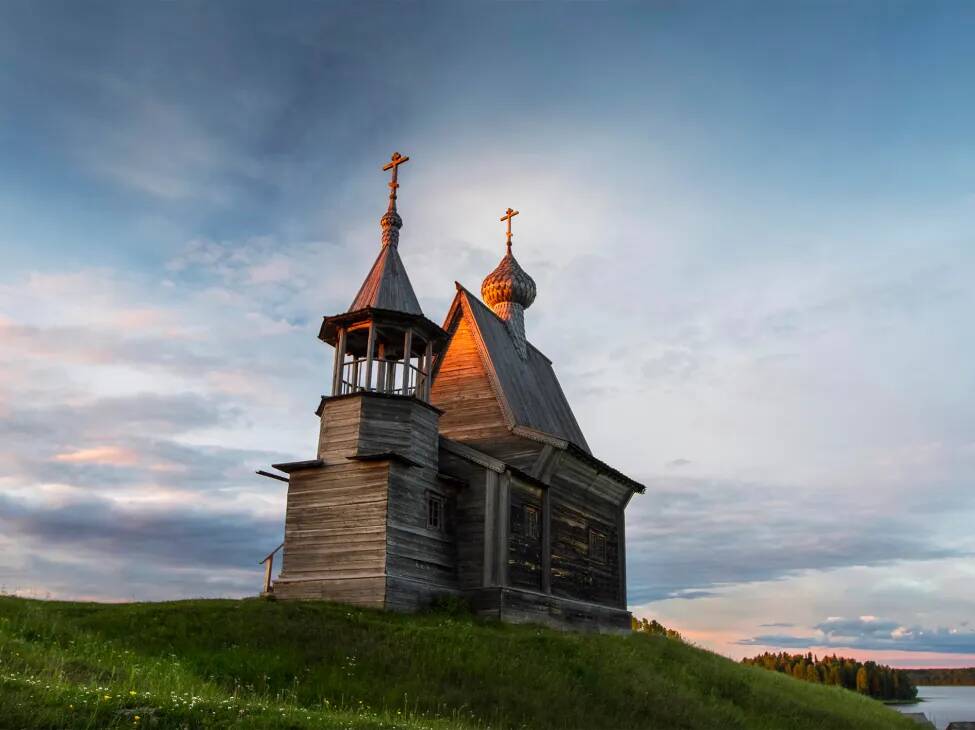
Cultural Landscape of Kenozero Lake

The site is located in the Kenozero National Park in the Arkhangelsk Region, where villages, wooden churches with painted ceilings, and surrounding farmland have been preserved. The Kenozero cultural landscape has been developing since the 12th century, and the national park continues to support traditional lifestyles, trades, and crafts.

Value: An example of a relict cultural landscape in Russia featuring traditional wooden architecture.

Year and criteria for inclusion on the UNESCO World Heritage List: 2024; III.

The park is home to more than 30 chapels and other historic buildings

Explore our collection of travel itineraries across Russia, including routes that feature UNESCO World Heritage sites. If you have any questions, call us at +7 (495) 104-64-36 or email us at hello@russiadiscovery.ru.  

Contributors
Oleg Chernov
Co-author
Anna Laznik
Literary Editor
Yuliya Kopyltsova
Executive Editor
Ezhena Bykova
Proofreader

Notice an error or inaccuracy?

Write to us

Great-Value Flights to the Russian Far East with Aeroflot

2.02.2026
6 minutes
41

Discover Russia: Inviting the World to Explore

7.09.2025
8 minutes
190

The Best Places to See the Northern Lights

6.09.2025
10 minutes
182

Wrangel Island: A Journey to the Edge of the World

4.09.2025
16 minutes
210

A Week in Karelia: Dog Trekking, Cycling, and Rafting

12.08.2025
7 minutes
85

Best Places to Visit in Kamchatka

16.07.2025
1 minute
97