


There are still places on the map that feel unreachable — even in the age of mass tourism. Wrangel Island is one of those rare, untouched corners of the Earth, where the Arctic reveals its true nature only to the most determined travelers. Here, among the drifting ice and northern fogs of the Arctic Ocean, time seems to have stopped in the Pleistocene era, preserving ancient landscapes, fragile ecosystems, and some of the rarest animals on the planet.
Wrangel Island: A Journey to the Edge of the World
How to get there, when to go, and why this unique place is worth seeing at least once in your lifetime
This article was created in collaboration with the Wrangel Island Nature Reserve
This article was created in collaboration with the Wrangel Island Nature Reserve

You won’t find hotels or seafood restaurants here. Instead — polar bears, the boundless tundra, raucous bird colonies, permafrost, and the deep, pure silence of the Arctic. Wrangel Island doesn’t cater to visitors; it sets its own rhythm and rules. And that’s where its power and magic lie.
In this article, we’ll explain how the reserve works, how to get there, and what you’ll need to bring along for the journey.
Quick Navigation
Where is Wrangel Island?
Wrangel Island lies deep in the Arctic Ocean, between the East Siberian and Chukchi Seas, about 140 kilometers off the coast of mainland Chukotka in Russia’s Far North.
The 7,600-square-kilometer Wrangel Island — about half the size of Moscow Region — together with nearby Herald Island and its surrounding 12-mile marine zone, makes up the Wrangel Island State Nature Reserve, a UNESCO World Natural Heritage Site. The island’s harsh tundra is dotted with hundreds of lakes and rivers, and above it all rises Gora Sovetskaya (Berry Peak) — a majestic peak reaching nearly a kilometer in height.
Stretching 125 kilometers from east to west, Wrangel Island is also home to one of the world’s geographical curiosities: the 180th meridian, the line dividing the Western and Eastern Hemispheres, runs right through it. This makes the island a place where geography itself seems to defy logic — the western part lies in the Eastern Hemisphere, while the eastern part belongs to the Western Hemisphere.
The International Date Line doesn’t follow the meridian here but runs farther east, through the Bering Strait, between Russia’s Ratmanov Island (Big Diomede) and America’s Kruzenshtern Island (Little Diomede) — also the boundary between Russia and the United States. The two islands are only four kilometers apart, which means that by looking from one to the other, you can quite literally gaze into yesterday or tomorrow, depending on which side of the border you stand.
History of Wrangel Island
The story of Wrangel Island’s discovery is filled with dramatic twists. In 1820, Russian explorer Ferdinand Wrangel, guided by accounts from the Chukchi people, theorized that there was land north of the Chukotka Peninsula — but he never managed to see it himself.
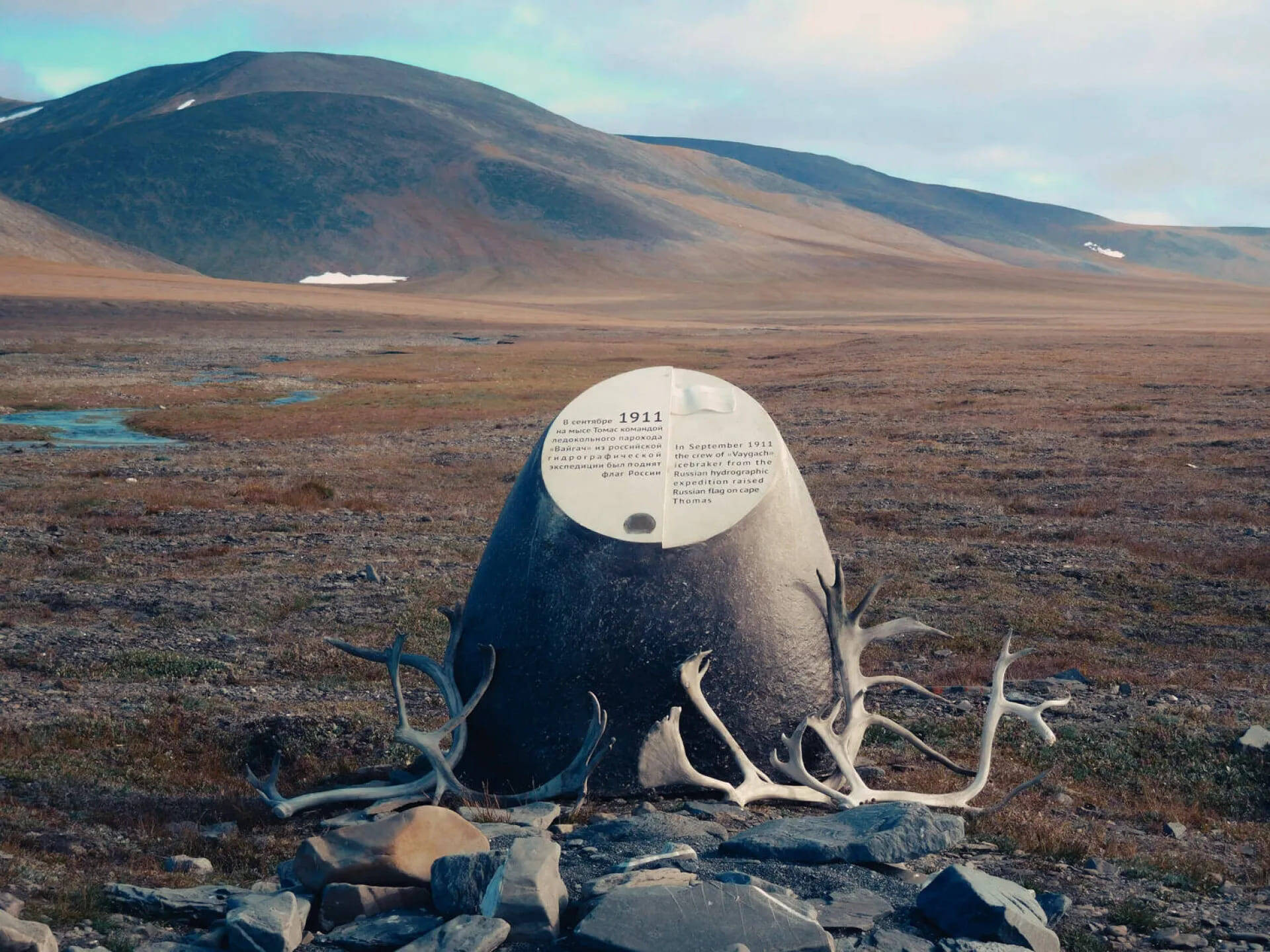
For decades, the island remained a mystery, known only as “The Doubtful Land.” It wasn’t until 1867 that American whaling captain Thomas Long sighted the island and named it in Wrangel’s honor. The first recorded landing took place in 1881, when an American expedition led by George De Long set foot on its shores.
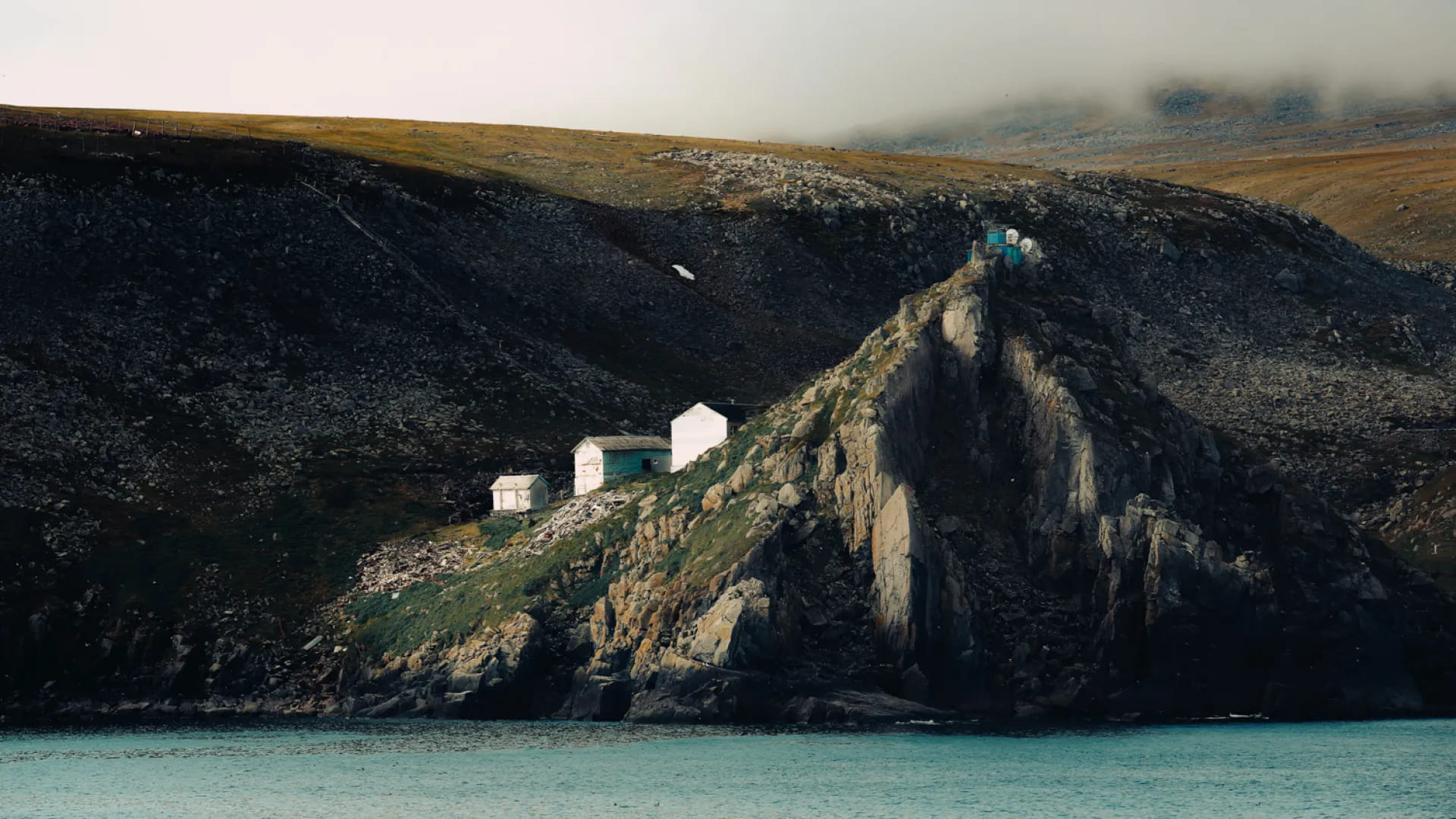
For many years, Wrangel Island had no permanent settlements due to its harsh living conditions
© Ulyana Babiy
Archaeological evidence suggests that humans first reached Wrangel Island about 3,400 years ago. Ancient Eskimo hunters came here in search of walruses and whales, but there were no permanent settlements until the 20th century.
A hundred years ago, Wrangel Island became the subject of territorial disputes between the USSR and the United States. In 1926, the Soviet Union formally established sovereignty over the island and founded the Ushakovskoye settlement. Up until the late 1990s, it was home to Chukchi, Eskimo, and polar station workers. Today, the island has no permanent residents — the site of the former village now serves as the main base of the Wrangel Island Nature Reserve and a meteorological station.
How to Get to Wrangel Island
Reaching Wrangel Island is an adventure in itself, requiring careful planning and significant resources. There are two main ways to get to the nature reserve — by sea or by helicopter.
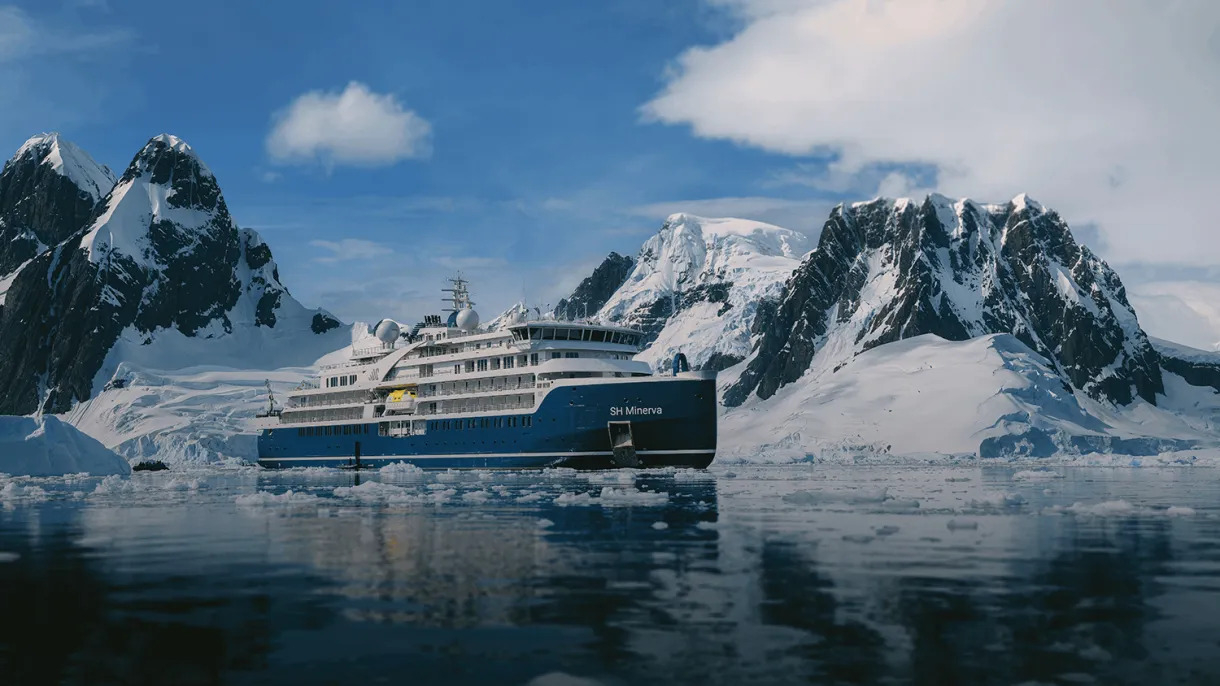
The sea route is the most popular. Expedition and cruise ships depart from Anadyr and sail along the Chukotka coast toward the island. The journey takes 10 to 14 days and typically includes stops at other regional highlights, such as the Beringia National Park.
Cruises to Wrangel Island are operated on mid-sized expedition vessels — agile enough to navigate narrow bays and remote coves. The ships vary in comfort level — from expedition-class to premium-class.
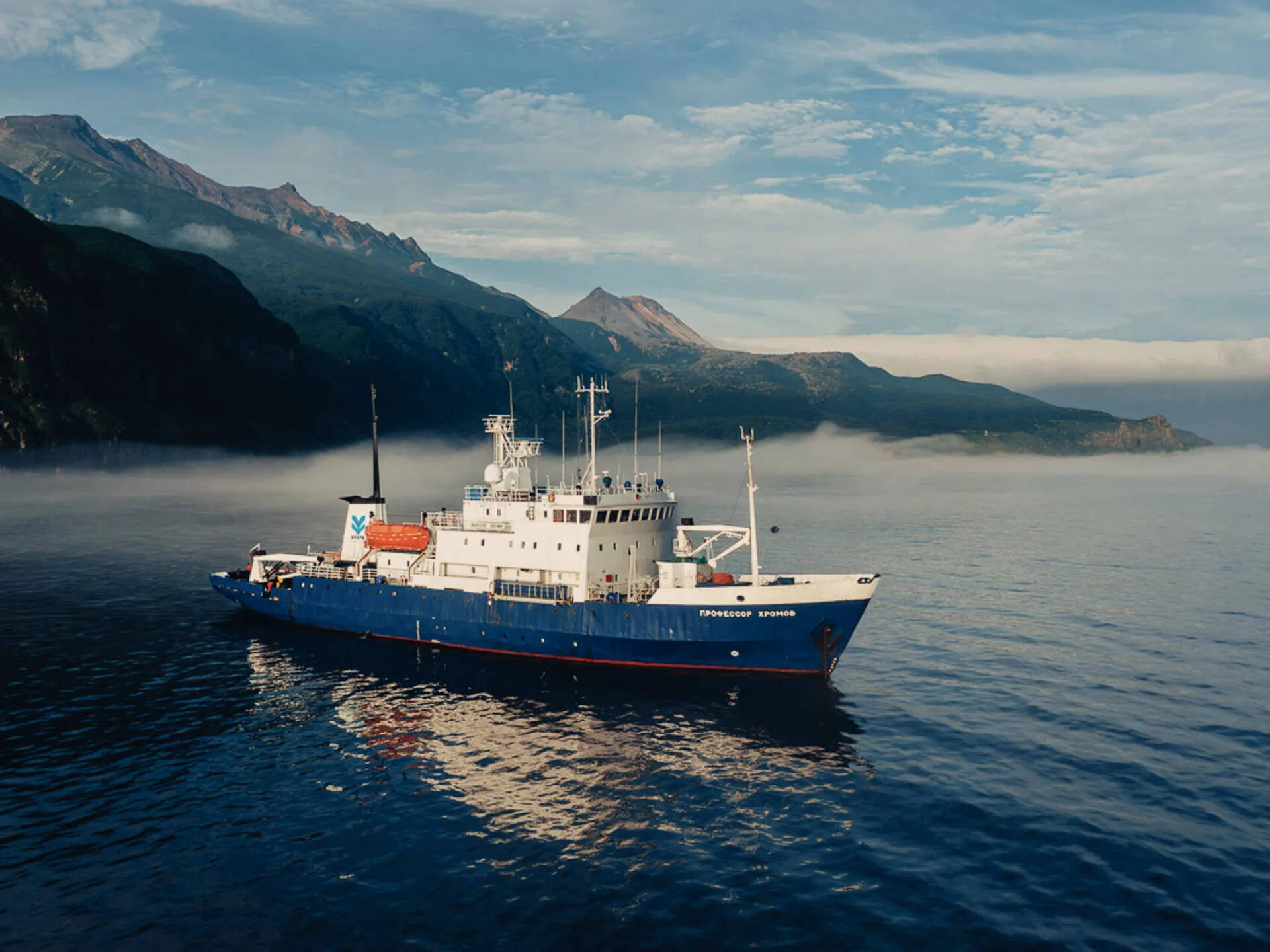
Access to the island is possible only by special vessels, most often expedition ships
© Slava Stepanov
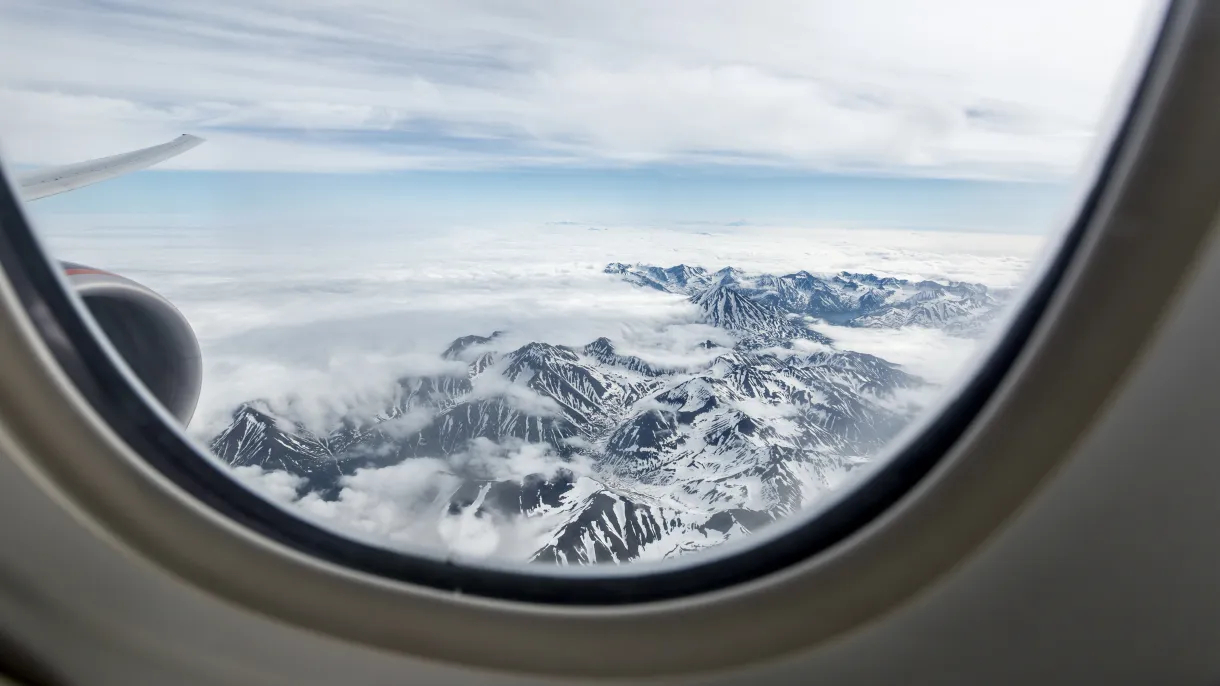
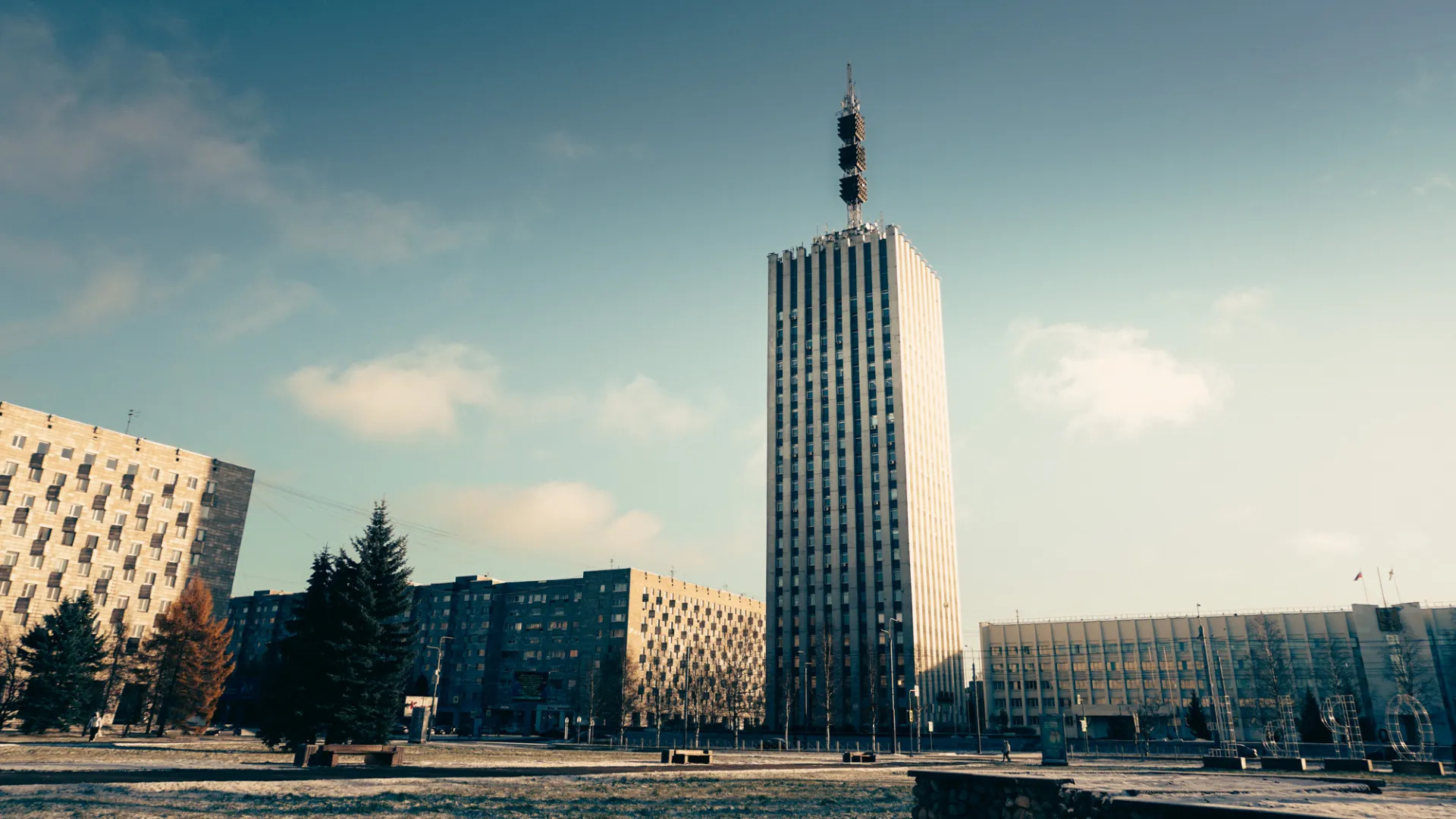
For those who prefer a faster option, the helicopter route is available. From Pevek (or Anadyr), travelers can reach the island in 2–3 hours by air. In either case, the journey begins in Anadyr, the administrative capital of Chukotka. Regular flights operate from Moscow to Anadyr, with a travel time of approximately eight hours.
When to Visit Wrangel Island
The tourist season on Wrangel Island is very short — it lasts only two months, August and September. This is due to the harsh Arctic climate and the need to protect the island’s unique wildlife during the breeding season.
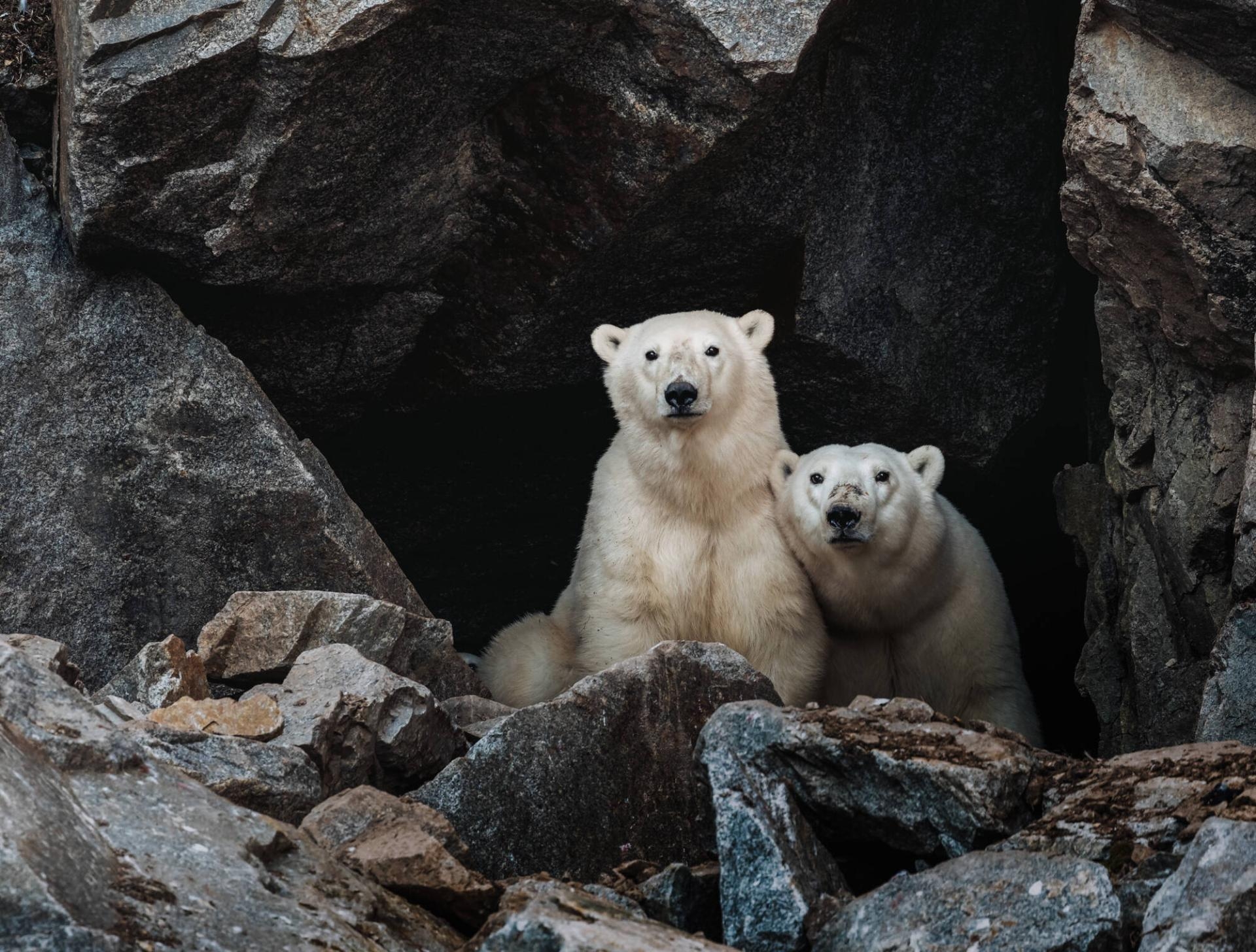
From October to May, Wrangel Island experiences a long, severe Arctic winter. Temperatures drop to –30°C (–22°F), and in the mountains can plunge as low as –50°C (–58°F). Strong winds sweep across the tundra, and the polar night envelops the island for months. Visiting the island during this period is nearly impossible due to extreme weather and heavy sea ice. It’s also the time when polar bear mothers give birth and nurse their cubs in dens — they must not be disturbed.
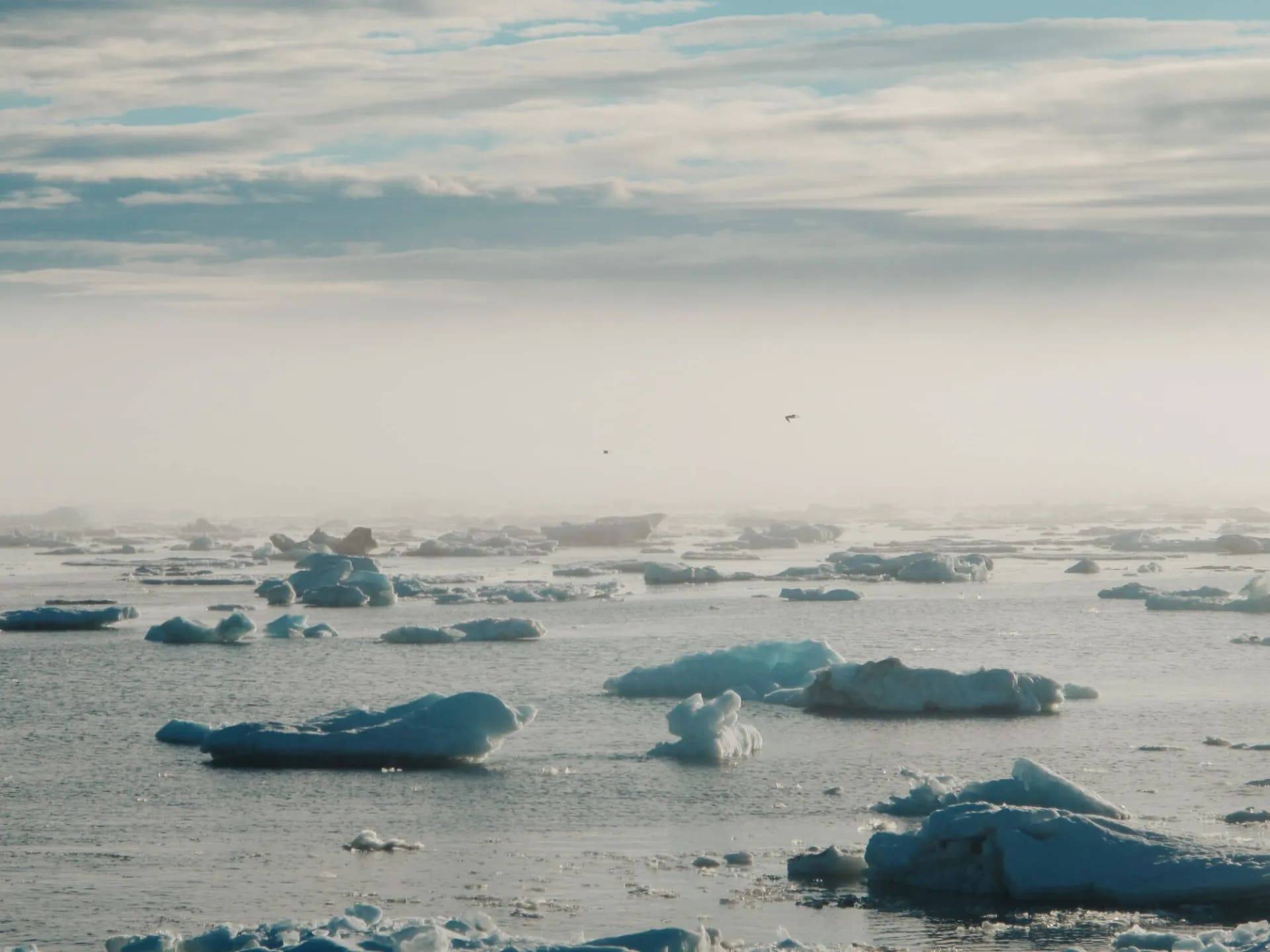
Sea ice and weather conditions are always unpredictable
© Ulyana Babiy
“Summer” in these latitudes is a relative term. It lasts only 2–3 weeks, roughly from late June to early August. The average temperature ranges between +2°C and +6°C (36°F–43°F), occasionally reaching +10°C (50°F). Snow never fully melts, yet the tundra comes alive with a bright carpet of Arctic wildflowers.
The best time to visit Wrangel Island is from August to mid-September. During this period, travel routes are fully open, ice conditions usually allow ships to approach the island, and animals are at their most active. However, even in these “warm” months, visitors should be prepared for sudden weather changes and freezing temperatures.
Where to Stay on Wrangel Island
Wrangel Island isn’t a place for standard comfort — tourist infrastructure is minimal and strictly regulated by the nature reserve protections. Visitors are accommodated in several guesthouses located at the ranger stations (cordons) of the reserve. These provide heated sleeping rooms, kitchen facilities for self-catering, and everything needed for basic comfort. Tourists must bring their own sleeping bags and all food supplies for their stay.
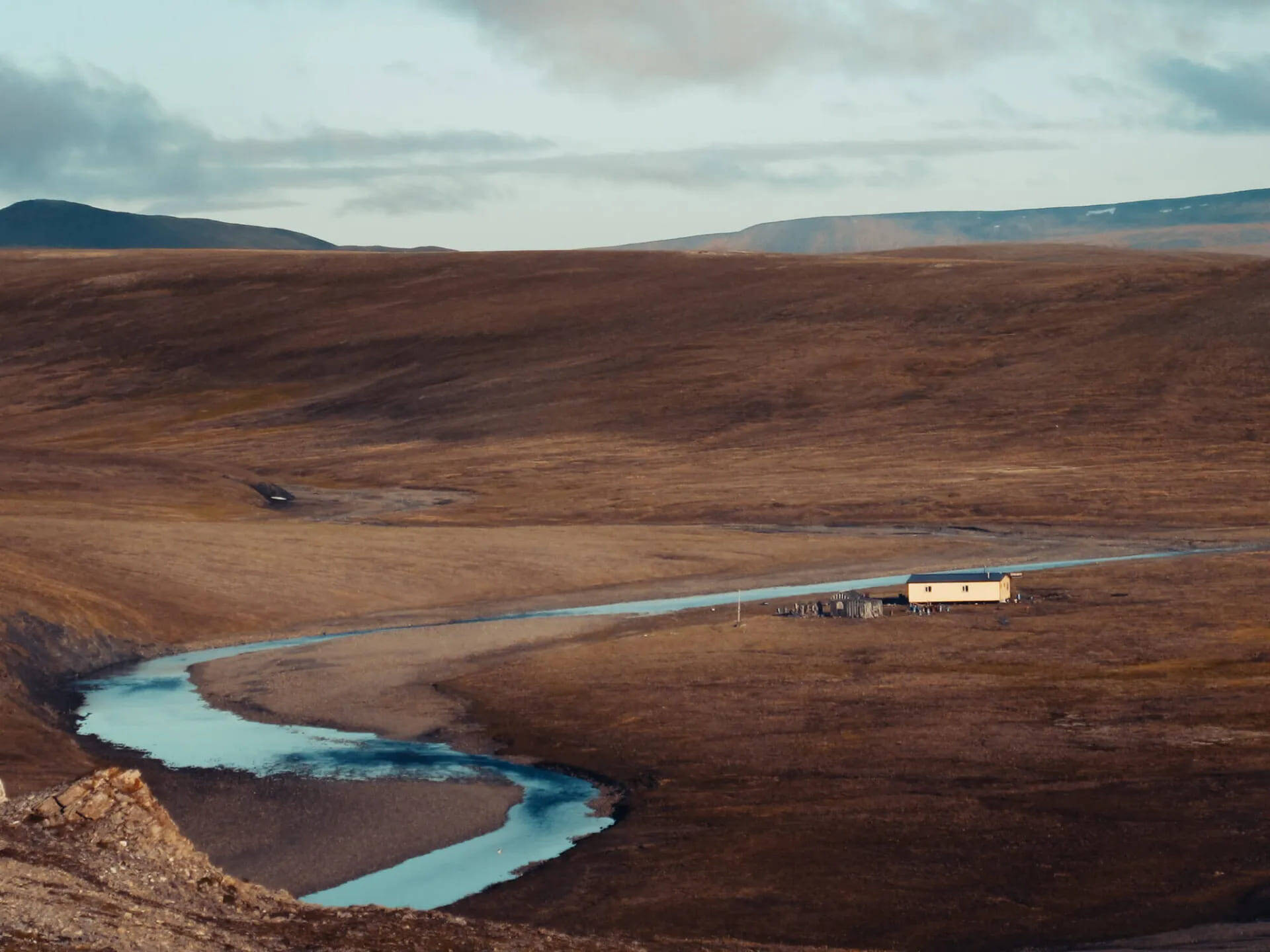
A guesthouse where travelers can stay overnight on Wrangel Island
© Ulyana Babiy
Cruise participants sleep aboard their vessel, which acts as a floating base. Modern expedition ships offer a high level of comfort: cabins with private amenities, onboard restaurants, and lecture halls.
Important: Wrangel Island operates under strict safety rules. Visitors are under constant supervision by reserve inspectors. Independent walks into the tundra are prohibited — polar bears may lurk behind any thicket. Even viewing phenomena like the northern lights must occur under escort by reserve staff.
Why Wrangel Island Is Worth the Trip
Wrangel Island is like a living museum of Pleistocene nature. Unlike most Arctic lands, it was never completely covered by glaciers nor submerged by rising seas. This allowed its ancient plant and animal life to survive when elsewhere they were lost.
There are 382 species of vascular plants on the island — more than on any other Arctic area of similar size. Among them, 23 are endemic, meaning they are found nowhere else on Earth. In summer, the tundra transforms into a vivid carpet of Arctic poppies, saxifrages, primulas, and other wildflowers.
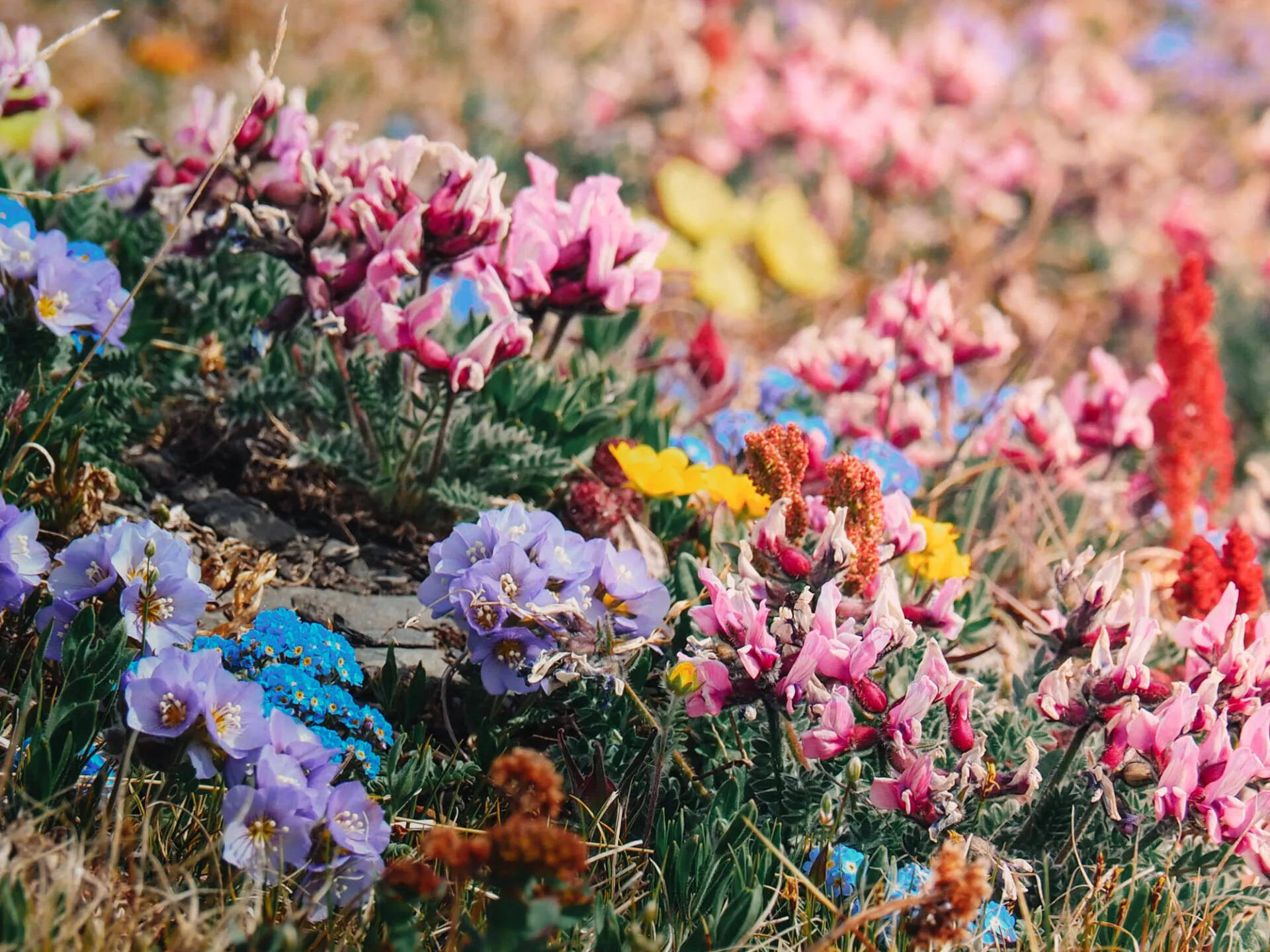
The Arctic summer is brief, yet even here you can lose yourself in the scent of blooming tundra flowers
© Ulyana Babiy
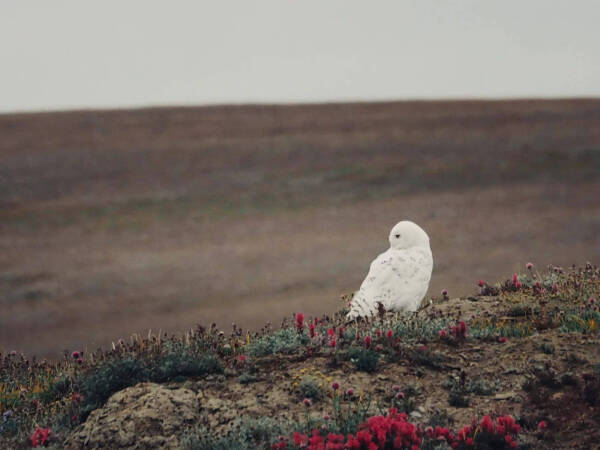
The invertebrate world is equally rich: hundreds of types of insects and spiders flourish in summer — even butterflies appear. Bird watchers will delight in over 170 bird species, including the snowy owl, buff-breasted sandpiper, gyrfalcon, and snow bunting. Wrangel also hosts Asia’s largest colony of white geese and massive seabird rookeries.
Among the large mammals are musk oxen, introduced here in the 1970s from Nunivak Island in Alaska. Their population now numbers around 1,200. Arctic foxes, wolves, and wolverines also roam freely across the tundra.
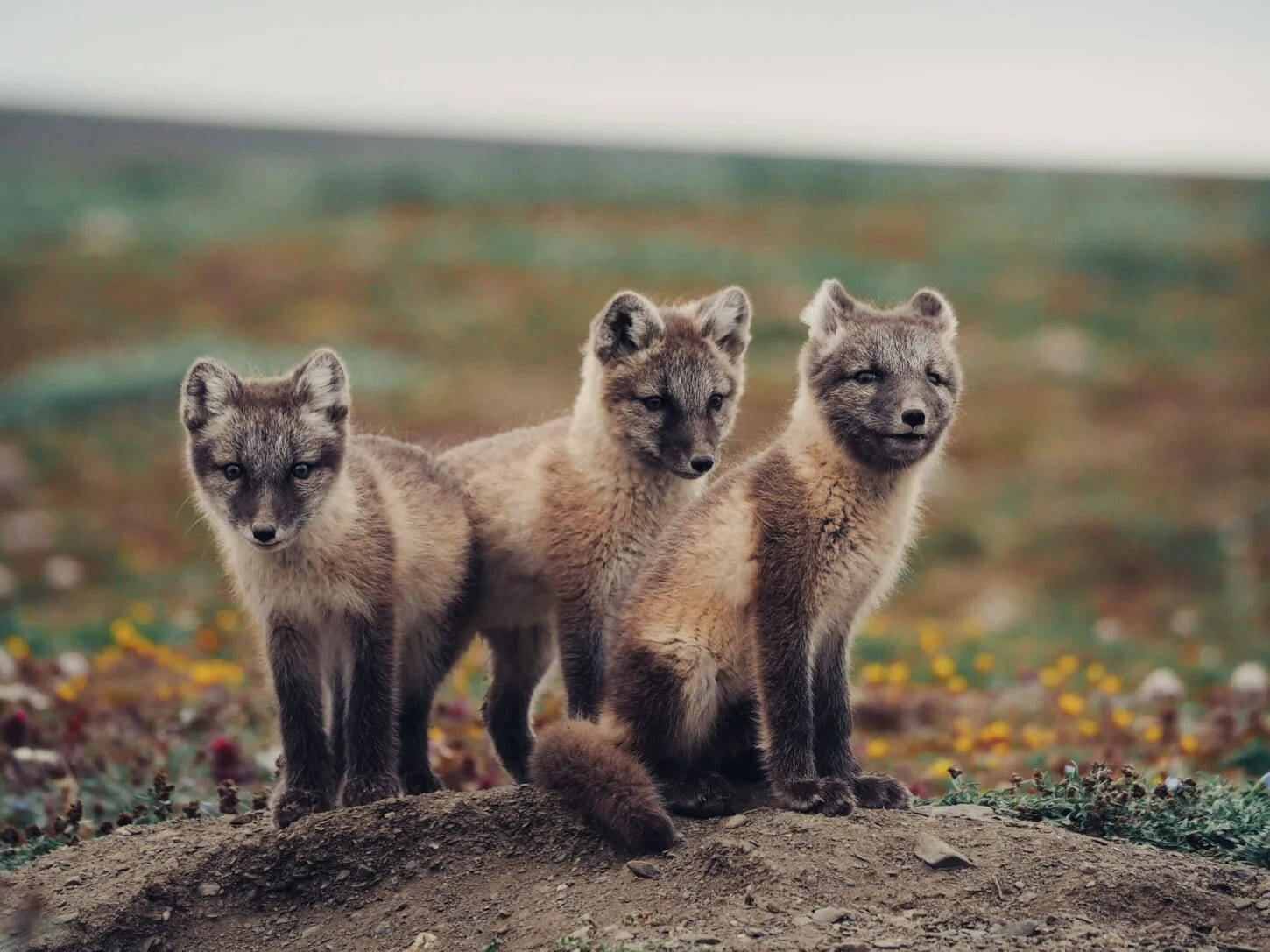
In years when lemmings are abundant, a pair of Arctic foxes can raise up to 14 pups
© Ulyana Babiy
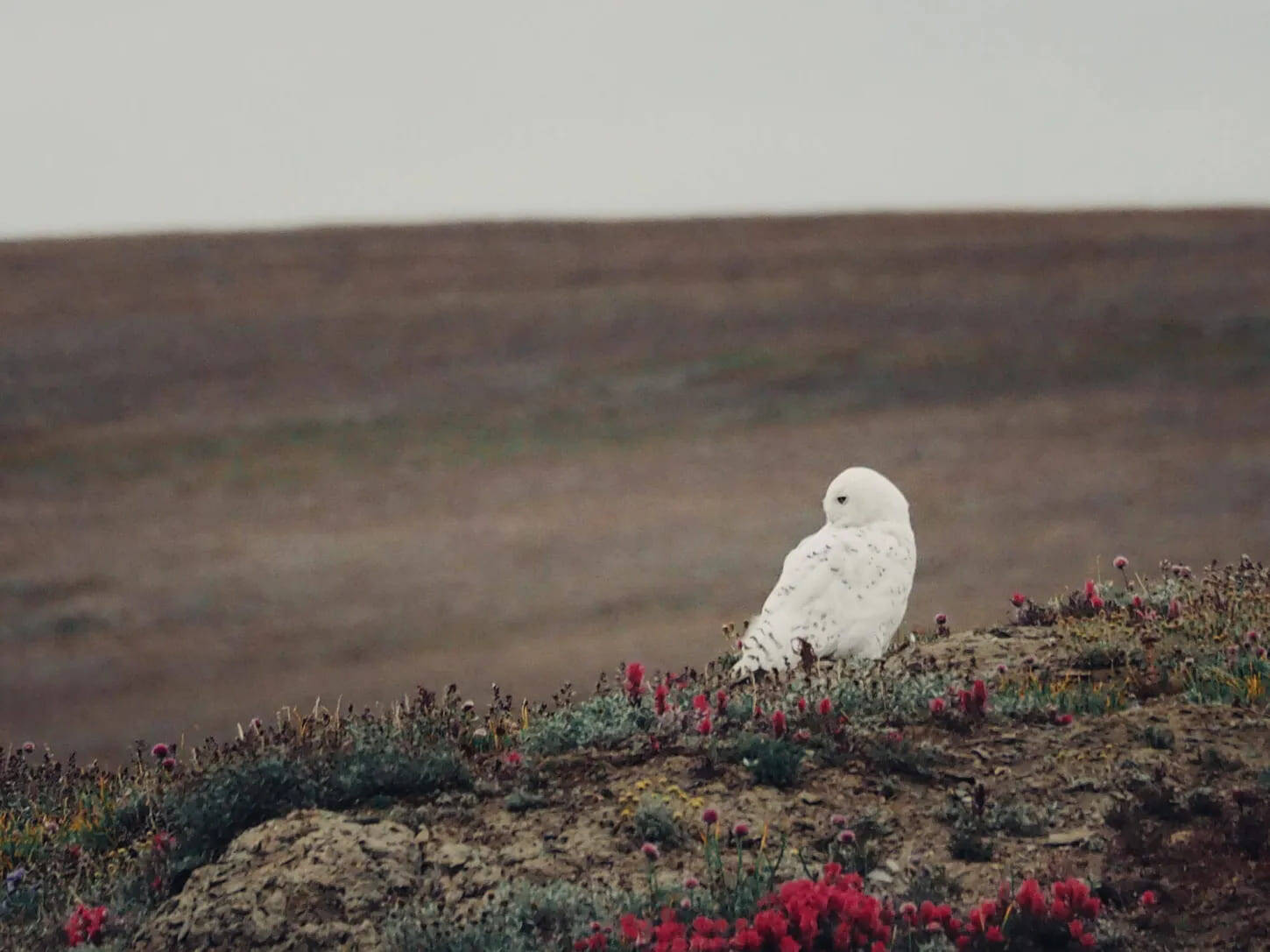
A snowy owl scans the tundra in search of prey
© Ulyana Babiy
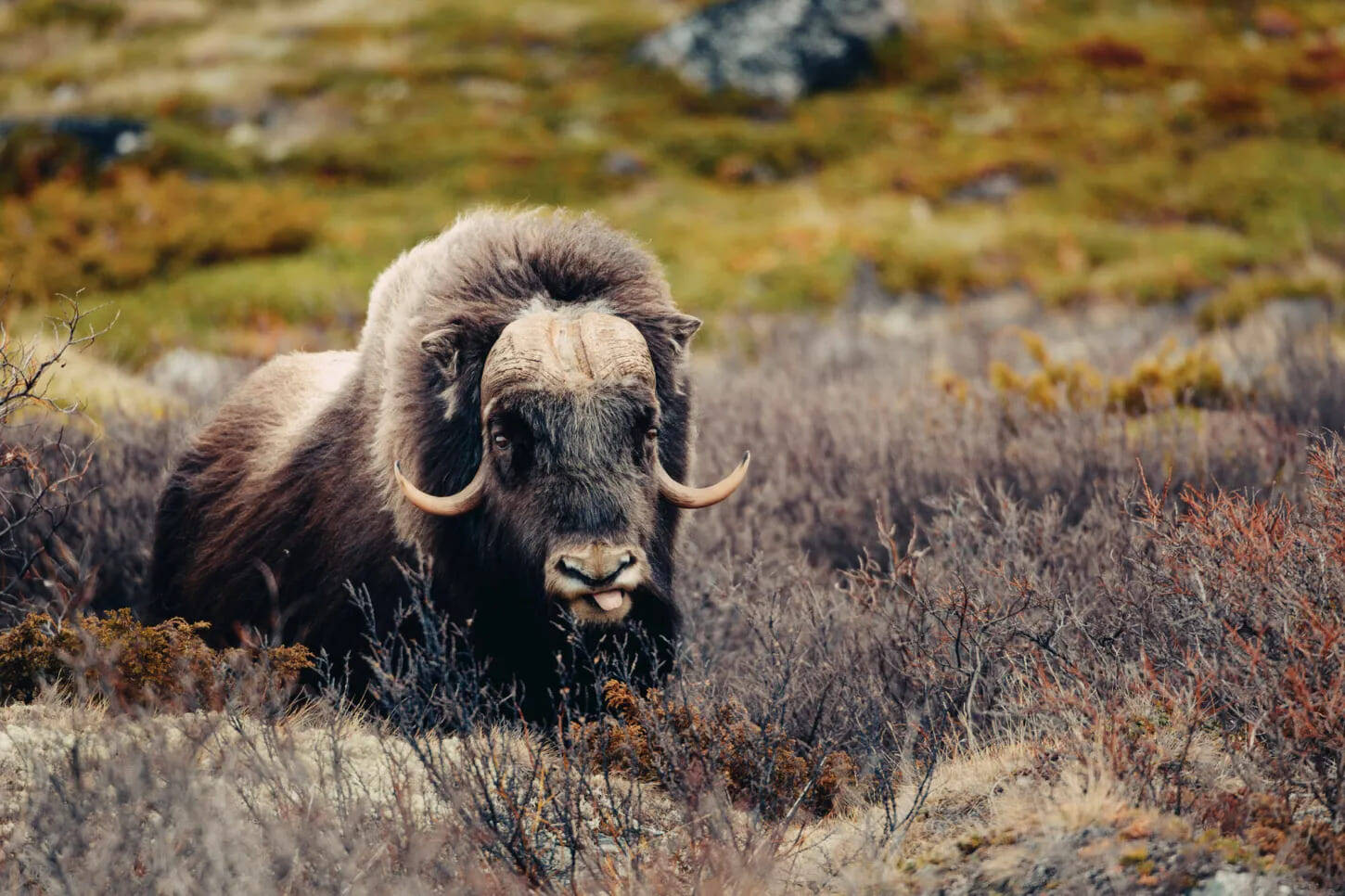
During the rutting season, musk oxen can be just as dangerous as polar bears
© Indrek Ladva
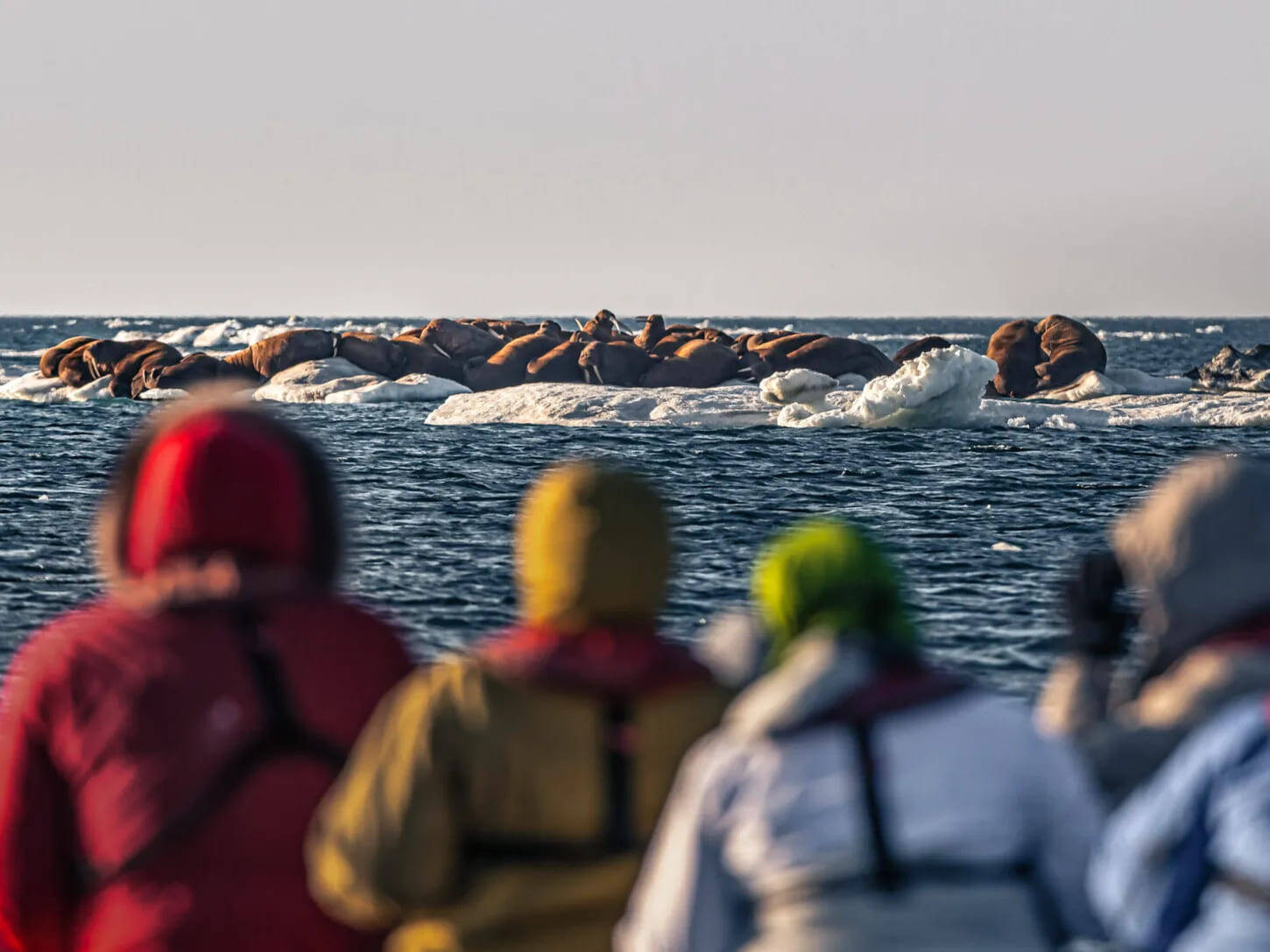
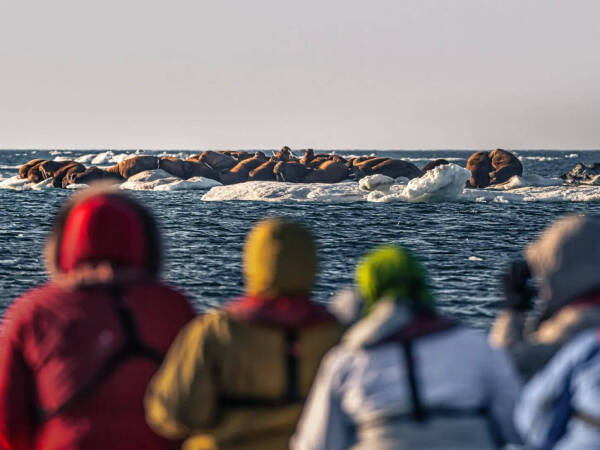
Walruses come ashore in the second half of summer
© Sergey Dolya
Polar Bears — The Kings of the Arctic
The island’s main draw for most visitors are polar bears. Wrangel is rightly called the “maternity home” for these majestic predators. Every year, up to 500 pregnant females den here. On tiny Herald Island, the density of maternity dens is among the highest in the world. In March–April, females and cubs leave their dens and make their way toward the sea.
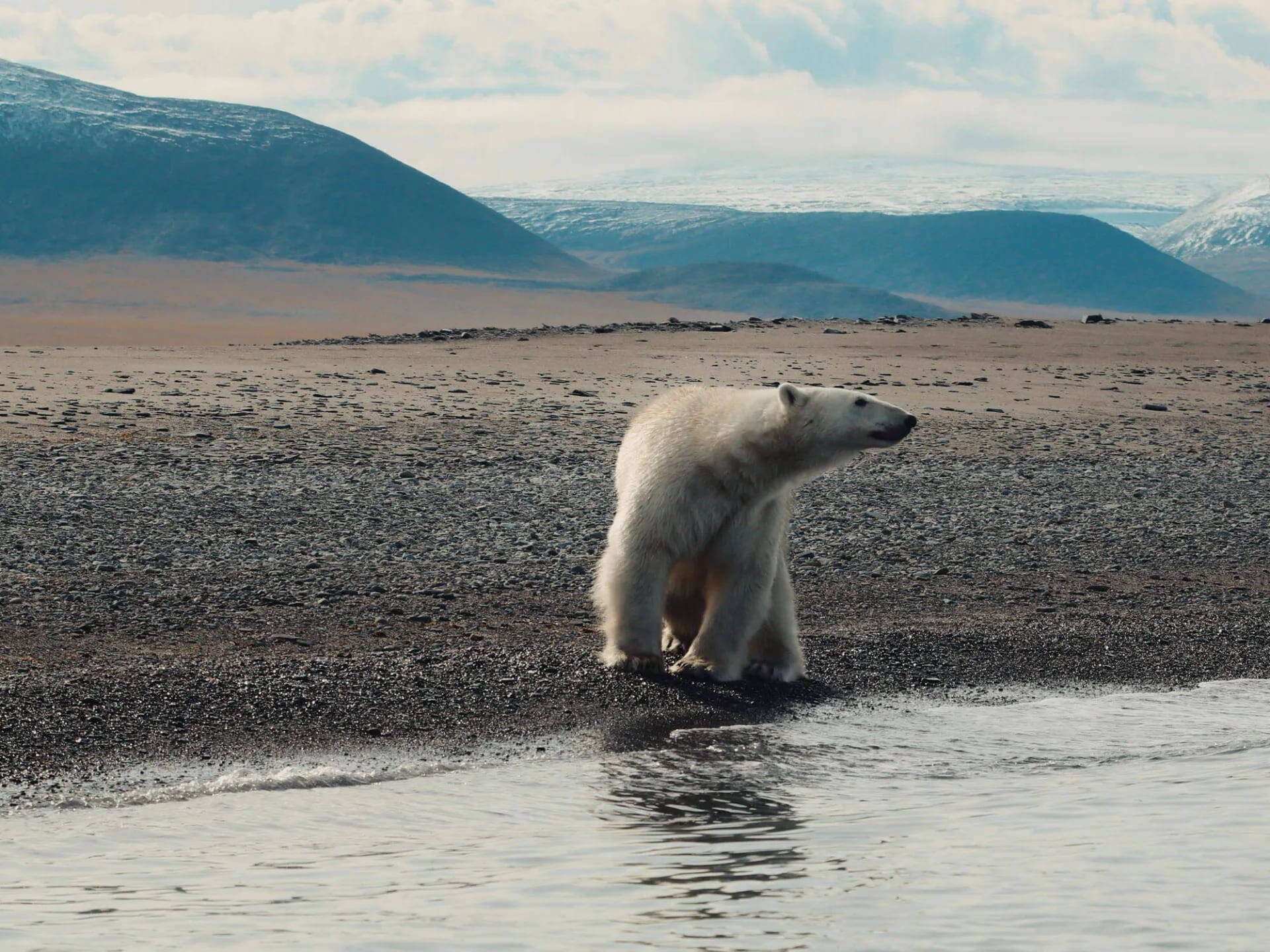
The polar bear is the largest land predator on Wrangel Island
© Vadim Mamontov
In summer, the island may seem nearly empty of bears, since ice is their natural domain. But when the sea ice recedes, bears — adult females, males, and young inexperienced individuals — move ashore. By August, the island comes alive with their presence.
Encounters with polar bears are unpredictable: they may appear on drifting ice, along coastlines, or even near ranger stations. Any such meeting is thrilling — but always requires strict safety and respect for rules.
Educational & Scientific Travel
Wrangel Island offers more than sightseeing. Tours are conducted by experienced reserve staff, who introduce visitors to the island’s unique nature, local flora and fauna, and historic and archaeological sites. Seasonal displays include the remains of musk ox skulls and dwarf mammoths; at camps like Somnitelnaya you can visit the Ulvelkot House Museum to glimpse the lives of marine hunters from the 1960s–1980s.
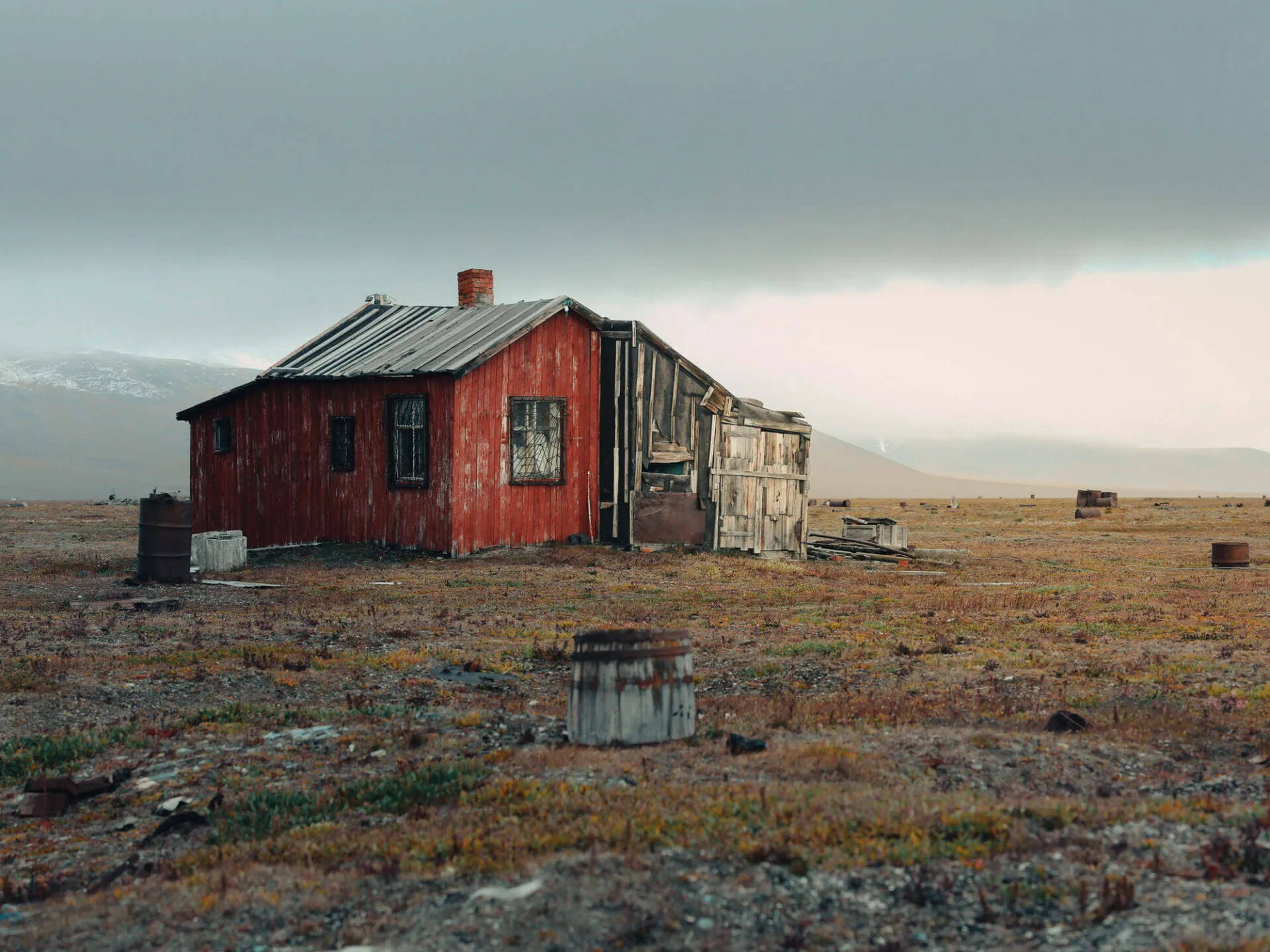
The “Somnitelnaya” research base stands on the site of a former marine hunters’ settlement
© Vadim Mamontov
Tourists don’t only observe — many participate in scientific work. Guests often help with photo-identification data for whales, document animal behaviour. Wildlife observation, including encounters with gray whales and walruses, takes place from small inflatable boats — close enough for unforgettable views, yet always at a safe distance for both people and animals.
Photography during the polar day offers incredible opportunities to capture the raw beauty of the Arctic. Many professional photographers who come here later see their work published in major international publications.
The Grand Arctic Safari
A cruise along the Chukotka coast to Wrangel Island aboard a premium vessel
18 Aug 2027 — 30 Aug 2027
13 days
Travel Tips for Visiting Wrangel Island
- Although extreme exertion isn’t expected during a trip to Wrangel Island, it’s best to be in good physical shape. Walks across the tundra can last several hours, and disembarking from the ship requires agility — especially when the sea is rough.
- The Arctic doesn't forgive a careless attitude toward clothing. A high-quality wind- and water-resistant jacket, waterproof boots, a hat, and gloves are essential. Layering is your best friend in these conditions.
- Traveling in the Arctic demands flexibility and a willingness to adapt. Weather can alter the route, and animal encounters cannot be planned in advance. Try to keep a philosophical mindset — in Chukotka, you might wait weeks for a flight, and wild animals don’t perform for the camera on cue.
- When setting out, remember: you’re a guest in the wild. Keep a respectful distance when observing animals, don’t leave any litter behind, and always follow the instructions of guides and rangers. Every step you take on the tundra leaves a mark that can last for years.
- Photography and videography are allowed in the reserve, but drones are strictly prohibited. Bring a telephoto lens to capture wildlife safely from a distance, and don’t forget extra batteries — they drain faster in the cold. It’s always chilly here, so protect your equipment from moisture and sea salt.
- Consult your doctor before the trip, and bring a personal first-aid kit with all essential medications.
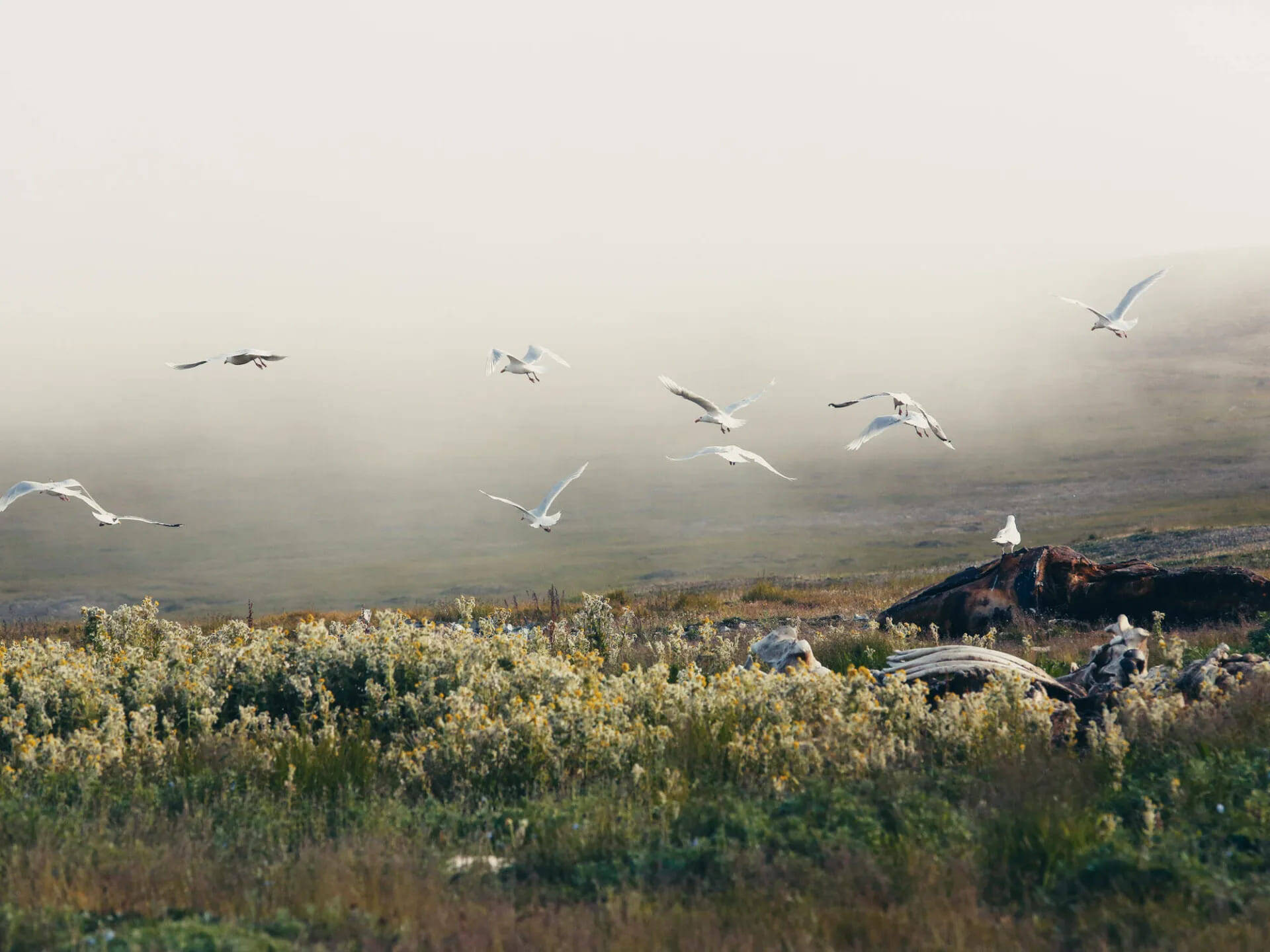
Wrangel Island is rightfully called the island of fogs
© Vadim Mamontov
A journey to Wrangel Island is more than just a tourist trip — it’s an encounter with a world where time is measured not by hours but by seasons, and beauty reveals itself only to those who embrace the Arctic’s harsh laws. Here, at the edge of the world, you understand the true value of wilderness. Perhaps that’s why those who have visited Wrangel Island carry the memory of this wild, beautiful land in their hearts and dream of seeing its somber silhouette once more.
Explore our full collection of tours and cruises to Chukotka and Wrangel Island. Need help choosing the right expedition? Our travel experts will be happy to assist — call +7 (495) 104-64-36 or email us at hello@russiadiscovery.ru.
Contributors
Ulyana Babiy
Head of Science Department at Wrangel Island State Nature Reserve
Kristina Boyko
Editor
Ira Sinyaeva
Executive Editor
Maria Cherdantseva
Photo Editor
Sofya Schmidt
Proofreader
Maria Potapova
Translator
Notice an error or inaccuracy?
Write to usSee also
All articles