RussiaDiscovery Magazine

We write about Russia so that the native land ceases to be Terra Incognita.

topchaeva
bobir
konstantin

Authors

Coming Soon

We collaborate with masters of words who are in love with travel.

Altai Mountains in Spring: Where to Go and What to See

A guide to the region with practical tips on how to prepare for your trip

Travel Ideas
06.05.2025
10 minutes
61
Article photo

Altai is a treasure chest of natural wonders. Beyond its mountain ranges and snow-capped peaks lie hidden valleys and dense forests, thundering waterfalls, and shimmering turquoise lakes.


In spring, the Altai Mountains come to life: snow retreats from the slopes, giving way to lush greenery and the vivid crimson blooms of the maralnik. In this guide, we’ll cover how to plan your trip to the region: the best time to go, what to pack, and the must-see sights.

How to Get There

Geographically, Gorny Altai occupies the territory of the Altai Republic (not to be confused with the neighboring Altai Krai). Below are the main ways to reach the region.

By plane. To get to Gorny Altai, fly to the republic’s capital, Gorno-Altaysk. This small airport, surrounded by mountains, is served by Russia’s major carriers, Aeroflot and S7 Airlines, with direct flights from Moscow. Flight time is around four hours. S7 Airlines also operates flights to Gorno-Altaysk from Novosibirsk.

By train. There is no railway connection to Gorno-Altaysk itself, but trains run to Barnaul, a major transport hub in the neighboring Altai Krai. From Barnaul, you can continue to Gorno-Altaysk by car or bus.

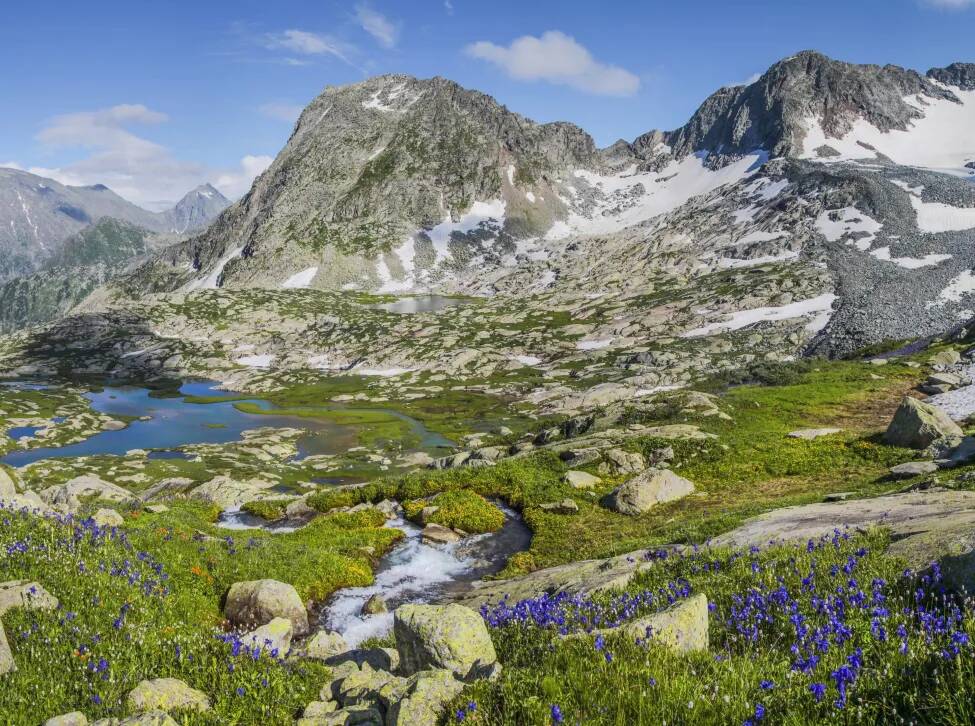
In spring, the valleys of Altai fill with the sound of babbling streams

By bus. Regular bus services to Gorno-Altaysk operate from Barnaul (from about 1,500 RUB) and Novosibirsk (from about 3,000 RUB). The journey from Barnaul takes around five hours; look for routes labeled Barnaul–Chemal or Barnaul–Ozyornoye (the Manzherok ski resort). From Novosibirsk, take the Novosibirsk–Ozyornoye route (Manzherok ski resort); travel time is eight to nine hours.

By car. If you have the time and energy, the 4,000-kilometer drive from Moscow can become a road trip lasting three to five days, with stops in Kazan, Chelyabinsk, and Novosibirsk. The route starts on the M-7 highway or the newer M-12 (to Kazan), then continues via the R-239 and M-5. From there, head to Novosibirsk, pass through Barnaul, and continue toward Gorno-Altaysk.

Why Spring Is the Perfect Time to Visit Altai

Altai may not seem like the most obvious choice for a spring getaway. Yet this is precisely the season when snow-capped mountain peaks still sparkle in the sun, while the valleys below are already awash in fresh greenery. Torrential streams rush down the slopes, and the forests come alive with the calls of lapwings, chaffinches, cuckoos, and leaf warblers returning from their wintering grounds.

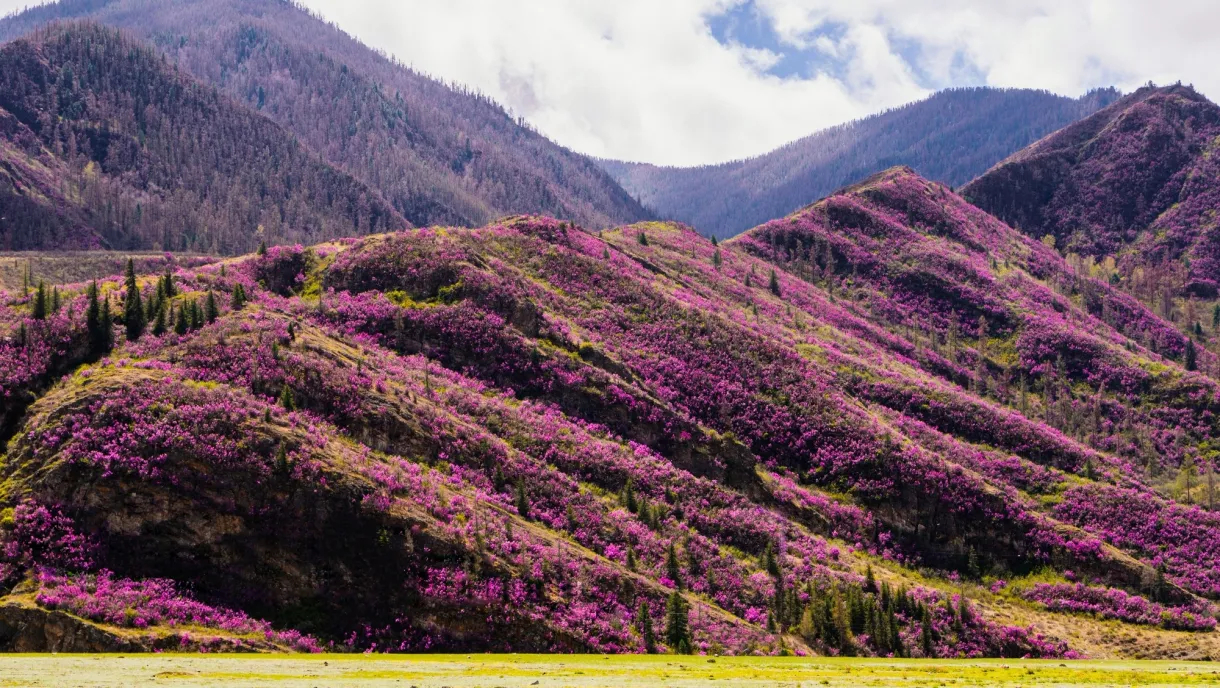
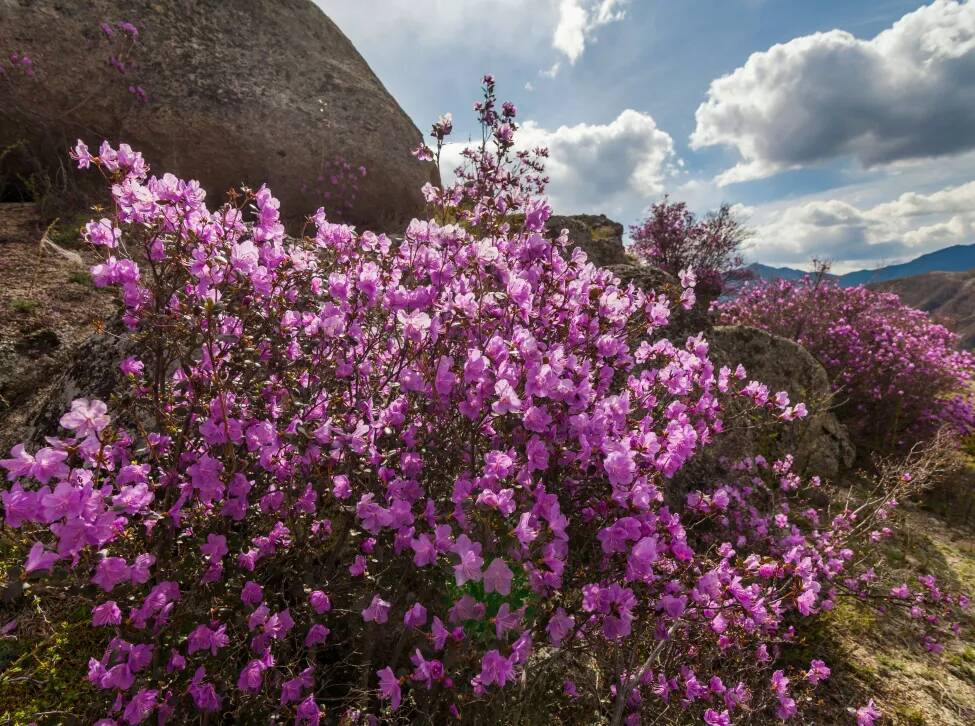
Large, vivid blossoms seem to magically paint the mountains in shades of purple and violet. This is the maralnik—Ledebour's Rhododendron, a protected species listed in Russia’s Red Book. Paired with deep blue skies and white mountain tops, it gives Altai’s landscapes a truly fairy-tale quality.

Maralnik is often called the “Siberian sakura”

In spring, Altai sees far fewer visitors than in summer. This relative solitude makes it ideal for exploring scenic trails on foot or horseback, discovering ancient petroglyphs, soaking in thermal springs, and simply listening to the rush of rivers, the roar of waterfalls, and the sounds of nature.

Accommodation prices are lower in spring, and there is a wider choice of places to stay.

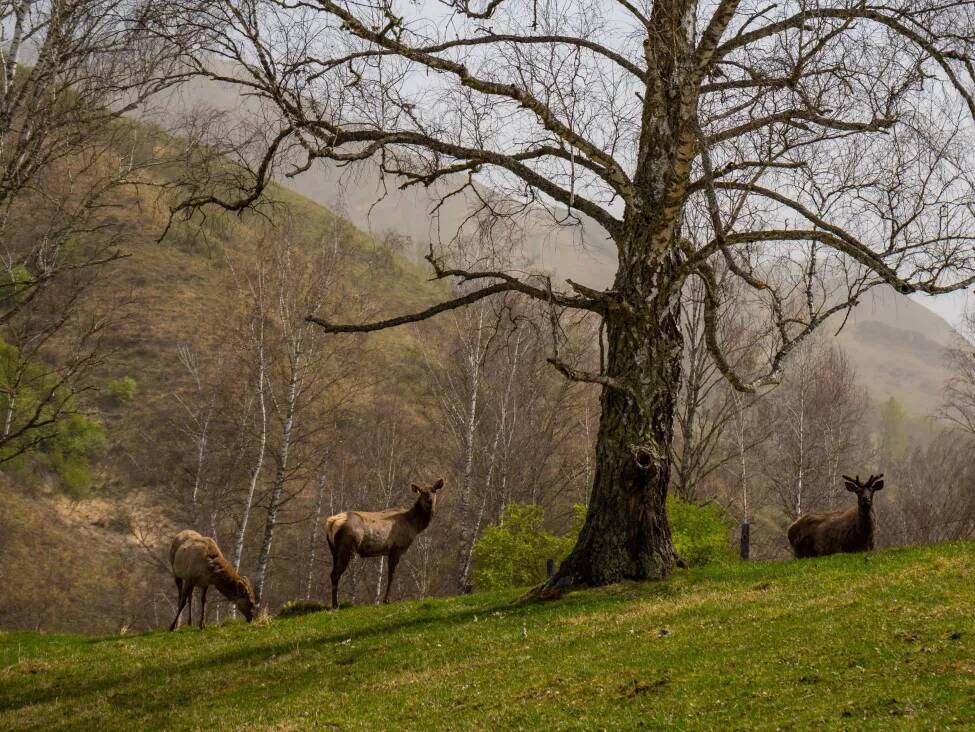
Wildlife watching is also more rewarding at this time of year than in summer. Some animals are emerging from hibernation, others have yet to shed their winter coats and stand out against the dark forests and mountains, while some venture closer to cordons in search of food. With a bit of luck, you may spot maral deer, roe deer, the unusual musk deer with its distinctive fangs, foxes, or even bears.

In spring, maral deer change their coat from brownish gray to a reddish hue with warm, copper tones

Spring Weather in Altai

Warm weather arrives in Altai gradually, and with each change in the weather, new opportunities for travel and outdoor adventures appear.

In March, daytime temperatures hover around –5 °C, while nights can drop to –25 °C. By all standards, it is still winter—an ideal time for snow-based activities.

April is noticeably warmer. The air warms up to +15–20 °C, snow melts quickly, maralnik comes into bloom, and a green haze spreads across the mountains. Hiking and horseback trails reopen, marking the start of the trekking season.

In May, daytime temperatures reach +20–25 °C. Rivers and waterfalls are finally free of ice, meadows and foothills turn lush and green, and the air fills with the scent of herbs. May also marks the beginning of the rafting and river-running season. The only downside: ticks become active.

Altai in Spring by Month: Where to Go and What to Do

March: Snow-Capped Peaks and Active Adventures

In March, snow still blankets Altai. The slopes of the Manzherok resort and Seminsky Pass welcome skiers and snowboarders. Travelers can also enjoy easy snowshoe hikes, snowmobile rides, or dog-sledding trips through the foothills and mountain passes.

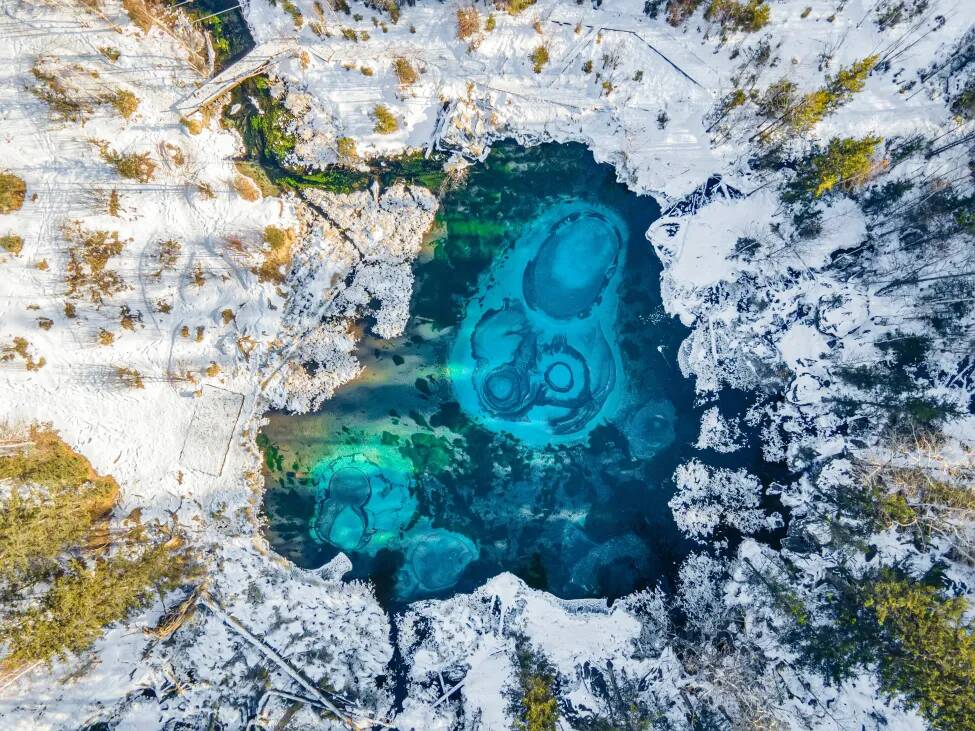
March is also a popular time to visit Lake Teletskoye, Lake Aya, and Geyser Lake. As April approaches, the ice on Altai’s lakes begins to break into crystalline slabs, with drifting floes visible on the surface. Those hoping to witness a dramatic spring ice breakup head to the Katun River. Geyser Lake, however, never freezes—even in winter—and its turquoise waters can be admired year-round.

The ice-free Geyser Lake near the village of Aktash

April. Maralnik Bloom and the First Excursions

Altai is especially stunning in April, when the maralnik comes into bloom. The landscapes feel like scenes from a Hayao Miyazaki animated film: fresh green slopes are splashed with shades of pink, crimson, purple, lavender, and lilac. By this time, the snow has melted, the air warms noticeably, and the first guided excursions of the season begin.

One of the most popular routes is trekking along the Chemal Tract. The trail passes through areas where the maralnik is in full bloom, the Che-Chkish Waterfall, and the Ust-Sema (Katun) Baths—small natural rock pools that fill during spring floods and warm up enough for swimming. From the Oroktoy Bridge, which spans the narrowest section of the Katun River, visitors enjoy enchanting views of the river and surrounding mountains.

The exact timing of the maralnik bloom varies from year to year and cannot be precisely predicted. It usually lasts about two weeks, roughly between April 10 and May 12.

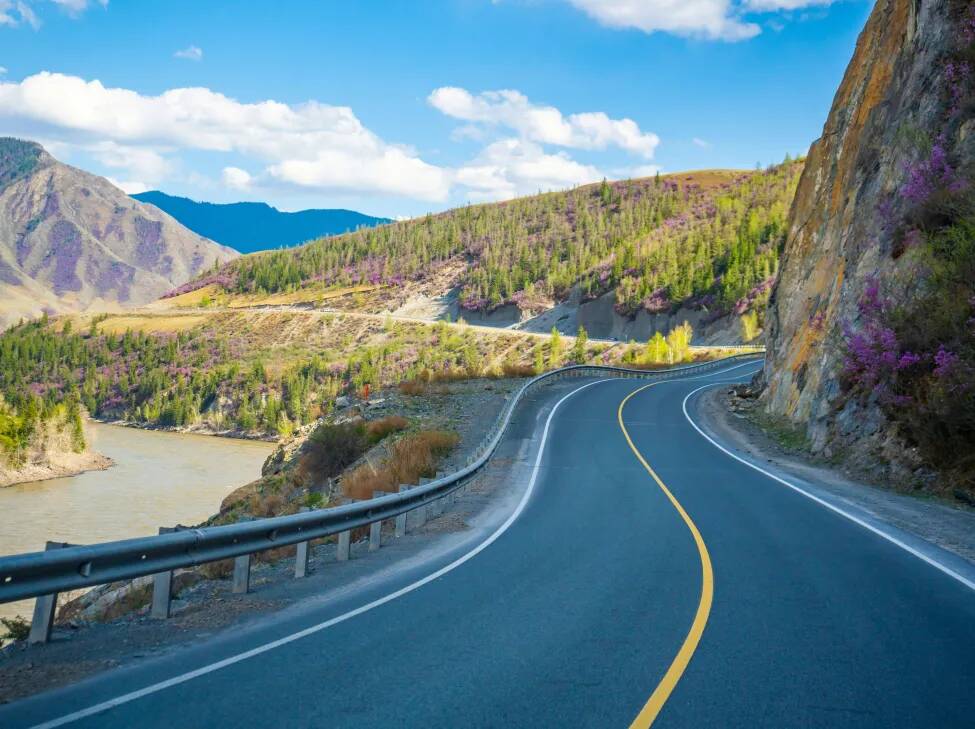
The Chuysky Trakt is considered one of the most beautiful roads in the world by National Geographic. Travelers come here to walk across the Ininsky suspension bridge over the Katun, see half-meter-high pyramid-shaped burial mounds resembling footprints in the Sentelek River valley, and discover ancient Altai petroglyphs at the Kalbak-Tash site.

The Chuysky Trakt offers breathtaking views of mountain ranges and rivers

May. Rafting, Hiking, and Horseback Tours

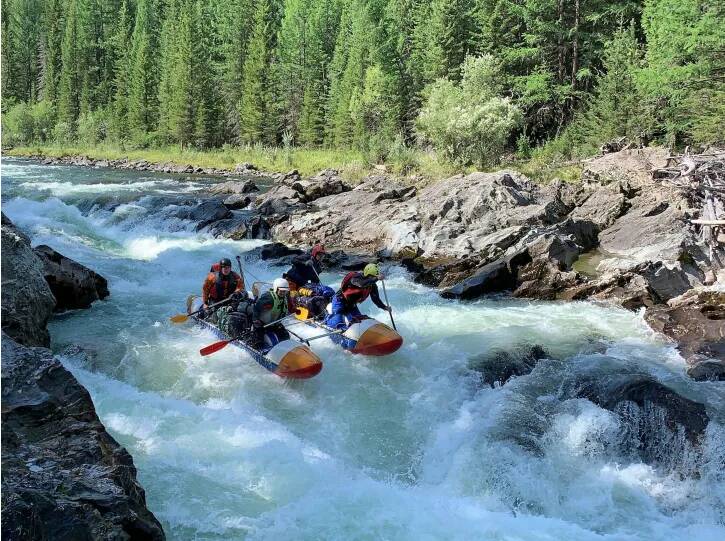
In May, the rivers finally break free of ice and waterfalls come back to life. This marks the start of the rafting season in Altai. Different rivers call for different types of watercraft—rafts, catamarans, or inflatable kayaks.

Never take part in a rafting trip without a life jacket, helmet, and wetsuit.

The Katun River and its tributaries are the most popular choices for rafting. Experienced paddlers head to the Chuya, known for its challenging Class IV–VI rapids, as well as the Ursul River and the Sumulta—one of the most remote rivers in Altai.

The Chulyshman River and its tributary, the Bashkaus, are equally demanding and hard to access, making them suitable only for well-prepared travelers. Extreme rafters choose the Argut River, while the calm, crystal-clear Biya is ideal for beginners.

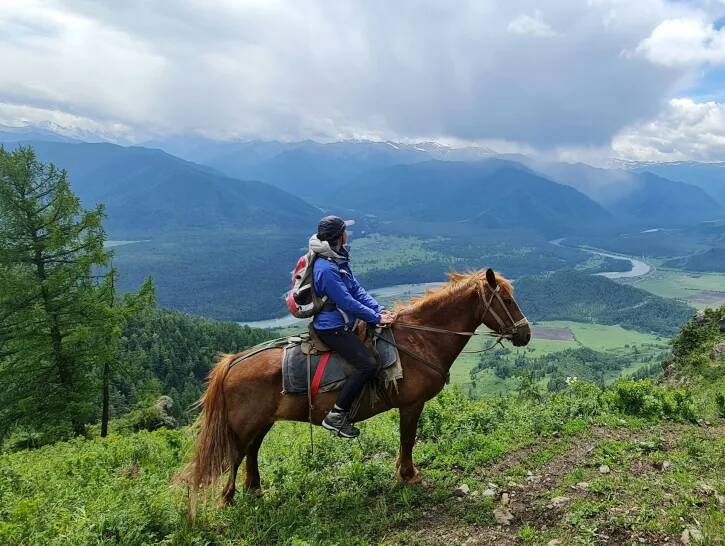
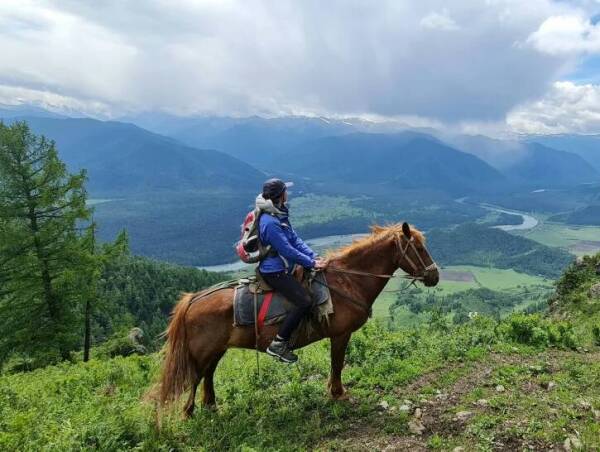
Beyond water adventures, May is a great time for hiking, horseback riding, or combined trekking routes. No prior riding experience is required for horse tours—they are also suitable for first-time riders.

The Lovushka Rapid on the Bashkaus River

Before setting out, you’ll be introduced to the horses and given a safety briefing

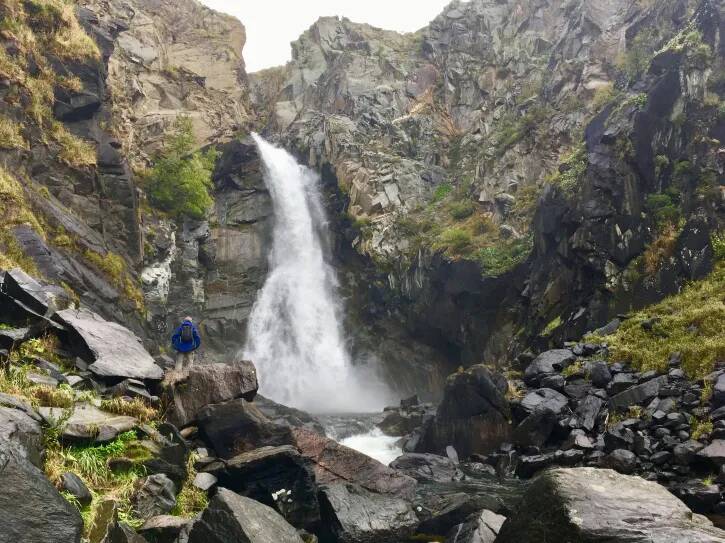
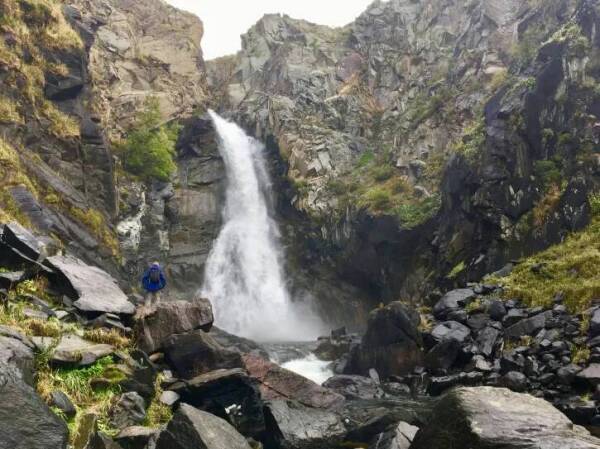
Kurkure Waterfall, 30 meters high, is one of the most impressive in Altai

May is also ideal for trekking to Altai’s alpine lakes, such as the Shavlinsky Lakes—a system of several milky-turquoise lakes.

Another worthwhile destination is the Chuya Range, which separates the Karagem, Chagan-Uzun, and Chuya rivers. The reward is a view of the Bish-Iirdu mountain junction, where the range reaches its highest point and where its main glaciers are concentrated.

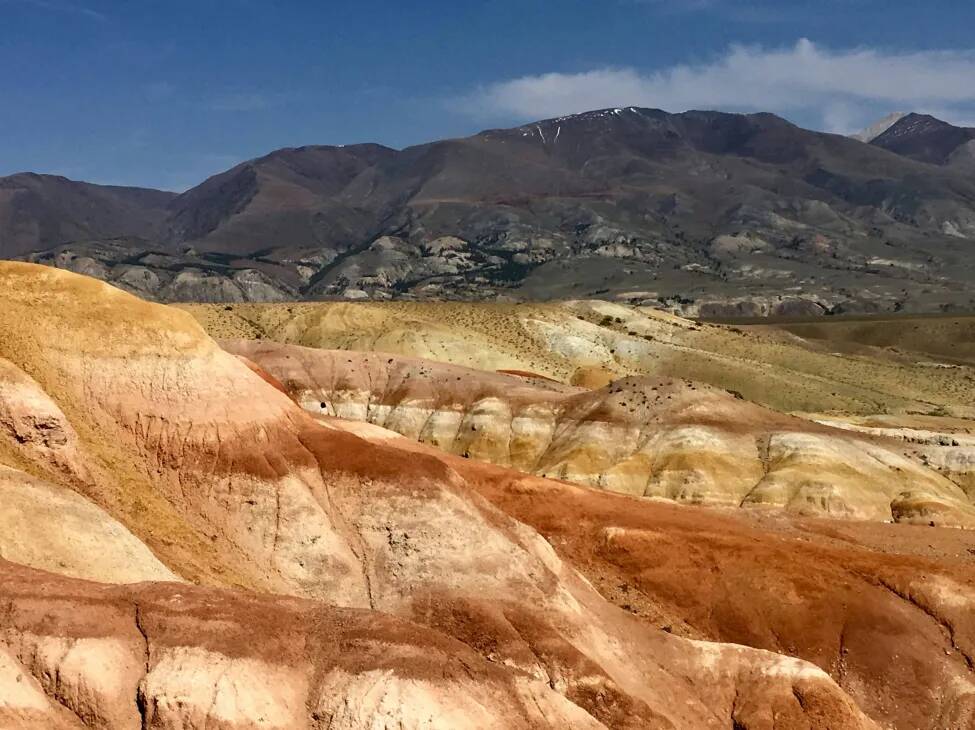
Ninety million years ago, Altai Mars was covered by water

Top 7 Places to See in Altai in Spring

Altai Mars (Kyzyl-Chin Valley)
Often called Earth’s outpost of the Red Planet, this striking area features canyons and ravines formed from vivid red and orange rock.

Geyser Lake
Famous for its countless swirling circles, this mysterious pattern is created by springs rising from the center of the thermal lake.

Chemal Village
One of Altai’s most photogenic spots. Travelers come to see the Chemal Hydroelectric Power Station and reservoir, the confluence of the Chemal and Katun rivers, and the crystal-clear streams of the Che-Chkys Waterfall. The yurts of the Ornygu Altai Culture Center are also located here.

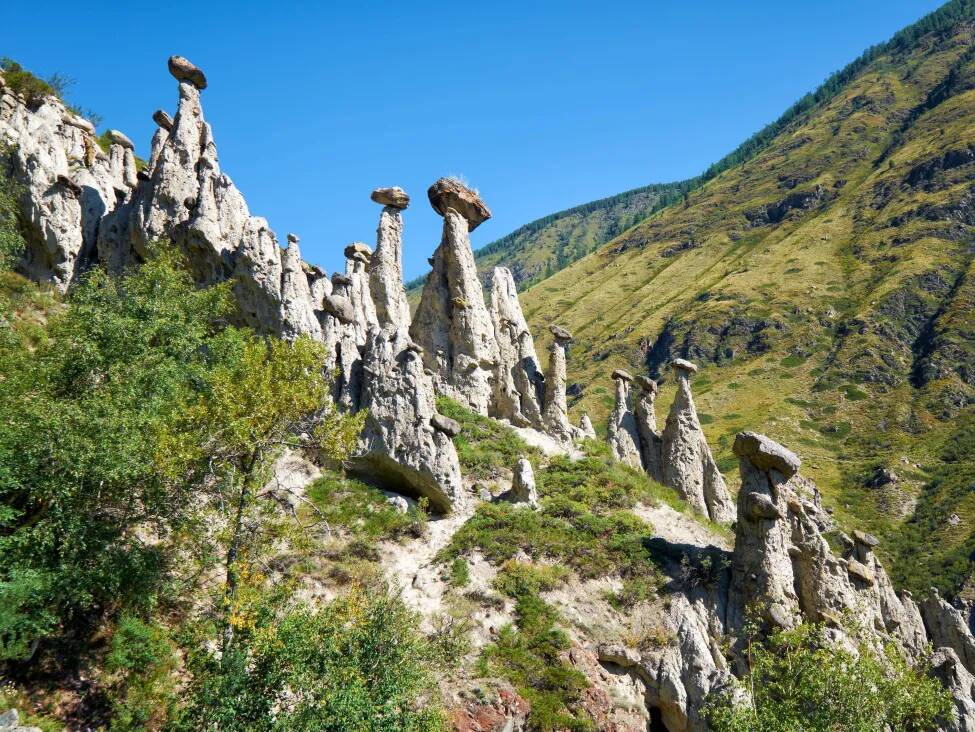
Chulyshman River Valley and the Stone Mushrooms
This area is known for its unusual rock formations shaped like giant stone mushrooms, with small “caps” balanced on thick stems.

Chuysky Trakt
A historic stretch of the Great Silk Road and one of the most scenic highways in the world, long favored by filmmakers.

Lake Teletskoye
Russia’s second-largest lake by size and freshwater reserves after Lake Baikal. It lies at an elevation of 434 meters, surrounded by mountain ridges and peaks.

Multinsky Lakes
A cascade of alpine lakes linked by the Multa River. This natural wonder is consistently ranked among the top 10 most beautiful places in Russia.

The Stone Mushrooms range in height from one to seven meters

Safety Guidelines

Traveling through the Altai Mountains means spending a lot of time in the wilderness. Please keep these basic safety rules in mind:

  • Beware of ticks. In spring, ticks become active and may carry tick-borne encephalitis. We recommend getting vaccinated if you haven’t already, wearing closed clothing, tucking your pants into your socks, and using repellents. Check yourself and your gear regularly—not only after hikes, but during them as well.
  • Wildlife encounters are possible. In the Altai Mountains, you may come across wild animals. Avoid contact with foxes, ground squirrels, and squirrels, as they can carry rabies. In areas where large animals such as bears live, make your presence known: make noise, sing, whistle, or tap a spoon on a pot—loud sounds help scare animals away.
  • If you are traveling independently, without a guide, bring a compass and a paper map (offline maps downloaded to your phone are also useful).

Travel Tips: How to Prepare for Your Trip

Book flights and accommodation in advance, even though spring is not considered peak season in Altai. Reserve a rental car ahead of time if you plan to drive, and allow extra days in your itinerary in case of bad weather.

We also recommend purchasing travel medical insurance, including coverage for tick bites. Below is a checklist of items that may be useful on your trip:

  • Clothing: warm, windproof, and lightweight. A down jacket, fleece or wool sweater, insulated trekking pants, thermal underwear (two sets), a hat, and gloves are ideal. Be sure to pack a waterproof jacket and pants, as well as a raincoat for unpredictable weather.

  • Warm socks: thermal socks for trekking and wool socks for sleeping.

  • Trekking boots: suitable for uneven, mountainous terrain, with a sturdy sole, good ankle support, and effective water resistance.

  • Headwear: a cap or sun hat for daytime, and a warm hat for evenings and nights. A neck gaiter or buff is also useful.

  • Sunglasses and sunscreen: UV exposure is stronger in the mountains than on the plains, so choose sunscreen with SPF 50 or higher.

  • Camping gear (if you plan a hike): a sleeping bag rated for comfort temperatures below –8 °C, a tent, possibly a tarp, a sleeping mat or inflatable pad, a headlamp, plate, mug, spoon, and personal hygiene items.

  • Tick and mosquito repellents.

Layered clothing is the best choice for travel in the Altai Mountains

If the Altai Mountains have inspired you to travel, explore our full collection of tours to the region. Call us at +7 (495) 104-64-36 or email us at hello@russiadiscovery.ru — we’ll be happy to answer your questions and help you choose the right itinerary.

Contributors
Yulia Ilnitskaya
Literary Editor
Svetlana Guseva
Managing Editor
Ezhena Bykova
Proofreader
Maria Potapova
Translator

Notice an error or inaccuracy?

Write to us

Great-Value Flights to the Russian Far East with Aeroflot

2.02.2026
6 minutes
40

Discover Russia: Inviting the World to Explore

7.09.2025
8 minutes
190

The Best Places to See the Northern Lights

6.09.2025
10 minutes
182

Wrangel Island: A Journey to the Edge of the World

4.09.2025
16 minutes
209

A Week in Karelia: Dog Trekking, Cycling, and Rafting

12.08.2025
7 minutes
83

Best Places to Visit in Kamchatka

16.07.2025
1 minute
97