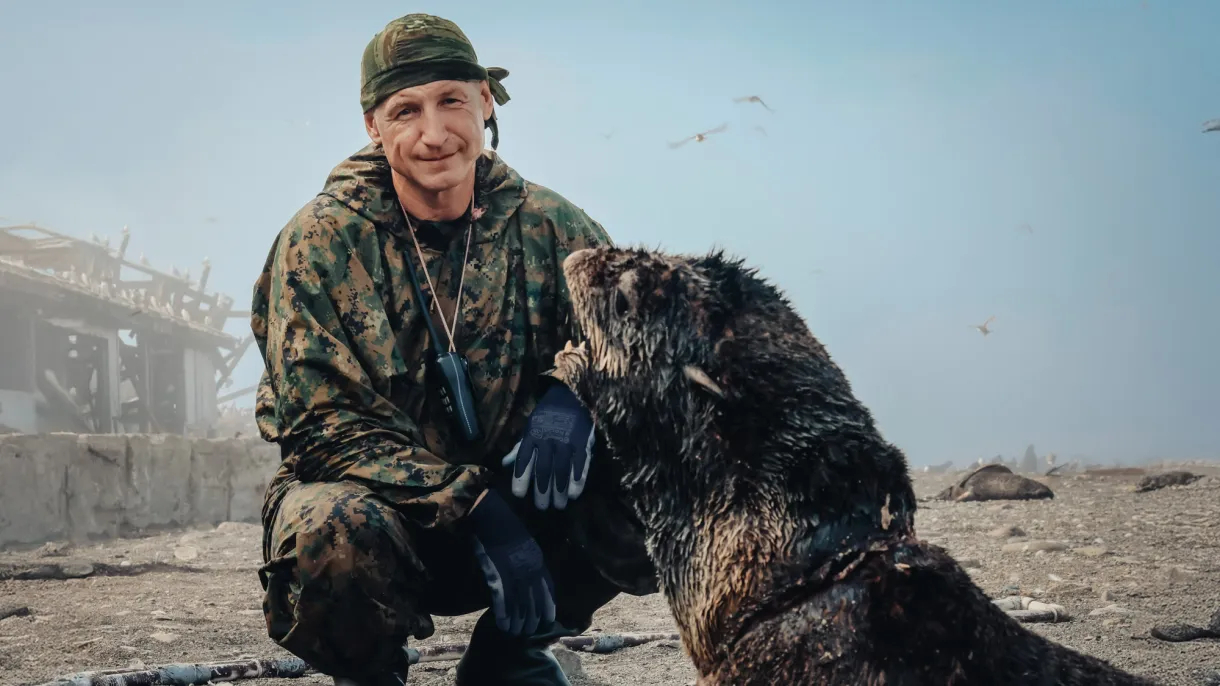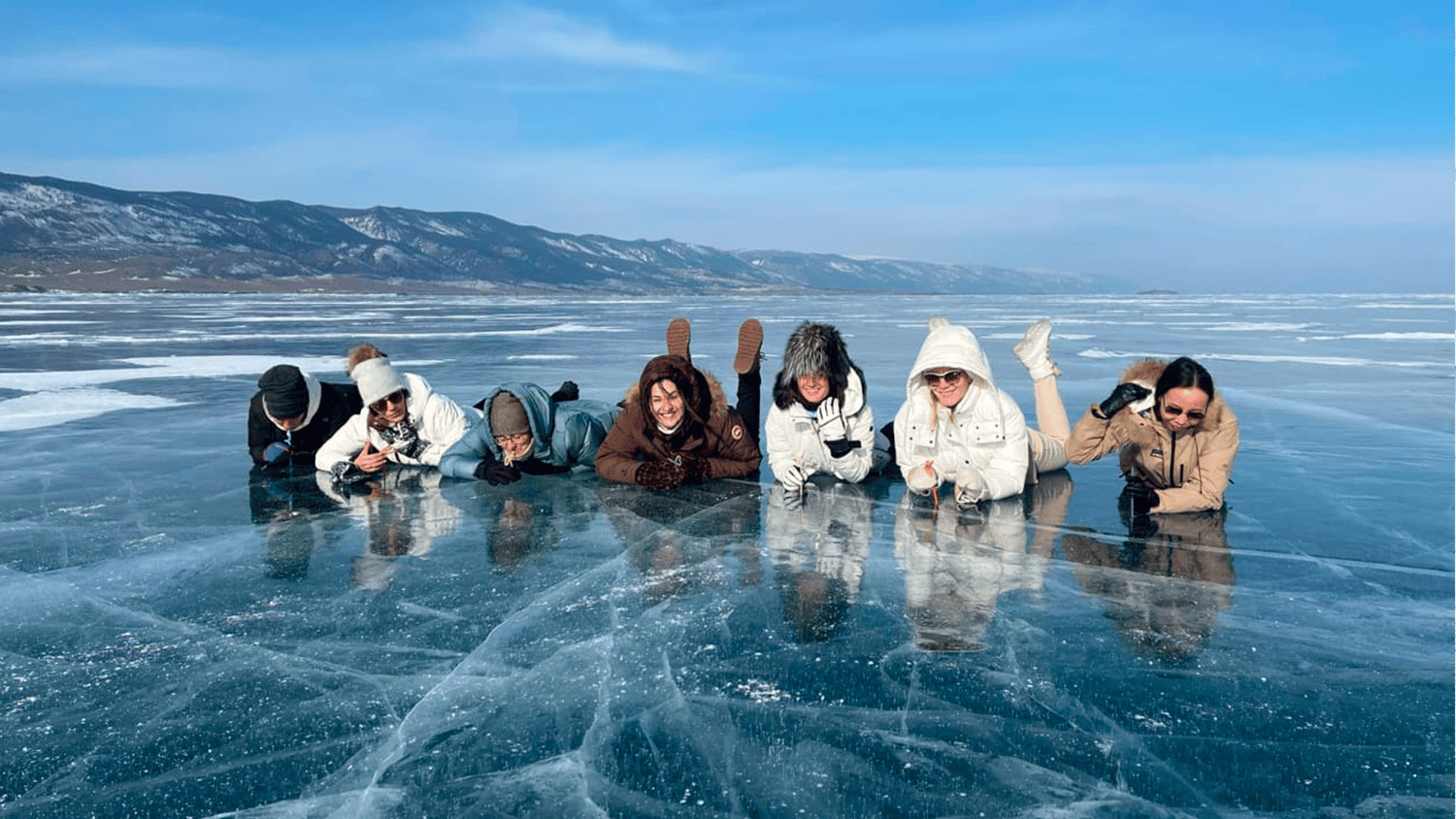



What will those who dare to travel to Yakutia remember most? Perhaps meeting the Lord of the Cold in the harsh village of Oymyakon — or maybe a gigantic piece of fried sausage in a roadside café.
The Joy of Icicles on Your Eyelashes: An Expedition to Oymyakon
Why you should visit the coldest place in Russia
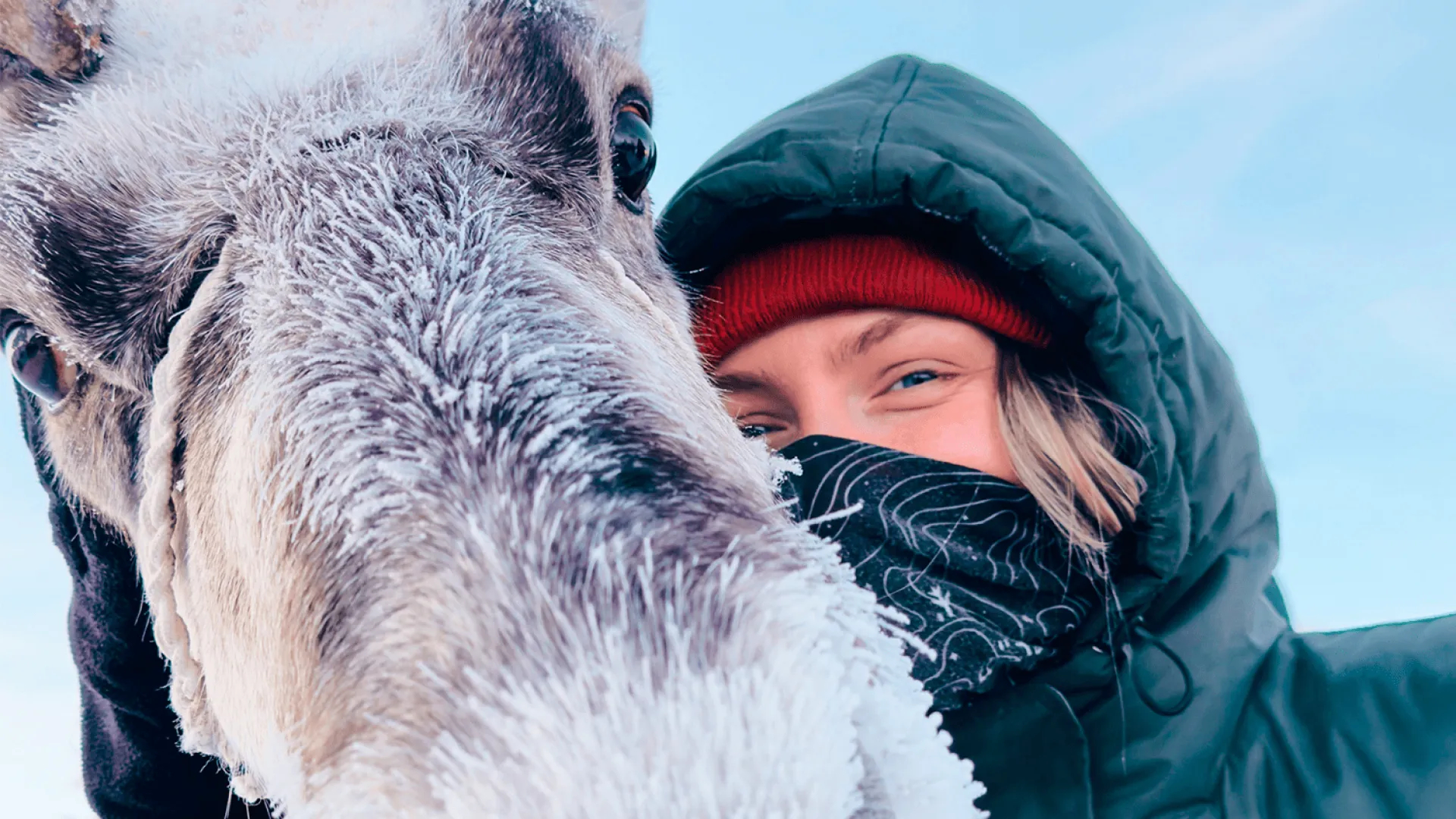

RussiaDiscovery photographer Anna Rogozhina experienced both. In early 2025, she joined one of our expeditions and returned not only with photographs, but also with travel notes from the journey.
Next, in Anna’s own words — about the kisses of frost, trees that look like frozen whipped cream, and even Yakutian yetis.
A Refreshing −44 °C Welcome
On the day of departure, I wake up to a call from the airline. The flight has been rescheduled, and yesterday’s one — as I learn from our travelers’ chat — was canceled altogether because of heavy fog. This has never happened to me before.
On the fly, I figure out the ticket refund rules and buy new ones. Not only do I manage to get the full price back, I even save a little — though I don’t allow myself to celebrate until the money actually appears on my card. Well, I suppose this is exactly how an expedition should begin!
Ahead lies a nine-hour flight with a stop in the city of Neryungri. Outside the window, I can see the light on the airplane wing with the airline’s diamond logo shimmering, and beyond it the stars, as if embroidered on a theater curtain.
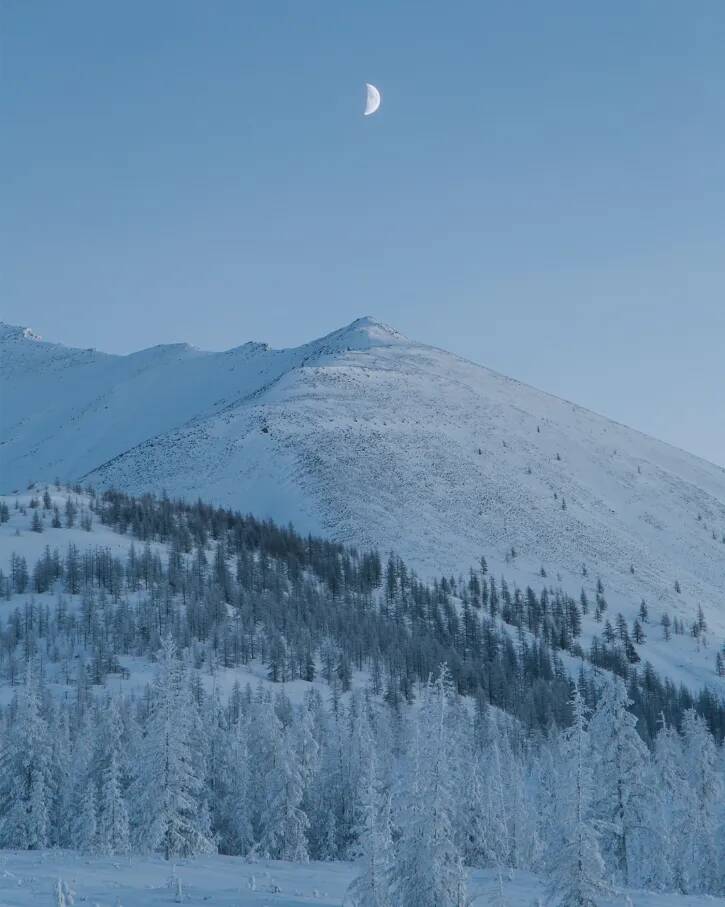
Spruce trees look like fibers on a terry towel
From a personal archive
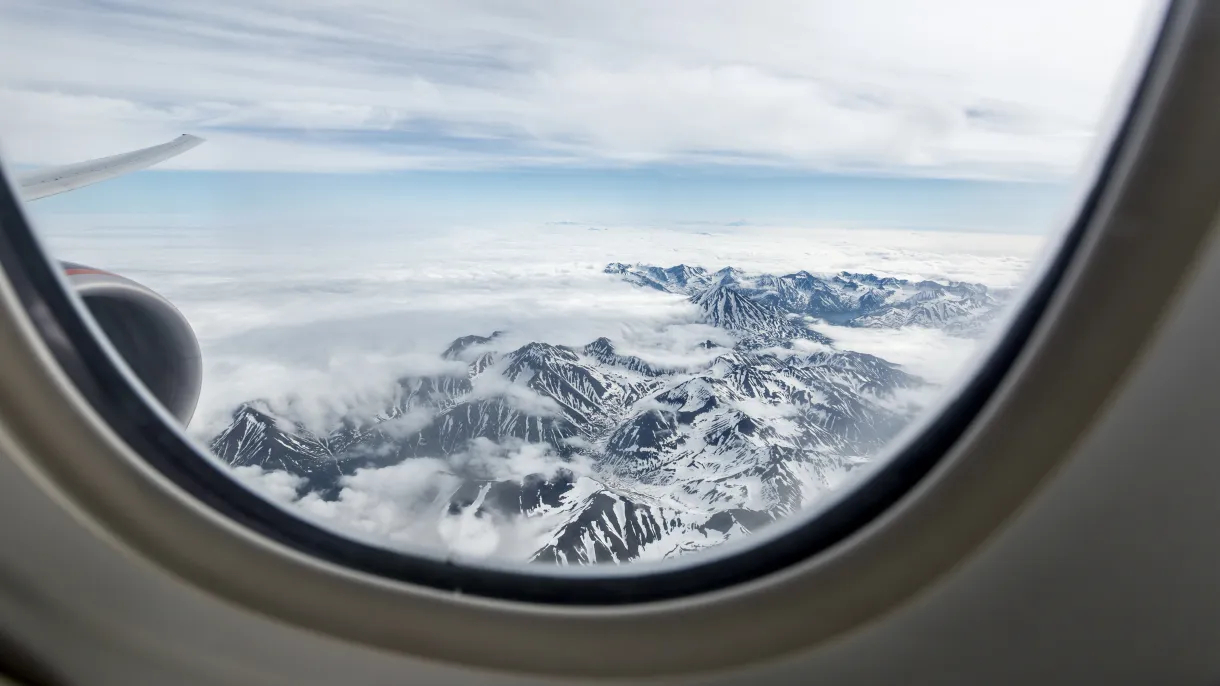
We refuel in Neryungri. We step into the waiting area for 40 minutes, then return to the plane and take any available seats — for safety, the first rows must remain empty, so we sit from rows eight to twenty. Fog again. I peer out the window and can’t quite tell what’s below: clouds, or a completely frozen white earth. From this height, the spruce trees look like tiny fibers on a terry towel.
I step out of the airport and almost choke on the cold. Breathing is difficult at first; with every exhale I release clouds of steam like a locomotive. I’ve never experienced anything like it before. In Yakutsk, fog often forms in winter when temperatures drop below −35 to −40 °C. The extreme cold also pushes clouds away, so winters here usually bring little snow. If the visibility in Yakutsk is good or it’s snowing, that’s actually a sign of warmer weather.
We arrive in a brisk −44 °C. You can hardly see anything: just ice-covered trees, wires, the soft glow of traffic lights, and a heating pipeline running along the road. Because of the permafrost, the pipes are laid above ground.
“The city with its guts on the outside!” our guide Vasily says.
A Journey into the Past Through the Northern Gate
Our first stop is the Chochur-Muran Ethnographic Complex. We begin with a ride on Yakutian Laika dogs bred by the owner. Unlike my previous dog-sledding experience in Karelia, this one feels very calm and unhurried. Afterwards we visit a café-museum displaying the owner’s collection of trophies and artifacts: taxidermied animals, mammoth bones, and antique household items.
We visit the Atlasov Estate Museum
From a personal archive
When the door opens, thick clouds of steam rush in from outside. In just ten minutes in the courtyard, my eyelashes, eyebrows, and hair are covered with frost. I try foal meat with cloudberry sauce and the traditional Indigirka salad made from frozen chir.
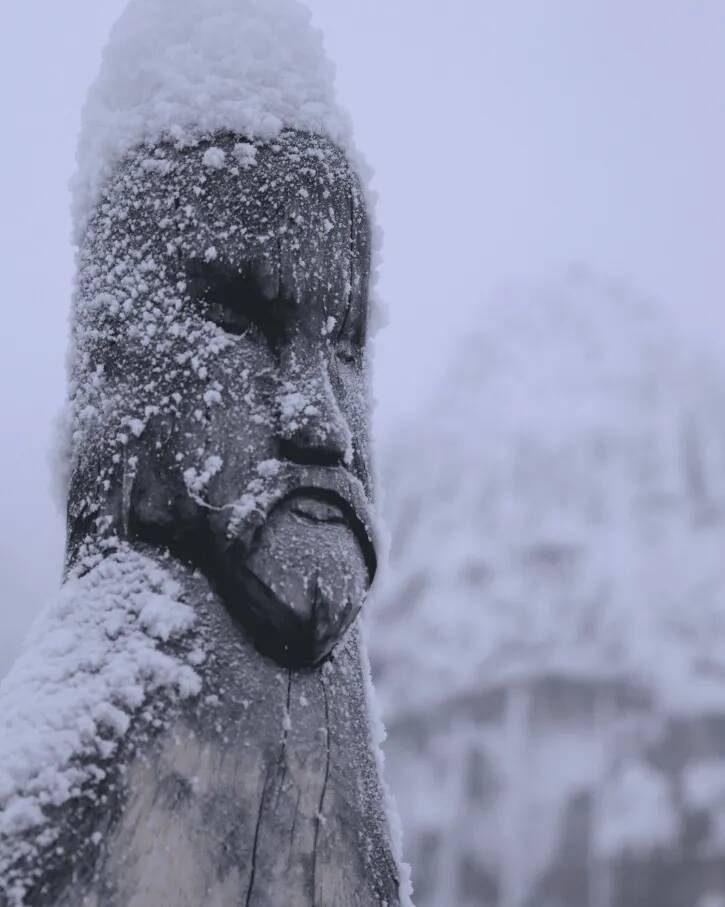
At the Atlasov Estate Museum, the first thing that catches my eye is the northern ritual gate, known as a "rogatka". According to local beliefs, people pass through it to cleanse themselves of anything bad. In the twilight and fog, the courtyard looks as if the gate has transported me to another era — like something out of the series Outlander.
We are greeted by Valentina, the smiling hostess of the house, dressed in traditional clothing. She tells us about the culture and history of the region, but what stays with me most are her words about why she and her husband created this place more than twenty years ago:
“We need to restore the memory that we came from someone — that we didn’t just fall from the sky today.”
Expedition to the Pole of Cold
Ethnic trip to Yakutia in winter
12 Dec 2026 — 19 Dec 2026
8 days
The Kingdom of Permafrost and the Kisses of Cold
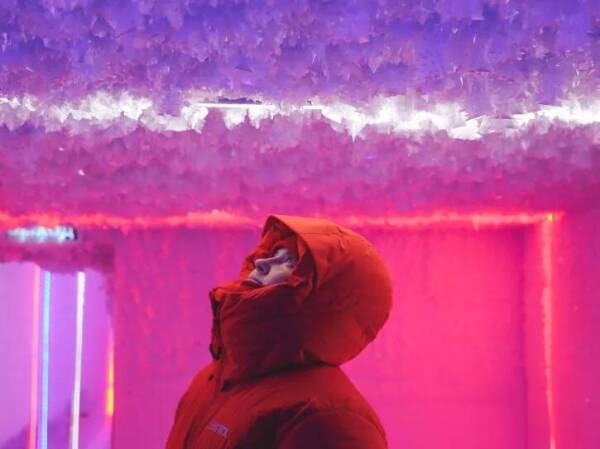
At the end of the day, we stop to warm up at the Kingdom of Permafrost complex — where the temperature is only −10 °C compared to −52 °C outside. Visitors have “breathed” beautiful patterns onto the ceiling and walls: moisture from their breath has settled and turned into sparkling crystals. Local artists have arranged ice sculptures here inspired by the Yakut epic Olonkho and other recognizable themes.
By 5:54 a.m., I’m already rustling down the hotel corridor in my corduroy pants, waiting for breakfast. The six-hour time difference with Moscow makes itself known. Today we’re heading along the frozen Lena River to the famous Lena Pillars. In summer, this road doesn’t exist on the map. When the cold sets in, road crews create an entire ice highway, which even appears in navigation apps until the end of the season.
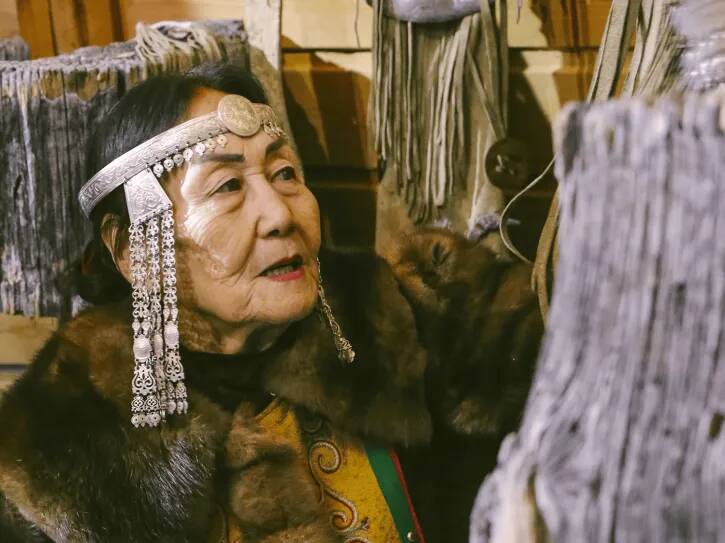
We are greeted by the hostess of the house in traditional dress
From a personal archive
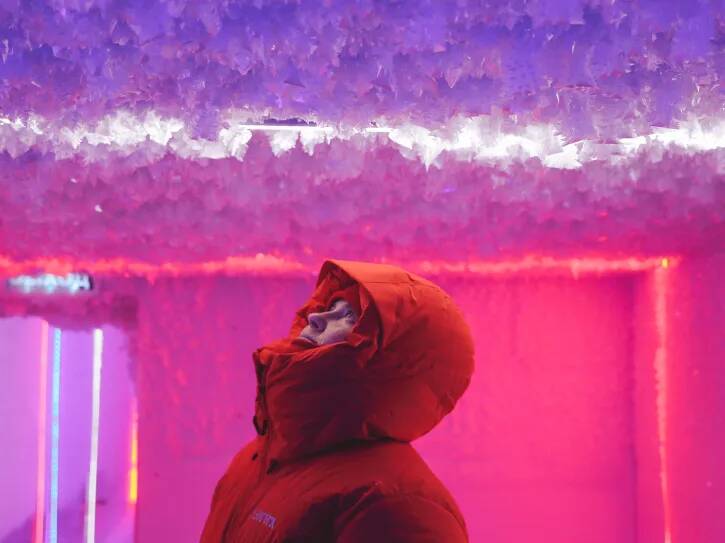
Visitors have “breathed” a beautiful ceiling in the Kingdom of Permafrost
From a personal archive
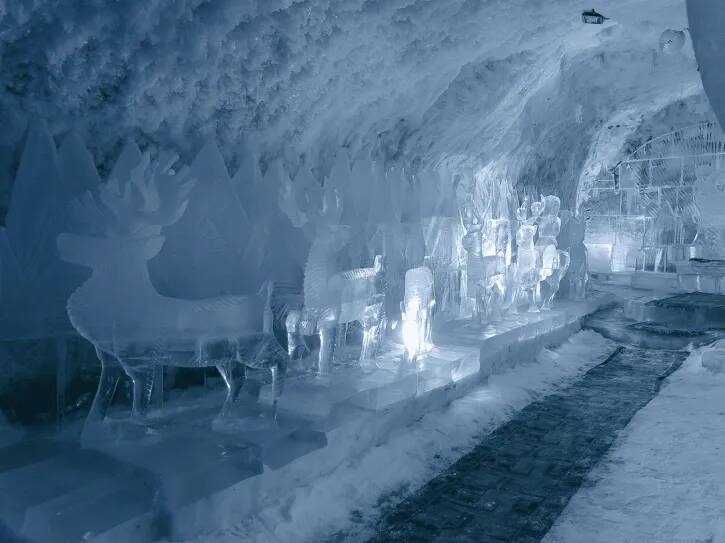
Artists have installed ice sculptures here
From a personal archive
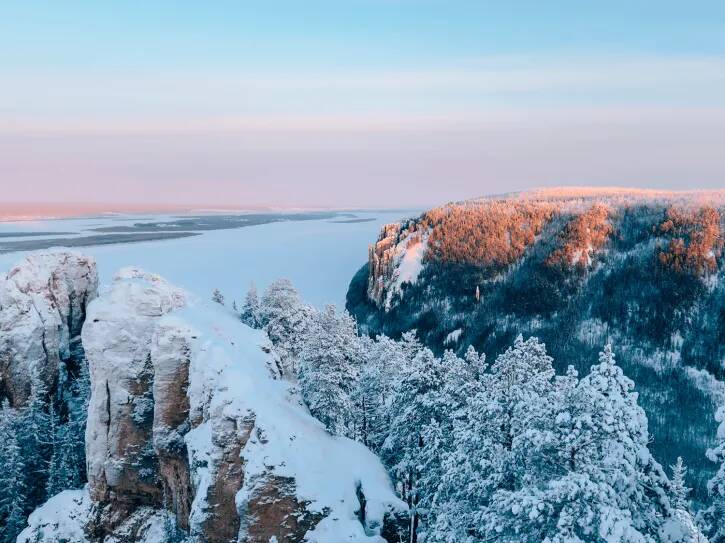
On our way to the famous Lena Pillars
From a personal archive
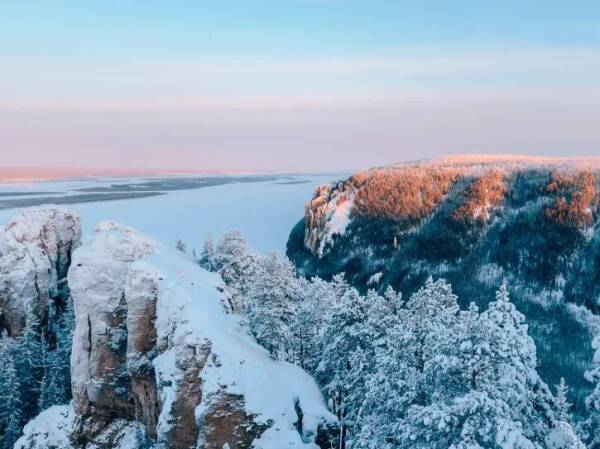
From the base camp to the start of the hiking route, we travel by snowmobile with a three-seat sled attached behind. The path to the viewpoint leads through archways of frozen trees, bent under the weight of ice and snow. The sun is shining — but it gives no warmth.
My eyelashes stick together, my hood and hat quickly become covered with frost, and my buff stiffens as if frozen solid. After about an hour in the cold, the camera display starts responding sluggishly, the lens freezes and refuses to turn, and eventually all the equipment falls into a complete coma. And yet there’s an endless feeling of joy from the icicles forming on my eyelashes.
As Natalia, another participant in the journey, recalls, this experience was vividly described by Nikolai Leskov in his short story On the Edge of the World, about a young archbishop who sets off on a mission to Siberia. “It was quite true, when he rubbed my face with his fur coat sleeve, my frozen eyelashes thawed and my eyelids opened.”
My own experience includes frostbite on my hands and face — as if the frost itself doesn’t want to let go, and even plants a parting kiss on your cheek. That day I end up taking our guide to the burn center of the Republic of Sakha (Yakutia), adding to the statistics of the 97 people who sought medical help during the January holidays.
At 8:00 a.m., our two-day journey to the Pole of Cold begins. In these parts, cars are only turned off in warm garages, and for winter they’re insulated around the hood and the underside. Our minibus has triple-pane windows. Between the layers, frost runs and crackles, tracing delicate patterns.
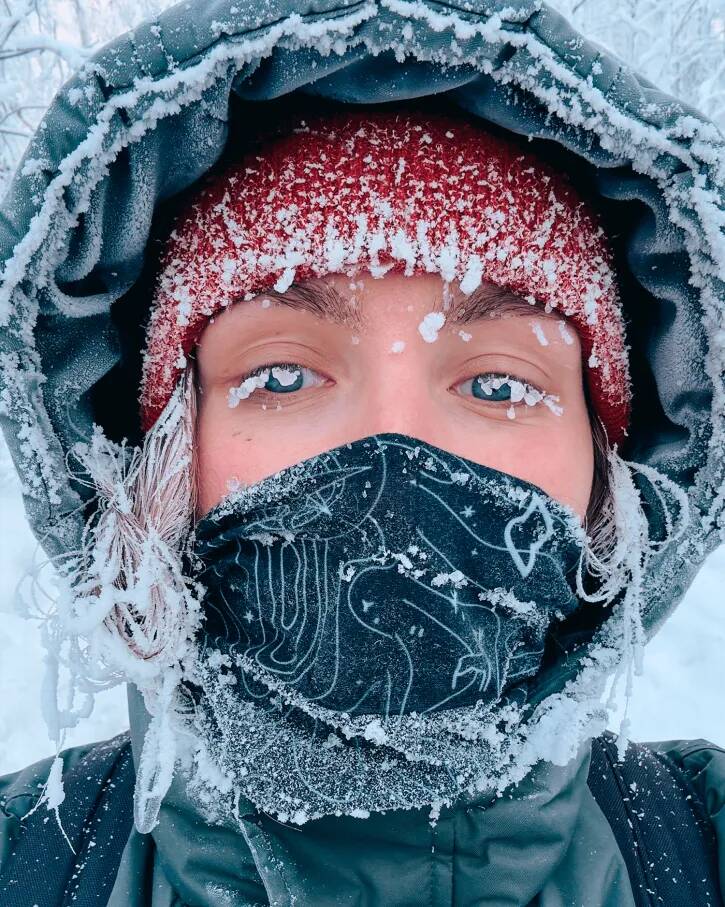
Eyelashes stick together, while the hood and hat become covered with frost
From a personal archive
Along the way, I collect bits of folklore in my notes — stories, legends, and local tales. Because of this, several people jokingly call me Shurik from the Soviet comedy Kidnapping, Caucasian Style.
Note No. 1. Yakutia has its own version of the yeti, known as chuchuna. In local folklore they are described as huge human-like creatures covered in black hair and dressed in animal skins. They abduct women to take as wives.
Once, hunters accidentally shot a chuchuna and reported it to the authorities. A whole coalition of scientists prepared to study the body of the local snowman, but during transportation it mysteriously disappeared, and everyone involved got into serious trouble. According to one version, the hunters feared a curse — killing a chuchuna was said to bring misfortune upon you and your entire family — so they hid the body.
Icy Spruces and a Pink Sky
The road is coated with ice: warm underground springs have surfaced and frozen. If the ice is deep enough, a car can get stuck in it like in porridge and freeze in place. The only way to find out is to try driving through!
We arrive in Khandyga. Outside there’s a swing set and a crescent moon shining bright like a lantern. A slightly crooked two-story house, a room with three beds, and a chandelier with leaf-shaped crystals. There are small souvenirs in the kitchen cupboard: figurines, plates, seashells. We brew bags of Princess Noori tea and chat past midnight.
— Go take a photo with the “I Love Khandyga” sign. You’ll probably never be here again!
— Thank goodness for that!
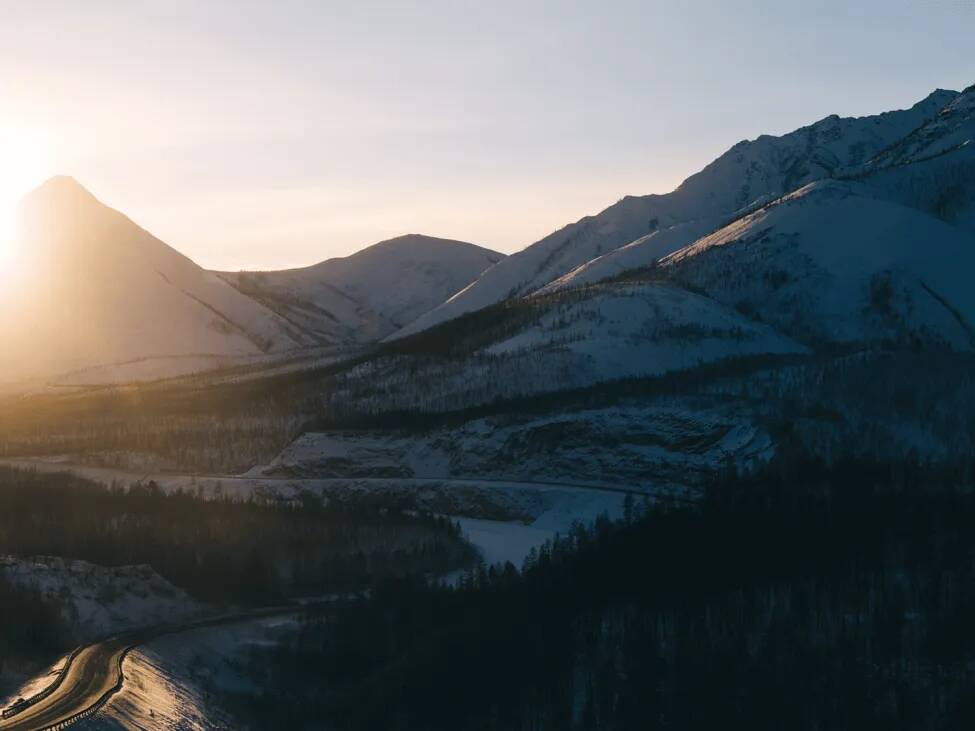
We stop along the road to take photos
From a personal archive
Of course, it’s all jokes. In the morning, still sleepy, we meet in the minibus and set off again. Along the way we stop to stretch our legs and take pictures. I notice that felt boots are warm outside but feel cold indoors when you climb back into the car. The frost sneaks deeper into them and hides there. That’s why, when you come in from the cold, you should take off your boots and outerwear right away to warm up.
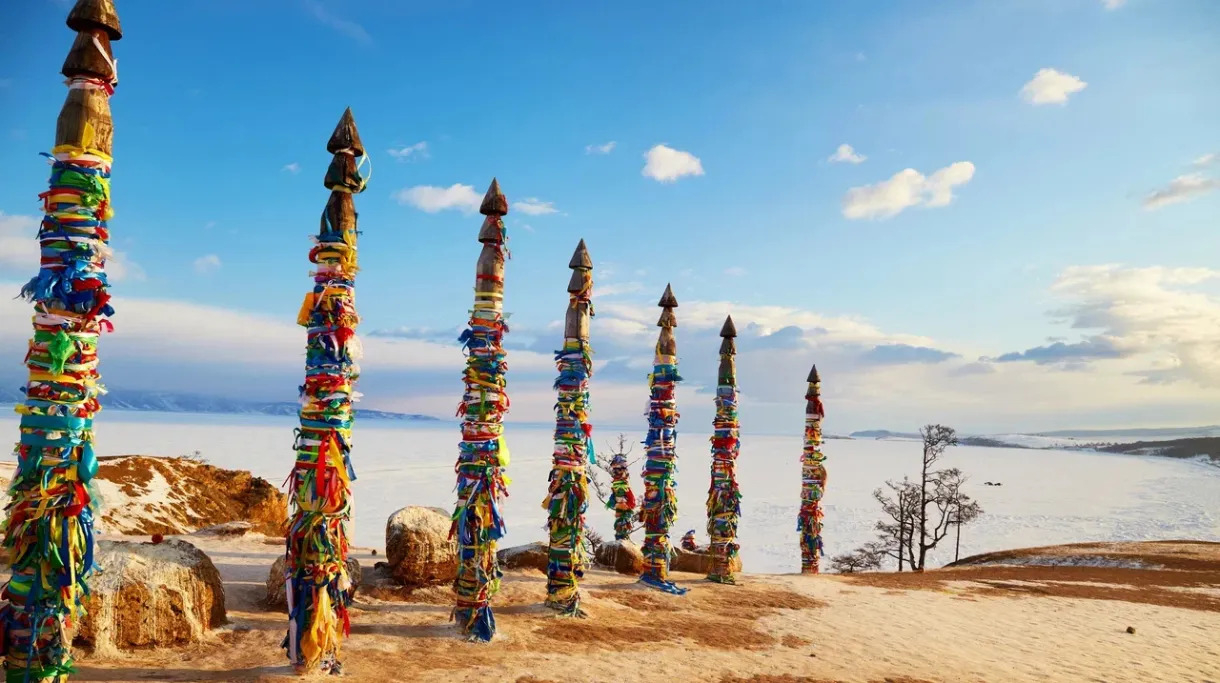
We stop by one of the rivers that never freezes. In a small gazebo nearby, people toss coins into the water, locals leave pancakes for the spirits, and tie colorful ribbons to the railings. I learn how this tradition began: at sacred places you were supposed to leave behind something valuable so your journey would go well. Cloth used to be expensive, so people parted with small pieces of fabric from their clothes.
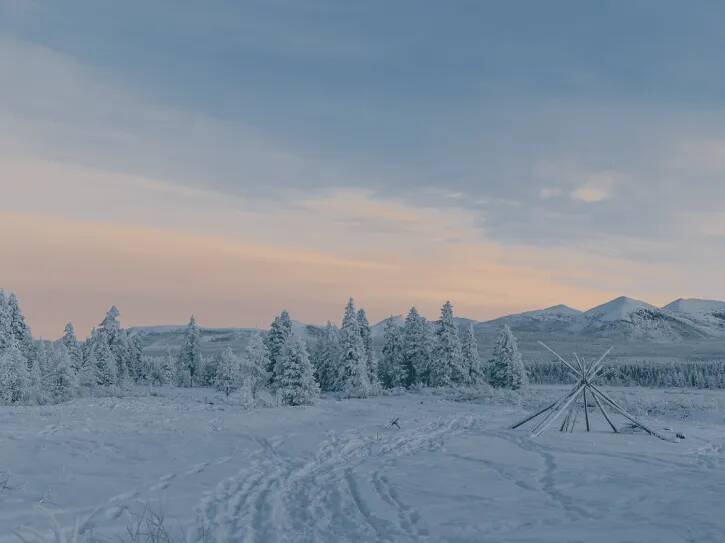
I press my forehead to the window and marvel at how varied one region can be. The sun sets, and we stop to watch it under a pink sky. All the cold sinks into the Oymyakon Valley, and the ice-covered spruces disappear into the fog. We cross a bridge, and the clock jumps forward by an hour. The first star appears above the mountain ridge.
Note No. 2. Yakutia has its own version of the Loch Ness monster — the Labynkyr Devil. According to legend, this enormous creature lives in Lake Labynkyr in the Oymyakon District and feeds mostly on reindeer that come to the lake to drink.
Note No. 3. During the campaign to eradicate shamanism in Yakutia, strange things reportedly happened. People say that when shamanic artifacts were burned in public squares, tambourines would leap out of the fires in front of large crowds of witnesses — completely unharmed. And when one local shaman was being interrogated, snow suddenly began to fall right in the middle of the official’s office.
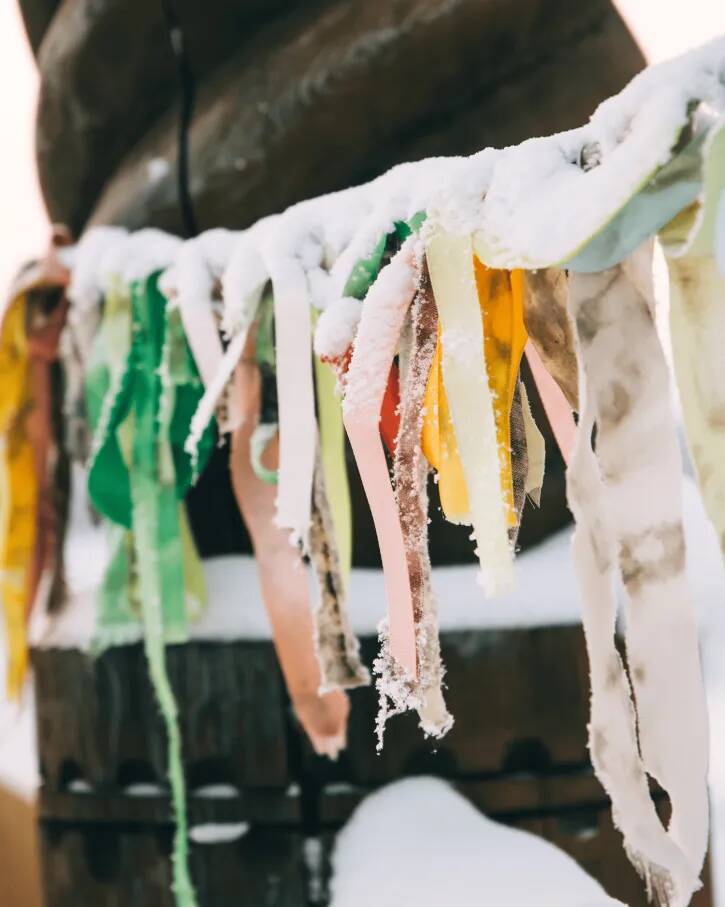
Colorful ribbons are tied at sacred places
From a personal archive
Meeting the Lord of the Cold
We’ve reached the Pole of Cold. The name Oymyakon comes from the Even language and means “non-freezing water” — a place where fish spend the winter. The local record low reaches −71.2 °C. At the moment, the thermometer reads −45 °C, and the lowest temperature we experienced during the trip was −54 °C.
We stay in a guesthouse run by a local resident, Tamara Yegorovna Vasilyeva. In our room, there’s a sofa that feels just like home. It’s warm inside, yet in the entryway, by the door and even on the ceiling, there’s frost. Our hostess treats us to dinner and shares how she defended Oymyakon’s status as the Pole of Cold.
On the shelves, among books about Yakutia, I find a volume on Oymyakon folklore — mostly in Yakut, with small sections in Russian. The author is Tamara Yegorovna herself. I can’t imagine a better souvenir.
Nothing wakes you up in the morning quite like an outdoor toilet at −51 °C. For breakfast, we have rice porridge and sandwiches with homemade butter and blueberry jam. In my jacket pocket, a Little Red Riding Hood chocolate bar I’d saved for tea the night before is starting to freeze.
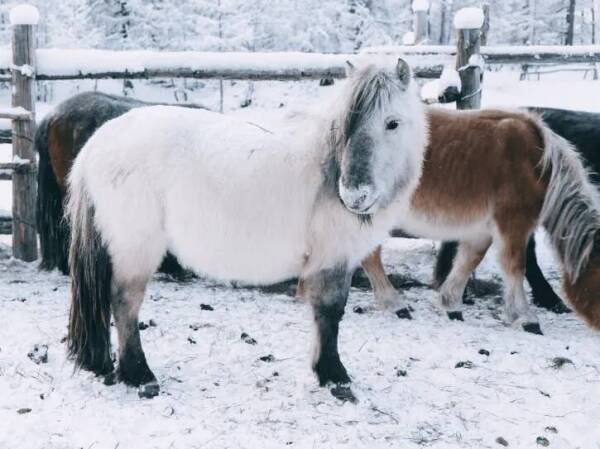
We arrive at a horse farm. While crawling under fences in search of the perfect shot, I nearly forget my small bag with my passport, keys, and money. Next, we visit a local resident named Evdokia to see Yakut cows with their thickly insulated udders. A month-old puppy is curled up by the stove.
— “He lies here until he turns yellow! I keep shooing him away so he doesn’t get burned!”
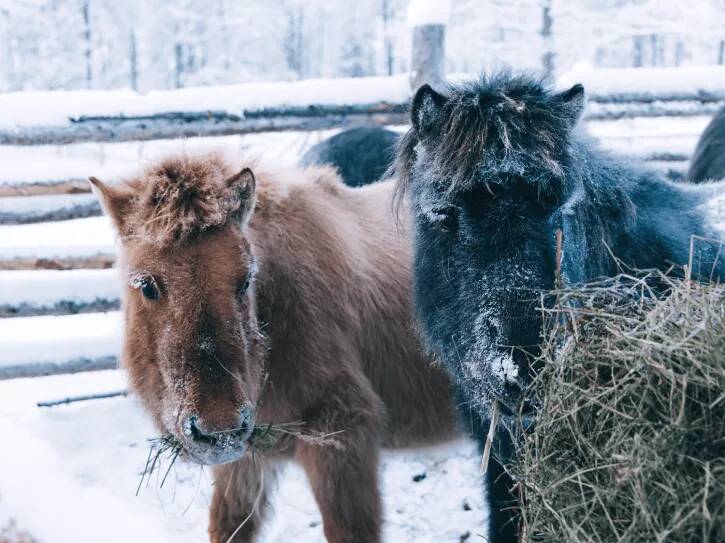
We arrive at a horse farm
From a personal archive
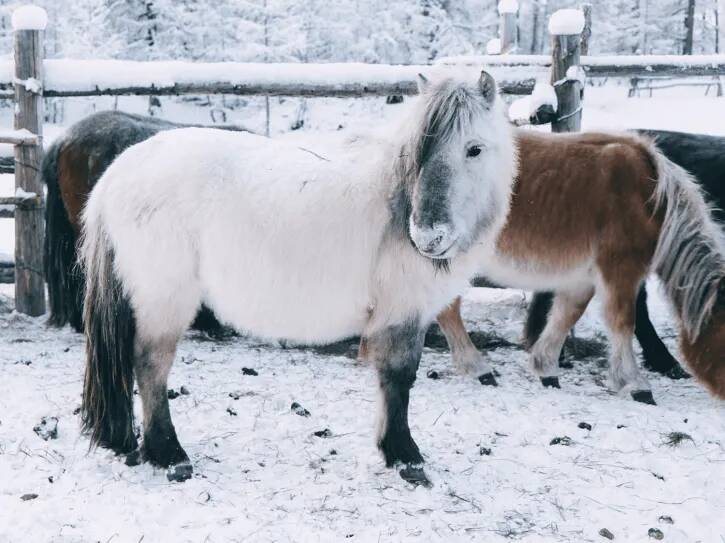
Climbing under fences in search of the perfect shot
From a personal archive
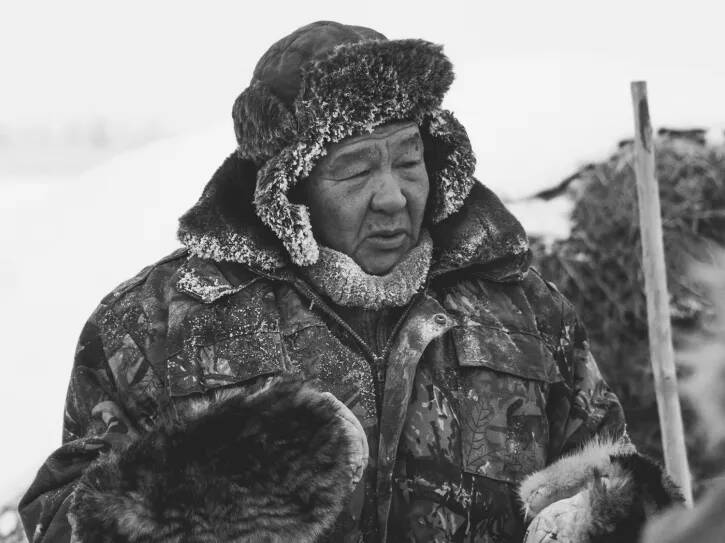
A local resident takes care of the horses
From a personal archive
Note No. 4. In Yakutia, alongside the familiar New Year, people celebrate Ysyakh — the summer solstice festival, which marks the beginning of a new annual cycle. Locals gather at special open-air sites called alases (meadow clearings), where they honor the sun with songs, dances, games, and traditional treats, raising their hands to the sky.
During the Soviet era, the holiday wasn’t banned but reshaped in an effort to “win hearts and minds.” A portrait of Stalin would occupy the central place at the celebration grounds, yet, as our guide explains, people still remained true to the festival’s original meaning.
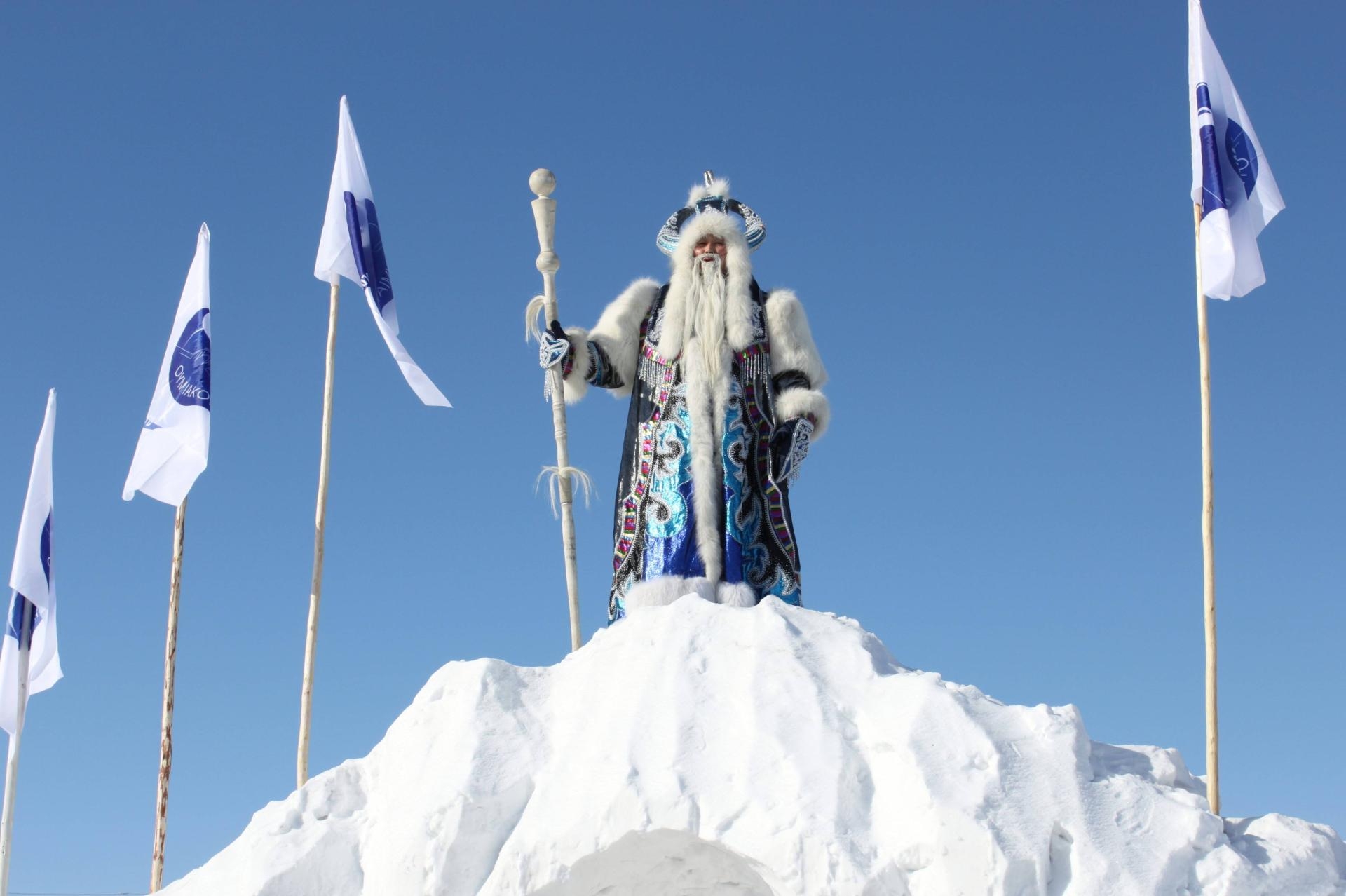
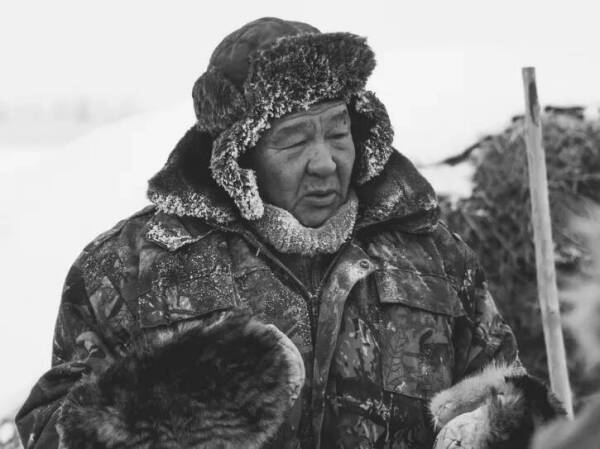
At the main stele in Oymyakon, Chyskhaan presents visitors with certificates confirming their visit to the Pole of Cold. Chyskhaan is not a local version of Ded Moroz (Father Frost), as one might assume. He is the lord of cold, portrayed as a bull-man figure dressed in garments resembling the northern lights. In the cold, my certificate sticks to several others, so in the photos I end up holding both mine and someone else’s proof of visiting the coldest place in Russia.
Before the evening concert, we have some free time. For an hour and a half, the entire guesthouse falls silent, everyone napping. Then, on the steps of the local administration building, we’re greeted by a dog, and inside we find national jewelry, traditional costumes, games, singing, dancing, and musical instruments. As our guide jokes, we’re treated, as usual, to “something cold and something raw”: a dessert made of frozen cream and raw foal meat.
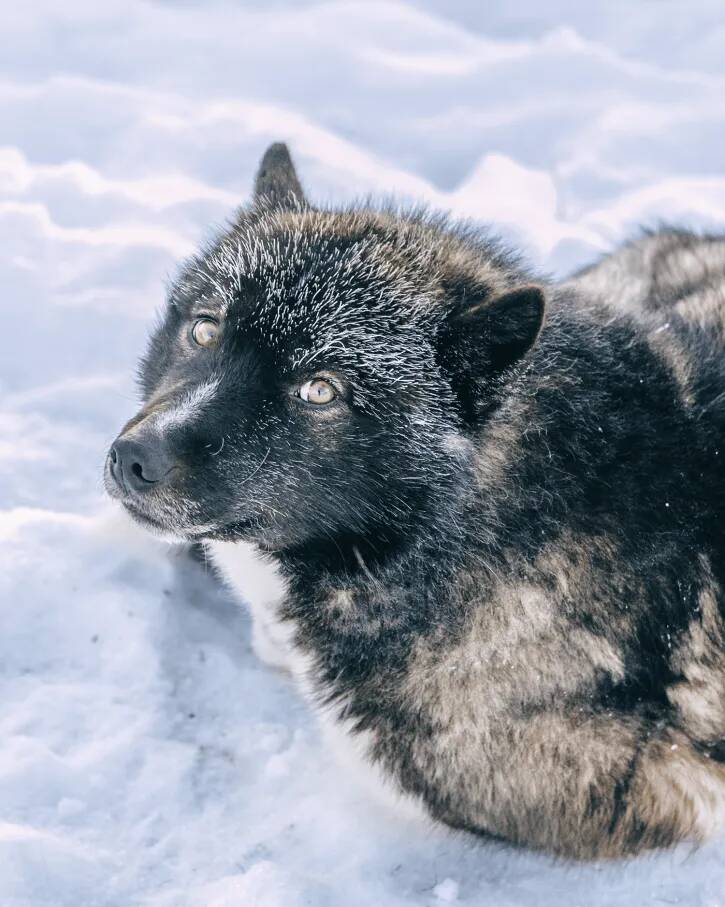
We meet a reindeer herders’ dog
From a personal archive
Endless Happiness — Being Here
If I had traveled from Yakutsk to Oymyakon on my own, the journey would have taken at least a week. I’d want to stop at every bush, capturing each moment with my camera and taking it with me to share with others.
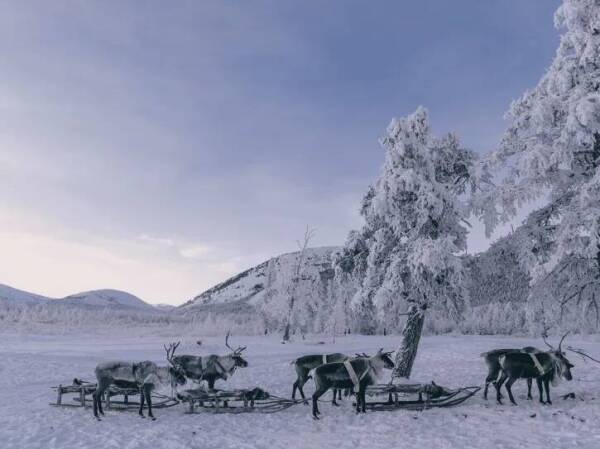
At the Nenkan Stream, the time shifts back by an hour. I look at the frost-covered trees on the hills — they now resemble a Yakut dessert of frozen cream. From behind the mountain, a cloud shaped like a reindeer appears. A few hours later, we meet real reindeer herders and their team. I make my way through the snowdrifts toward a feisty white reindeer and freeze — overwhelmed by the beauty of the moment.
We race over washboard-like bumps in the road to Titanium by Sia playing on our driver Pavel’s “My Wave” playlist. There’s a sense of endless happiness — just being here. Ahead, barely visible, are the dark silhouettes of the hills, and the only light comes from our headlights reflecting road signs and a single bright star in the middle of the sky.
Note No. 5. According to Yakut mythology, there are three worlds: the upper world, the middle world (where we live), and the lower world, all connected by the World Tree. Perhaps that’s why locals treat trees with such reverence — especially sacred “shaman trees.”
One such tree stands in Yakutsk. When road construction threatened to cut down the dead tree in the middle of a street, strange things began to happen. Workers’ tools kept breaking, and eventually one man seriously injured his leg, accidentally striking it with an axe. The tree was left untouched, and now the road curves around it on both sides.
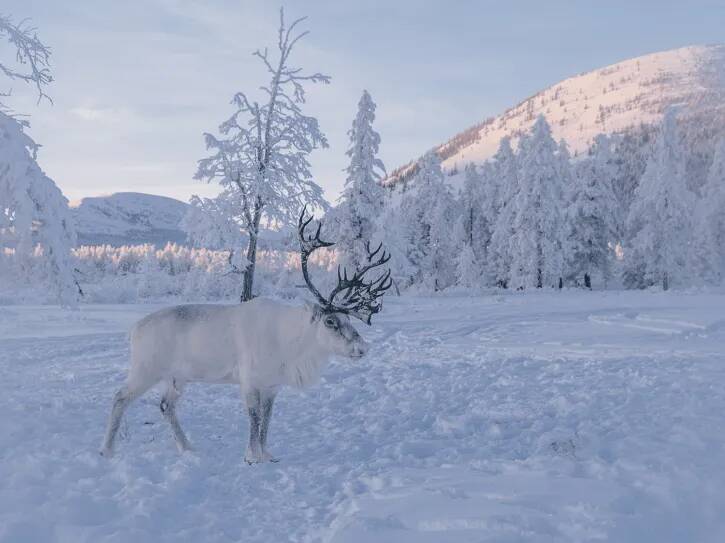
I see both a cloud reindeer and a real one
From a personal archive
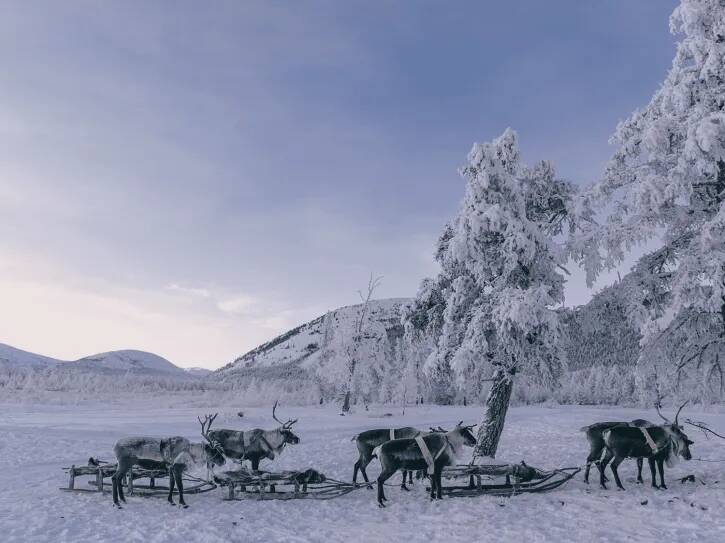
Watching a team of reindeer herders
From a personal archive
You want to capture every moment and take it with you
From a personal archive
I sleep as soundly as I do at home and don’t even want to get up. My body has finally adjusted to the local time — just in time for the last day of the expedition. Today, I’m amazed by semi-wild horses, a snake sculpture made of manure by a well-known Yakut artist, and an open-air “freezer market” right on the street.
At a roadside café, I come across an unexpectedly perfect tiramisu with cream. And that huge piece of fried sausage will forever remain, for me, a symbol of the Far North.
As we approach the city along an icy road, we encounter stout Yakut horses. I’m afraid of scaring them, but their leader turns out to be fearless and walks right up to me. At our final dinner in a café, I feel the fatigue catching up with me. Souvenirs and gifts are packed, and the impressions are only just beginning to settle in my mind.
I spend my last night at the Alaas Hotel — its name means “meadow.” Ahead lies an eight-hour flight and a return to everyday routine. But for now — just good night.
If this story has inspired you to travel to Yakutia, explore our collection of tours to the region. We’ll be happy to help you choose and answer any questions: call us at +7 (495) 104-64-36 or email hello@russiadiscovery.ru.
Contributors
Anna Rogozhina
Author
Elizaveta Strogalshchikova
Literary Editor
Elizaveta Strogalshchikova
Executive Editor
Ezhena Bykova
Proofreader
Maria Potapova
Translator
Notice an error or inaccuracy?
Write to usSee also
All articles