Russia

Russia: Baikal

Natural grandeur strikes the travelers to Baikal lake. Baikal region located in the Asian part of Russia is a place on earth where you will feel a true power of Nature and will share the greatest reverence to it with the locals who refer to Baikal in no other words but “He”, “Sacred Sea”, “Father”, and “Lord”. The world’s biggest freshwater lake size of Belgium is called the well of the planet for containing 1/5 of the world’s sweet water reserves and is listed by UNESCO as a World’s heritage site.

The unique lake itself with crystal clear water and amazing biodiversity, however, is far from being all that awaits the traveler. Baikal gave its name to the surrounding area with magnificent diverse landscapes. Wide steppe with endless horizons of blue sky and sheer space that give you an intense feeling of freedom turns into dense austere taiga, dramatic mountains around the lake give way to sunny valleys colored by the multitude of flowers, peaks covered with bright snow overlook hot springs, and tumultuous whitewater rivers flow in the Sacred Lake.

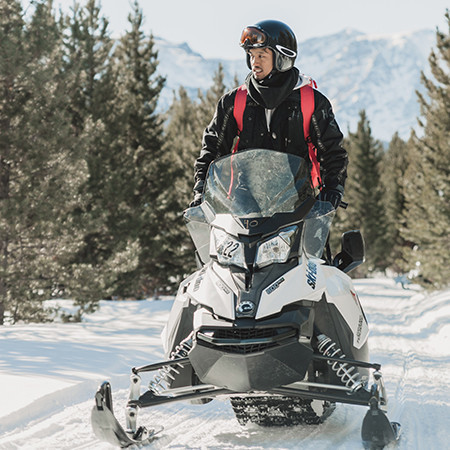
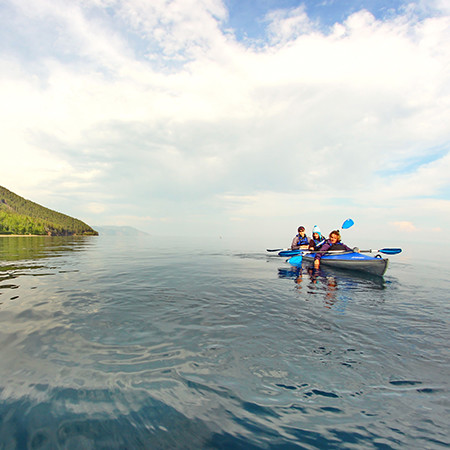
Baikal area hosts a remarkable number of national parks and reserves to be explored by true nature lovers. The beautiful wilderness setting offers excellent opportunities for exceptional nature photography and outdoor adventure. Trekking and biking possible practically everywhere is truly enjoyable in the scenic varying landscape, while climbing is best in the East Sayan mountains at the Mongolian border. White-water rafting will give you excitement and take you to the inaccessible otherwise places of pristine nature. Horses of the locals from a nearby village will ensure more freedom for exploration and facilitate treks to the hot springs in the Tunka valley. The discovery of the region in wintertime is fascinating and becomes particularly rich in experiences when you cross the ice-struck Baikal by snowmobile, skiing or dog-sledding.

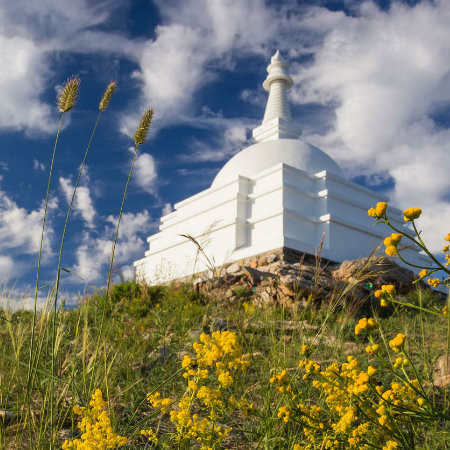
Off-road itineraries designed for adventure lovers interested in history and ethnography will reveal archaeological sites, milestones of shamanistic veneration with breathtaking views, mysterious petroglyphs (ancient rock drawings), traces of the long history of the Buryats, Evenks, and other Mongolian nations inhabiting the area, and remaining picturesque old believers’ villages that still keep their traditional lifestyle. The nowadays cozy city of Irkutsk located on the Transsiberean railway has its own story of a place of exile throughout different epochs in the Russian history.

A trip to Baikal will enrich your life with an incredible nature experience and adventures. Our team will be glad to guide you through the discovery of this sacred Asian land.

Time zone
Geography and description
Climate
Flora and fauna
People
How to get there
Water
Things to buy


Time zone

GMT+ 8 (Moscow time zone + 5 hours)

Geography and description

On the map, a narrow blue half moon of Baikal Lake is located almost in the center of Eurasia, in the south of Eastern Siberia. Its north-western part lies in Irkutsk Region, while its south-eastern part belongs to the Republic of Buryatia.

Baikal is the oldest freshwater lake on earth with a 25-30 mln years’ history. It is 636 km long (approximately the distance between Moscow and St Petersburg); its width ranges between 25 and 80 km. Baikal is the world’s deepest freshwater lake (1637 m) and largest in terms of volume. It contains 23600 km3 of water – more than the 5 Great Lakes together, 1/5 of the world’s freshwater reserves.

Baikal has 22 islands. The largest island is Olkhon (70 km long) that boasts the biggest number of sunshine days, has a microclimate and no mosquitoes. The landscape of the island is an attractive combination of forest and steppe best suiting for biking and walking. The sacred sites of Shamanists and Buddhists are located in the most spectacular points. There are stretches of sandy beach and a number of archeology sites on the capes. The island is the most popular summer destination with tourists and locals from Irkutsk. To the north-east of Olkhon lie the Ushkany islands that are a part of a nature reserve and the preferred place for the Baikal freshwater seal. The Ushkany can be visited by a specially ordered boat.

330 rivers feed into the Baikal lake, among the biggest are Selenga, Barguzin, and Upper Angara, which are all famous for the endemic fish species omul (sig family). Only one river, Angara, flows out of Baikal.
Baikal has spectacular shoreline with a number of picturesque bays, the most prominent being Chivyrkuysky (268 km2) and Barguzinsky (790 km2) bays on the eastern coast, and Peschanaya (Sandy Bay) in the west. Olkhon separates a part of the lake along the western shore, the Small Sea (over 1000 km2), which is rather shallow and normally has a temperature suitable for bathing in summer.

Lake Baikal is nested between the mountain ridges Primorsky (1746 m) and Baikalsky (max 2588 m) in the west, Barguzin (2400m on average, max 2840 m) in the east, and Khamar-Daban (1500-1800m on average) in the south. Further south off the Lake spreads the picturesque Tunka valley fringed by the Tunka ridge (max 3266 m). Munku Sardyk mountain ridge stretching along the border with Mongolia has the highest peak of the whole Sayan mountain system (3491 m). These areas are best for trekking, mountaineering, alpinism, and white-water rafting.

Baikal area is still seismically active. There are 35 hot springs around the lake, mostly located in the north-east of Baikal and in Tunka valley.

On the adjacent areas there are numerous national parks and nature reserves. There 3 major national parks where visitors are welcomed. Pribaikalsky national park, the most accessible one, stretches from the southernmost point of the Lake along the western shore to the north and encompasses the Olkhon island and the Small Sea. It possesses majestic rocky shore cliffs, scenic bays with sandy beaches, caves, and steppes. Zabaikalsky national park lies along the eastern shore of Baikal and includes unique in their beauty Barguzin ridge peaks, cape Svyatoy Nos with its singing sands, Chivyrkuy Bay with numerous caves and mineral springs, and the Ushkany islands famous for being preferred by the seals. Tunkinsky national park in the south-west of the lake covers Tunka mountain ridge and valley known for its medicinal mineral springs Arshan, Zhemchug, Nilova Pustyn. The access to the striking pristine wilderness areas of the remote Barguzin biosphere reserve on the north-east part of lake and Baikalo-Lensky in the north-west is difficult.

The main cities of Baikal area are Irkutsk, the capital of Irkutsk region and Eastern Siberia, and Ulan-Ude, the capital of Buryatia. The average density of population is 3.3 p./sq m in Irkutsk region and 2.8 person / sq m in Buryatia. Most of the population is concentrated in the cities leaving vast areas uninhabited.

Climate

Significant contrasts between summer and winter temperatures are characteristic of the lake located in the center of Eastern Siberia with its continental climate. However, on the very shore of the lake the climate has features of a maritime climate. Due to the size of the lake, the process of cooling off and warming up is very slow. The surface water temperature in the open lake during summer never exceeds +13C, while Baikal freezing takes place only in the middle of winter (in January), long after the beginning of Siberian frosts start.

This phenomenon has an impact on the climate around. Seasonal temperature variations of this climate are somewhat smoothed, summers are cooler and winters are milder on the shore than in the Irkutsk city. In December, while it is - 25C-30C in Irkutsk, it is only -15-20C ashore 70 km away from Irkutsk. But in July, when the temperature reaches +25 + 30C in Irkutsk, it is only +15 +20C on the shore.

The average temperature in the coldest month (January) in Baikal area ranges from -21C to -28C; the average t in the hottest month (July) is +16C - +22C.

Baikal waters incidentally warm up to the bathing temperature (+19C +22C) in a limited number of shallow bays incl the Small Sea in July-August. September-October are the months of powerful storms at the lake.

Baikal area has the reputation of a sunny region. The annual sunshine is 2000 - 2400 hours, which exceeds that of the Caucuses, another Russian region in the south, a traditional resort of the country. Thus, a comparatively mild winter and abundance of sunny days are true merits of the Baikal climate

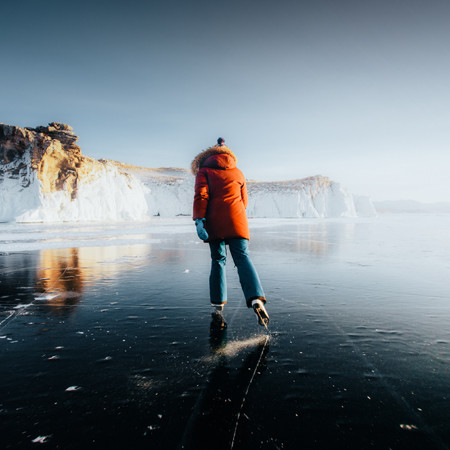
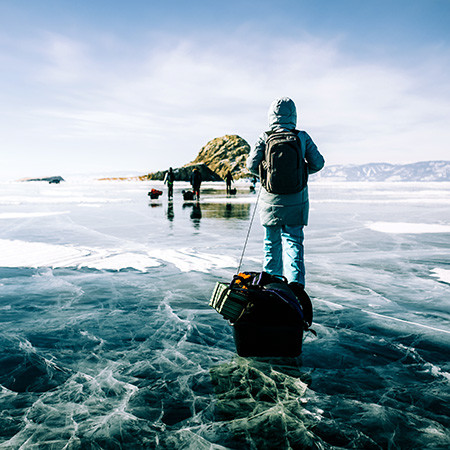
In winter, Baikal lake freezes over. The ice width varies from 50 cm to 2 m thick throughout the lake in winter allowing for a long season of skiing and snowmobiling across the lake. The ice goes only in May - June when the shores of Baikal turn rosy with Siberian rhododendron in blossom.

The average annual precipitation is 500-900 mm in the south and only 200-350 mm in the central and north Baikal. The place with the highest precipitation is the Khamar-Daban mountain ridge (1000-2000 mm/year), the Siberian tropics in the south-east of Baikal.

Flora and fauna

Four major natural landscape types prevail in the area of Baikal Baikal: high, mid, low-elevation, and plain. The high-elevation landscape is dominated by mountain tundra, Alpine and, rarely, low density trailing cedar forests located at an altitude of 1600-2000 m. The mid-elevation landscape is typical for the altitude of 1200-1800 m. In particular places its lower boundary goes down to 800 m, then the dark-coniferous cedar and cedar/fir forests reach the shore of the lake (in North Baikal). These kinds of area preserve natural severe beauty and virginity due to the steep slopes and limited accessibility. The low-mountain landscape is common for an altitude of 600-1200 m. It is dominated by sloping dark-coniferous, cedar/larch, pine and mixed taiga. Such areas are strikingly rich in berries, herbs, mushrooms and cedar nuts. On the plains, forest, steppe and marsh are dominant.


The pride of the region in terms of vegetation is the taiga forest. In contrast to European new woods, the Baikal taiga has trees of all ages - from young ones to 500-600 and even 800 year old giants. Larch, birch, poplar and alder trees grow in the lower belt. Higher up they are replaced by dark coniferous forest (cedar, fir and spruce). Higher slopes are covered with impassable brushwoods of trailing cedar. Above them on the sloping terrace are Alpine grasslands, over which are only snow-covered peaks. Among non-forest types, most widely spread are steppe and Apline meadowland vegetation. The swamps are rich in cranberries and currants.

Baikal’s water with a low mineral content support a striking number of endemic organisms, 84% of species inhabiting the lake are found nowhere else on earth. Some of the plants and animals date to prehistoric times. In this way, Baikal can be considered a huge natural laboratory.

The lake has an exceptionally rich ichthyofauna including 53 fish species of 13 families. These include
the fish characteristic of coastal shallow waters and half closed bays of the lake, river mouths ( sturgeon, pike, eel-pout, ide, roach, dace, perch, minnow); Siberian mountain river fish (grayling, taimen, lenok) in small streams flowing into the lake and its coastal area; and estuaryarctic fish (omul and sig - white fish) mostly in coastal parts of the lake.

The shores of the lake have abundant wildlife as well. Baikal area is a habitat of more than 500 species mammals, its shore give life to 1200 plant species.

In the high ridges, most common mammals include mountain goat, snow sheep, Alpine field-vole, marmots, and in some places lemmings. In summer on the slope and in valley in remote and hardly accessible areas one can observe big ungulate animals and sometimes their predators. Largest predators in the region are bear, lynx and wolverine. Rein deer, white tailed deer, elk, moose, musk deer, Siberian roe, wild boar are typical fauna between the Alpine belt and the coniferous taiga zone. 29 fur-bearing species are found in the forests of Baikal region (squirrel, red fox, mink, ermine, musk rat, water rat, sable). Roe deer, polecats, ground squirrels, field-voles, insectivorous animals and wolves inhabit the partially - wooded steppes.

Among the birds populations, snipes, duck, seagulls, bald eagle, hawk, woodpecker, nutcracker, owl and partridge make the most part.

People

Population: 3 741.8 thousand people (total Irkutsk region and Buryatia)

The Baikal region has turned into a melting pot in the course of its history of the exploration of Asia already inhabited by Mongolian tribes by Russian Cossacks, and after being an exile place for Polish, Lithuanians, and Russian nobles in Tsarist Russia and for Russian, Ukranian, Belorussian kulaks (well-off peasants), the whole USSR intelligentsia and political rebels during the Soviet period. There are appr. 60 different nationalities. The most numerous ethnic groups are Russians (67-90%) and Buryats (1-30%); Ukrainian, Tatar, Belorussian, Evenks, Polish, etc also make their contribution to the population.

Religion: Russian Orthodox (prevailing), Buddhist (mostly in Buryatia), Animist (Shamanism, etc)

Languages: Russian, Buryat
All the population in Irkutsk region and Buryatia speaks Russian. The study of Buryat language at school was introduced in Buryatia only 10-15 years ago; currently mostly the older and young urban population and the majority of countryside inhabitant speak Buryat.

How to get there

The true gateway to Baikal region is the Irkutsk city in south-west of the lake, though Ulan-Ude airport on the eastern shore also has flights to major cities of Russia.

Frequent regular flights by domestic carriers (TransAero, S7 Airlines, Aeroflot, Pulkovo, etc) connect Irkutsk to most Russian cities. Mongolian airlines (MIAT) perform flights Irkutsk - Ulaanbaatar twice a week (prior booking required); there are charter flights Irkutsk - China. Several flights a day depart from Moscow for Irkutsk (duration 5 – 5.5 h). Flights from St Petersburg take place only a few times a week.

Within the region, the most common way to travel is by car/bus and train. Trans Siberian railway passes over the the southern end of the lake linking Irkutsk to Ulan-Ude (a night on train) and further to Ulaanbaatar in Mongolia and Bejing in China. The Baikal-Amur railway provides Irkutsk with connection to the cities in the north of the lake. There are also local flights from Irkutsk to the North of the Lake (Nizhneangarsk), though not frequently. In summertime there are regular departures of a water cushion boat crossing the whole Lake from the south to the north (Port Baikal – Severobaikalsk - Nizhneangarsk). A ferryboat connects Listvyanka (settlement on the shore of Baikal next to Irkutsk) and Port Baikal (end of the Circumbaikal railway). To get to most of the virgin and remote destinations, one might need to book a private boat or undertake a many hours’ ride by car.

Water

The region is considered environmentally clean. The water from the tap is drinking. The pure Baikal Lake water from a depth of over 400 m is bottled for sale. The water in the rivers and springs away from the towns is also safe to drink.

Things to buy

Diverse wood carvings, products and jewelry out of non-precious stones, national items of Buryats.

Burkhan, or Shamanka
Shaman
Shaman
North-East
North-East
Nerpa - Baikal seal
Nerpa - Baikal seal
The tree on the shore
Sagan-Zaba summer
Sagan-Zaba summer
Other regions:
See active tours of this region

Tel.: +7 495 664 2 664
3, Kholodilny Lane, office 201, Moscow, Russia
E-mail: incoming@russiadiscovery.ru 

Map of office location